
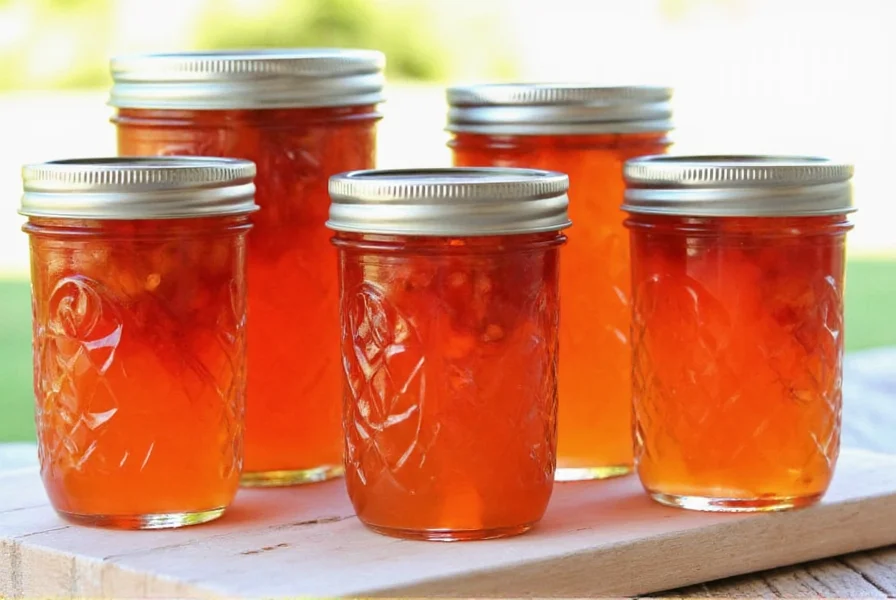
Creating homemade pepper jelly through proper canning methods delivers vibrant flavor and shelf-stable preserves that last up to one year. This guide provides a scientifically sound approach to safely preserve sweet and spicy pepper jelly using time-tested water bath canning techniques that meet food safety standards.
Essential Equipment for Successful Pepper Jelly Canning
Before beginning your pepper jelly canning project, gather these critical tools:
- 8-10 half-pint canning jars with new lids and bands
- Large pot for boiling water bath canning (must accommodate jars with 2-3 inches of water coverage)
- Canning funnel and jar lifter
- Acid testing strips or pH meter (critical for food safety)
- Heavy-bottomed stainless steel pot for jelly cooking
- Clean jelly bags or fine mesh strainers
- Long-handled wooden spoons and ladles
Proven Pepper Jelly Recipe with Safe Canning Parameters
This tested recipe maintains proper acidity levels while delivering balanced flavor. The 1:1 vinegar-to-sugar ratio ensures safe preservation while allowing pepper flavor to shine through.
| Ingredient | Measurement | Notes |
|---|---|---|
| Mixed colorful peppers (red jalapeño, bell, banana) | 4 cups finely chopped | Remove seeds for milder jelly |
| Granulated sugar | 4 cups | Do not reduce for proper setting and preservation |
| White vinegar (5% acidity) | 1 cup | Essential for safe pH level below 4.6 |
| Regular liquid pectin | 1 pouch (170g) | Do not substitute low-sugar pectin |
Step-by-Step Canning Process for Shelf-Stable Pepper Jelly
- Wash jars and lids in hot soapy water; keep warm in 180°F water until ready to use
- Combine peppers and vinegar in large pot; bring to boil and simmer 5 minutes
- Strain liquid through jelly bag into clean pot (should yield exactly 3 cups)
- Add exactly 3 cups pepper vinegar to sugar in clean pot; bring to full rolling boil
- Stir in pectin and return to full boil for exactly 1 minute, stirring constantly
- Remove from heat and skim foam; ladle immediately into warm jars with 1/4-inch headspace
- Wipe rims, apply lids and bands fingertip-tight
- Process in boiling water bath for 10 minutes (adjust for altitude above 1,000 feet)
- Remove jars and cool undisturbed for 12-24 hours before checking seals
Critical Food Safety Considerations for Home Canning
Pepper jelly sits at the edge of safe canning parameters. Follow these essential safety guidelines:
- Always verify final pH is 4.6 or lower using testing strips - this prevents botulism risk
- Never alter vinegar quantities or substitute lower-acid vinegars
- Use only tested recipes from reliable sources like USDA or university extension services
- Discard any jars with unsealed lids or signs of spoilage (bulging lids, off odors)
- Store properly processed jars in cool, dark place for up to one year
Scientific basis: Clostridium botulinum spores survive boiling water (212°F) but cannot produce deadly toxins in environments below pH 4.6 (USDA, 2015). This biochemical threshold makes pH verification non-optional for borderline foods like pepper jelly.
Historical Evolution of Canning Safety Standards
Modern canning protocols emerged from critical scientific milestones. Understanding this progression explains why current precision is non-negotiable:
| Era | Key Development | Practical Impact Today |
|---|---|---|
| 1909-1940s | USDA's initial guidelines based on time/temperature observations | Established foundational processing times but lacked pH understanding |
| 1943 | National Research Council identifies C. botulinum spore destruction requires 240°F | Explained water bath limitations for low-acid foods |
| 1960 | USDA establishes pH 4.6 as critical safety threshold | Defined modern high-acid/low-acid food categorization |
| 2015 | USDA mandates pH verification for borderline foods (like pepper jelly) | Requires home testers for recipes near pH 4.6 boundary |
Source: USDA Complete Guide to Home Canning (2015), pp. 1-8. Official documentation.
Recipe Boundaries and Critical Limitations
This method applies only within strict scientific parameters. Recognizing these boundaries prevents dangerous misapplication:
- Acid Requirement: Exclusively for high-acid foods (pH ≤ 4.6). Not suitable for low-acid foods like green beans or meats which require pressure canning (240°F)
- Altitude Constraints: Processing time must increase above 1,000 ft elevation: +5 min (1,001-3,000 ft), +10 min (3,001-6,000 ft), +15 min (>6,000 ft) per USDA guidelines
- Ingredient Integrity: Vinegar must be verified 5% acidity; sugar reductions compromise preservation. Fruit additions (e.g., peaches) require pH retesting
- Equipment Limits: Water bath canning fails for low-acid foods regardless of processing time
Source: National Center for Home Food Preservation (University of Georgia). Altitude adjustment protocol.
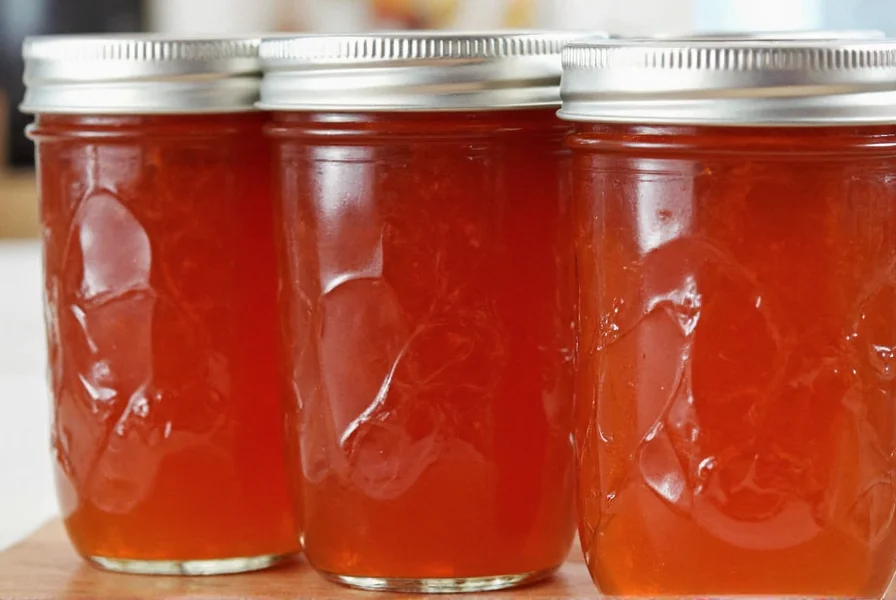
Troubleshooting Common Pepper Jelly Canning Issues
Even experienced canners encounter challenges. Here's how to address frequent problems:
- Jelly didn't set: Likely insufficient pectin or inaccurate measurements. Reprocess with additional pectin following tested guidelines.
- Cloudy appearance: Usually from improper straining. Next time use double-layered jelly bags and avoid squeezing.
- Weeping liquid: Often occurs with temperature fluctuations during cooling. Store jars at consistent room temperature.
- Fermentation signs: Indicates seal failure or pH above 4.6. Discard immediately - do not taste.
Flavor Variations and Creative Uses
Once you've mastered the basic safe canning method, experiment with these tested variations:
- Smoky Chipotle Version: Replace 2 cups mixed peppers with 1½ cups finely minced chipotle peppers in adobo
- Fruit-Infused: Add 1 cup ripe peaches or pineapple during vinegar simmering step (verify final pH)
- Herb-Enhanced: Steep 2 sprigs fresh rosemary in vinegar mixture before straining
Use your finished pepper jelly as glaze for meats, swirl into cream cheese for appetizers, or pair with sharp cheddar for unforgettable sandwiches. The proper canning technique ensures your homemade preserves maintain both safety and exceptional flavor throughout storage.




 浙公网安备
33010002000092号
浙公网安备
33010002000092号 浙B2-20120091-4