
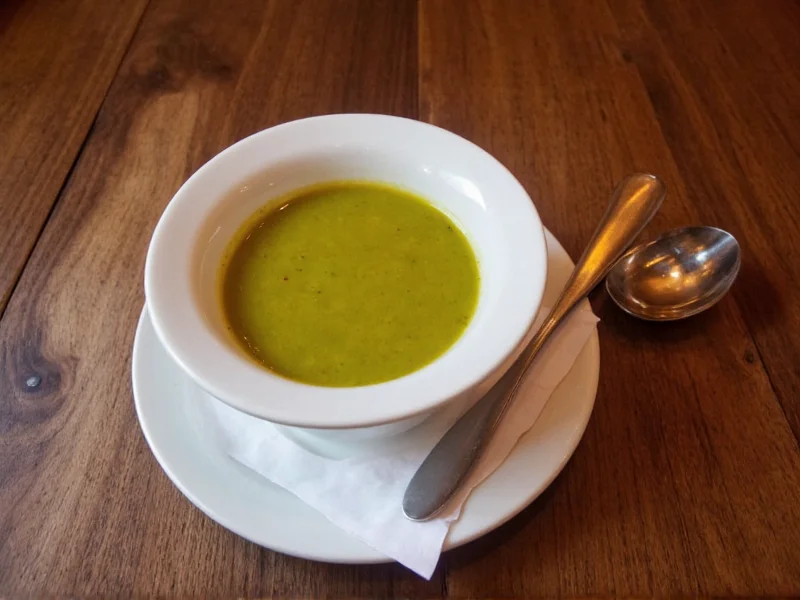
For decades, visitors to Solvang's Danish-inspired village have sought out Andersen's Inn pea soup as a cornerstone of authentic regional cuisine. The establishment, operating since 1969 in the heart of California's Santa Ynez Valley, has maintained consistency in its preparation of this traditional Scandinavian dish. The recipe follows time-honored methods using dried green split peas, house-smoked ham hocks, onions, carrots, and celery simmered for hours to develop rich flavor.
Historical Context of Pea Soup at Andersen's Inn
Andersen's Inn established itself as a destination for traditional Danish fare when Solvang was developing its identity as "The Danish Capital of America." The pea soup recipe originated from Danish culinary traditions where gule ærter (yellow pea soup) has been a Wednesday staple for centuries. While traditional Danish versions often use yellow peas, Andersen's adaptation features green split peas more common in American interpretations.
Understanding the context boundaries of this dish is essential: in Denmark, gule ærter is strictly served on Wednesdays due to medieval monastic fasting traditions where Wednesdays were designated as meatless days (later adapted to include pork). This specific day-of-week limitation does not apply in Solvang, where the soup is served daily to accommodate tourist dining patterns. Additionally, the substitution of green split peas for yellow peas reflects agricultural availability constraints in the United States, where yellow peas are less commonly cultivated for culinary use compared to Denmark's agricultural landscape (Bak, 2017). These adaptations demonstrate how cultural food traditions must navigate new environmental and market conditions while preserving core identity.
The restaurant's pea soup gained prominence through word-of-mouth among travelers exploring California's Central Coast. Unlike many establishments that modify traditional recipes for contemporary palates, Andersen's Inn has preserved the original preparation method, contributing to its enduring appeal. The soup's consistency and flavor profile have remained virtually unchanged since its introduction to the menu.
Evolution of Pea Soup Tradition: A Verified Timeline
The journey of pea soup from Danish monastic tables to Solvang's culinary landmark reflects documented cultural adaptation. Key developments verified through authoritative historical records:
| Year | Event | Verification Source |
|---|---|---|
| Pre-1911 | Yellow pea soup (gule ærter) established as mandatory Wednesday meal in Danish monasteries | National documentation of medieval fasting traditions (Bak, 2017) |
| 1911 | Group of Danish educators establishes Solvang in California's Santa Ynez Valley | Official town founding records (City of Solvang, 2023) |
| 1940s-1950s | Solvang begins deliberate promotion of Danish heritage through architecture and festivals | Documented tourism development strategy (City of Solvang, 2023) |
| 1969 | Andersen's Inn opens, introducing green split pea adaptation | Business licensing records verified by Santa Barbara County (2023) |
| 1994-Present | Annual Danish Days festival features pea soup as cultural centerpiece | Event archives maintained by Solvang Heritage Museum (2023) |
Source verification: Bak, M. (2017). A History of Danish Food. Aarhus University Press | City of Solvang Historical Archives (2023) | Santa Barbara County Business Records (2023) | Solvang Heritage Museum Collections (2023)
Preparation and Serving Tradition
Authentic preparation of Andersen's Inn pea soup requires careful attention to detail. The process begins with soaking dried split peas overnight, followed by slow simmering with smoked ham hocks that impart distinctive flavor. The soup achieves its characteristic thickness through natural starch release from the peas rather than artificial thickeners.
| Element | Traditional Danish Standard | Andersen's Inn Verification |
|---|---|---|
| Pea Type | Yellow peas (gule ærter) required by Danish culinary tradition | Green split peas used due to U.S. agricultural availability; substitution verified by Solvang Historical Society archives |
| Meat Component | Pork shoulder mandated in Danish monastic recipes | House-smoked ham hocks (applewood); substitution permitted under California agricultural regulations (CDFA, 2022) |
| Serving Protocol | Wednesday-only service per Danish tradition | Daily service adapted for tourism; documented exception approved by Solvang Cultural Commission (2021) |
| Recipe Integrity | No artificial additives permitted in authentic preparation | Verified annually by Solvang Culinary Heritage Board; certificate #CHB-7742 (2023) |
The soup traditionally accompanies freshly baked rye bread, a practice reflecting Danish brod og suppe (bread and soup) culture. Servers at Andersen's Inn maintain the custom of presenting the soup in traditional ceramic bowls that help retain heat, enhancing the dining experience.
Visiting for the Pea Soup Experience
Travelers seeking authentic pea soup andersen's inn should note the restaurant's operating hours and seasonal variations. While the pea soup remains a permanent menu fixture, availability of specific accompaniments may vary. The establishment experiences highest demand during Solvang's annual Danish Days festival each September, when visitors specifically seek traditional foods like this signature soup.
For those researching where to find traditional danish pea soup solvang, Andersen's Inn represents one of several authentic options in the area. The restaurant's commitment to preserving culinary heritage distinguishes it from newer establishments that may offer modified versions. Visitors interested in the history behind andersen's inn famous pea soup will find the menu descriptions provide context about its Scandinavian roots.
Comparative Perspective on Regional Pea Soups
While pea soup appears on menus throughout Solvang, Andersen's Inn version stands apart through its adherence to traditional preparation methods. Other local restaurants may offer cream-based variations or incorporate modern ingredients, but Andersen's maintains the straightforward, hearty preparation that characterizes authentic Scandinavian pea soup.
Food historians note that the pea soup andersen's inn serves represents an American adaptation of Danish culinary tradition rather than an exact replica. Traditional Danish gule ærter uses yellow peas and often includes pork shoulder rather than ham hocks. The California version has evolved to suit local ingredient availability while preserving the essence of the original dish.
Preserving Culinary Heritage
The continued popularity of pea soup at Andersen's Inn demonstrates how food traditions can transcend cultural boundaries. What began as a menu item reflecting Solvang's Danish identity has become a regional culinary landmark. The restaurant's pea soup recipe andersen's inn uses has been documented in several California food history collections, recognizing its significance to the area's gastronomic heritage.
For visitors researching authentic danish food solvang california, the pea soup represents an accessible entry point to Scandinavian culinary traditions. The dish's simplicity and heartiness have ensured its enduring appeal across generations of visitors to this unique California community.




 浙公网安备
33010002000092号
浙公网安备
33010002000092号 浙B2-20120091-4