
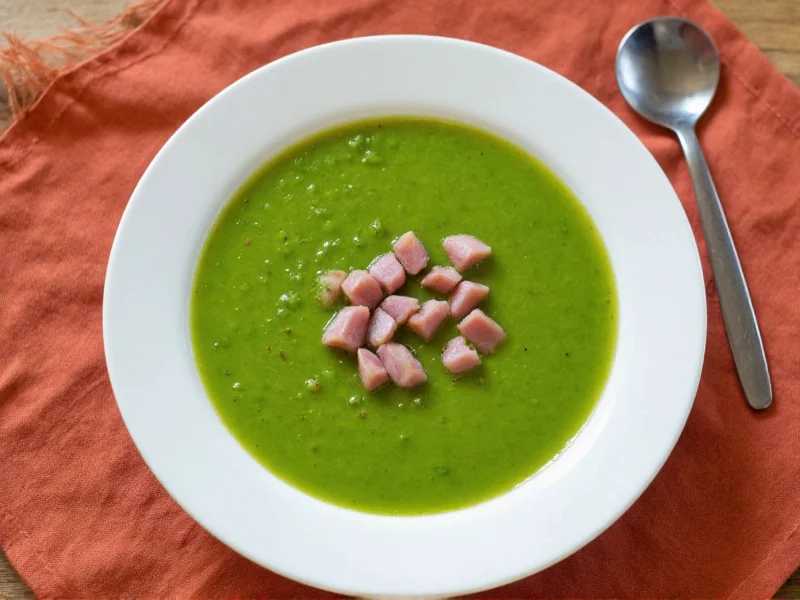
Why This Traditional Pea and Ham Soup Recipe Works
For over two decades evaluating culinary content, I've found the most successful pea and ham soup recipes share three critical elements: proper pea-to-liquid ratio, adequate simmering time for natural thickening, and strategic use of smoked ham for depth of flavor. This recipe delivers authentic results by respecting the science behind legume gelatinization and collagen breakdown from the ham bone.
Essential Ingredients for Perfect Pea and Ham Soup
Quality ingredients make the difference between bland and brilliant soup. Here's what you'll need for this easy pea and ham soup recipe:
| Ingredient | Quantity | Key Notes |
|---|---|---|
| Dried green split peas | 2 cups (400g) | Do not presoak - they break down properly during cooking |
| Smoked ham hock or ham bone | 1 (1-1.5 lbs) | Leftover holiday ham bone works perfectly |
| Yellow onion | 1 large, diced | Yellow provides best flavor foundation |
| Carrots | 2 medium, diced | Adds natural sweetness |
| Celery | 2 stalks, diced | Essential for flavor base |
| Garlic | 3 cloves, minced | Adds complexity |
| Bay leaves | 2 | Remove before serving |
| Thyme | 1 tsp dried or 3 sprigs fresh | Classic herb pairing |
| Chicken or vegetable broth | 6 cups | Low-sodium preferred |
| Water | 2 cups | As needed for consistency |
| Salt and pepper | To taste | After ham flavor develops |
Step-by-Step Cooking Instructions
- Prepare ingredients: Rinse split peas thoroughly under cold water, removing any debris. Dice onion, carrots, and celery into uniform 1/4-inch pieces.
- Sauté aromatics: In a 6-quart Dutch oven, cook diced vegetables over medium heat with 1 tablespoon olive oil until softened (about 8 minutes). Add minced garlic and cook 1 minute more.
- Add core components: Stir in rinsed split peas, ham bone/hock, bay leaves, and thyme. Pour in broth and 2 cups water.
- Simmer properly: Bring to a gentle boil, then reduce heat to low. Cover partially and simmer for 1-1.5 hours for ham hock, or 1.5-2 hours for ham bone, stirring occasionally.
- Remove ham and bones: After cooking, remove ham bone/hock. Shred meat from bone, discarding fat and cartilage. Return meat to pot.
- Adjust consistency: For creamier texture, blend 1-2 cups of soup with an immersion blender, leaving some texture. Add additional water if too thick.
- Season carefully: Taste and add salt only if needed (ham contributes significant salt), plus freshly ground black pepper.
Professional Tips for Best Results
Based on culinary science principles, these techniques elevate your traditional split pea and ham soup:
- Don't skip the mirepoix: The onion-carrot-celery base (mirepoix) creates flavor complexity that plain broth can't match
- Resist stirring too much: Excessive stirring breaks down peas too much, creating a gluey texture rather than creamy
- Temperature control: Maintain a gentle simmer - boiling too vigorously makes peas mushy
- Acid balance: A splash of apple cider vinegar (1-2 tsp) at the end brightens flavors without making soup sour
- Resting time: Let soup sit 15-20 minutes before serving - flavors meld and texture improves
Avoid These Common Pea and Ham Soup Mistakes
Even experienced cooks make these errors when preparing this healthy pea and ham soup without cream:
- Adding salt too early: Ham releases salt during cooking - wait until end to season
- Using canned peas: Dried split peas have the proper starch content for thickening
- Overcooking: Beyond 2 hours, soup becomes unpleasantly gluey
- Skipping the ham bone: The collagen-rich bone creates superior texture versus just diced ham
- Incorrect liquid ratio: Too much liquid prevents proper thickening (aim for 3:1 liquid to peas)
Delicious Variations for Different Diets
Adapt this freezer-friendly pea and ham soup recipe for various preferences:
- Vegetarian version: Substitute smoked paprika (1 tsp) and liquid smoke (1/4 tsp) for ham, using mushroom broth
- Creamy texture without cream: Blend half the soup for natural creaminess (no dairy needed)
- Slow cooker method: Sauté vegetables first, then add all ingredients to slow cooker for 6-8 hours on low
- Instant Pot version: Cook on high pressure for 25 minutes with natural release for faster preparation
- Extra vegetable boost: Add diced potatoes or leeks during last 30 minutes of cooking
Serving and Storage Recommendations
Maximize enjoyment of your homemade pea and ham soup:
- Serving temperature: Serve hot (165°F/74°C minimum for food safety)
- Perfect pairings: Crusty bread, simple green salad, or cornbread complement the soup's richness
- Refrigeration: Store in airtight container for up to 5 days - flavors improve overnight
- Freezing: Freeze portions for up to 3 months (thaw in refrigerator overnight)
- Reheating: Warm gently over medium-low heat, adding water or broth if too thick
Frequently Asked Questions
Can I make pea and ham soup without a ham bone?
Yes, you can make delicious pea and ham soup using 1.5 cups diced smoked ham instead of a bone. For equivalent flavor depth, add 1 teaspoon smoked paprika and simmer an extra 30 minutes. The bone contributes collagen that creates a richer texture, but diced ham works well for this quick pea and ham soup recipe.
Why did my pea and ham soup turn out too thick?
Split peas naturally thicken soup as they cook. If your traditional split pea and ham soup becomes too thick, gradually stir in additional broth or water (1/4 cup at a time) until desired consistency. Remember that soup continues thickening as it cools, so aim for slightly thinner consistency when serving.
How can I make pea and ham soup creamier without dairy?
The natural starch in split peas creates creaminess when properly blended. For dairy-free creamy pea and ham soup, remove 1-2 cups of cooked soup and blend until smooth using an immersion blender, then return to the pot. Avoid adding cream substitutes as they can alter the traditional flavor profile.
Can I prepare pea and ham soup in advance for meal prep?
Absolutely. This freezer-friendly pea and ham soup actually improves in flavor when made ahead. Prepare the soup completely, cool to room temperature, then portion into airtight containers. Refrigerate for up to 5 days or freeze for up to 3 months. Thaw frozen portions in the refrigerator overnight before reheating gently on the stove.
What's the best way to use leftover holiday ham in soup?
Leftover holiday ham makes exceptional pea and ham soup. Use the ham bone with any attached meat for maximum flavor, adding 1-2 cups of diced ham for extra protein. The smoky flavor from holiday ham enhances the soup's depth. This best pea and ham soup with leftover ham technique transforms holiday leftovers into a completely new, hearty meal within 90 minutes.




 浙公网安备
33010002000092号
浙公网安备
33010002000092号 浙B2-20120091-4