
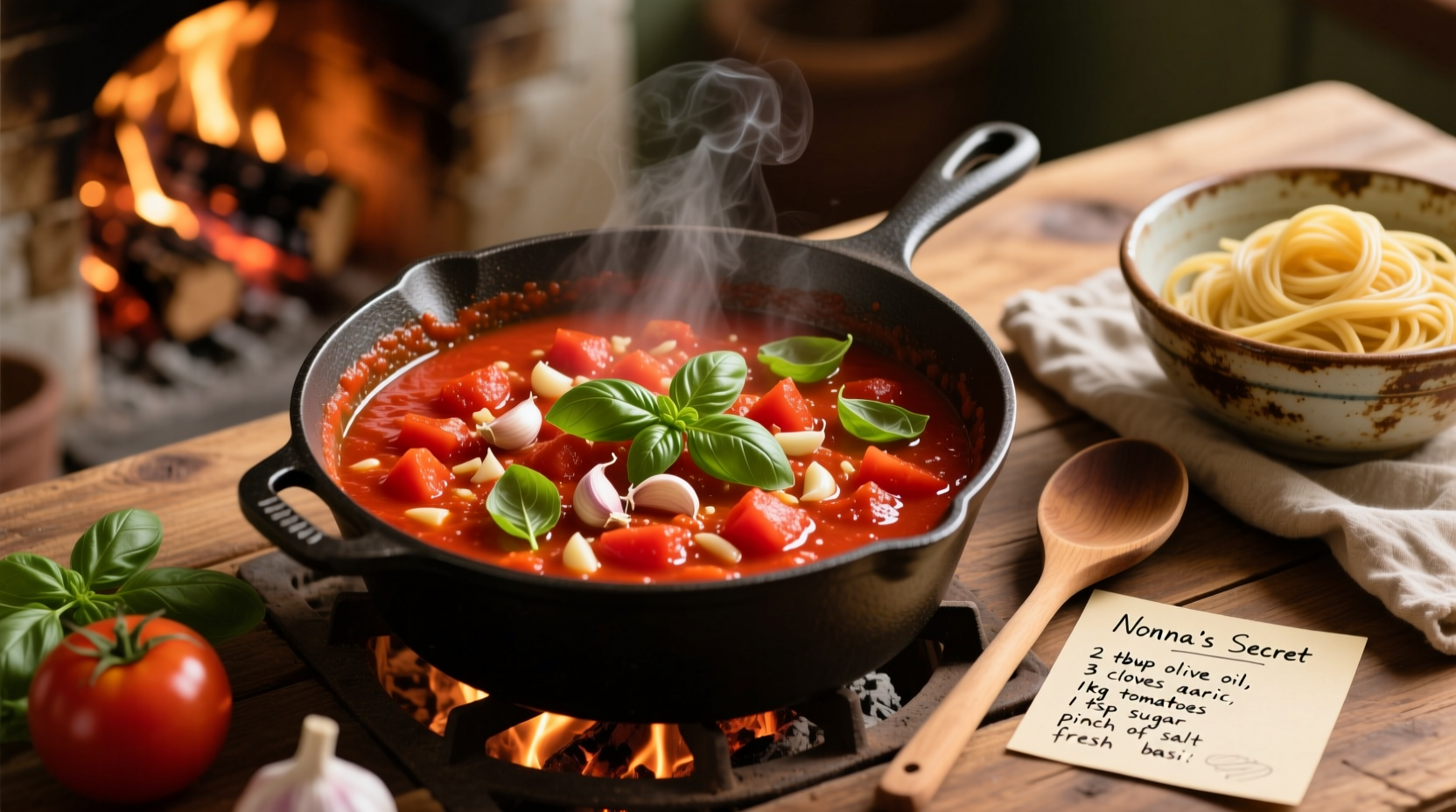
The perfect basic pasta tomato sauce recipe requires just 6 quality ingredients: 2 lbs ripe tomatoes (or 1 can whole peeled San Marzano tomatoes), 3 tbsp olive oil, 3 garlic cloves, 1 small onion, fresh basil, and salt. Simmer for 45 minutes for a rich, authentic flavor that outperforms store-bought versions. This foundational recipe serves 4 and forms the basis for countless regional Italian variations.
Nothing beats the aroma of fresh tomato sauce simmering on the stove. As a chef who's cooked in both Michelin-starred kitchens and rustic Italian trattorias, I've discovered that the secret to exceptional pasta sauce lies not in complexity, but in understanding why each step matters. This guide delivers the authentic technique professional chefs use, adapted for home cooks who want restaurant-quality results without special equipment.
The Science Behind Perfect Tomato Sauce
Tomato sauce seems simple, but chemistry plays a crucial role in flavor development. When tomatoes hit 190°F (88°C), their pectin breaks down, creating that ideal silky texture. The Maillard reaction between garlic and olive oil at medium heat develops complex flavor compounds that raw garlic can't provide. Understanding these processes transforms your cooking from following steps to making informed decisions.
| Tomato Type | Best For | Flavor Profile | Processing Tip |
|---|---|---|---|
| San Marzano DOP | Classic Neapolitan sauce | Sweet, low acidity | Hand-crush for texture |
| Roma | Everyday cooking | Balanced acidity | Remove seeds for smoothness |
| Cherry | Summer fresh sauces | Intense sweetness | Roast first for depth |
Step-by-Step Preparation Guide
Follow this professional technique for sauce that clings perfectly to pasta:
- Sweat the aromatics: Heat olive oil over medium-low. Add finely diced onion and 2 crushed garlic cloves. Cook until translucent (8-10 minutes) - never let garlic brown
- Add tomatoes: Pour in tomatoes (with juices) and 5 basil leaves. Break whole tomatoes with your hands for better texture
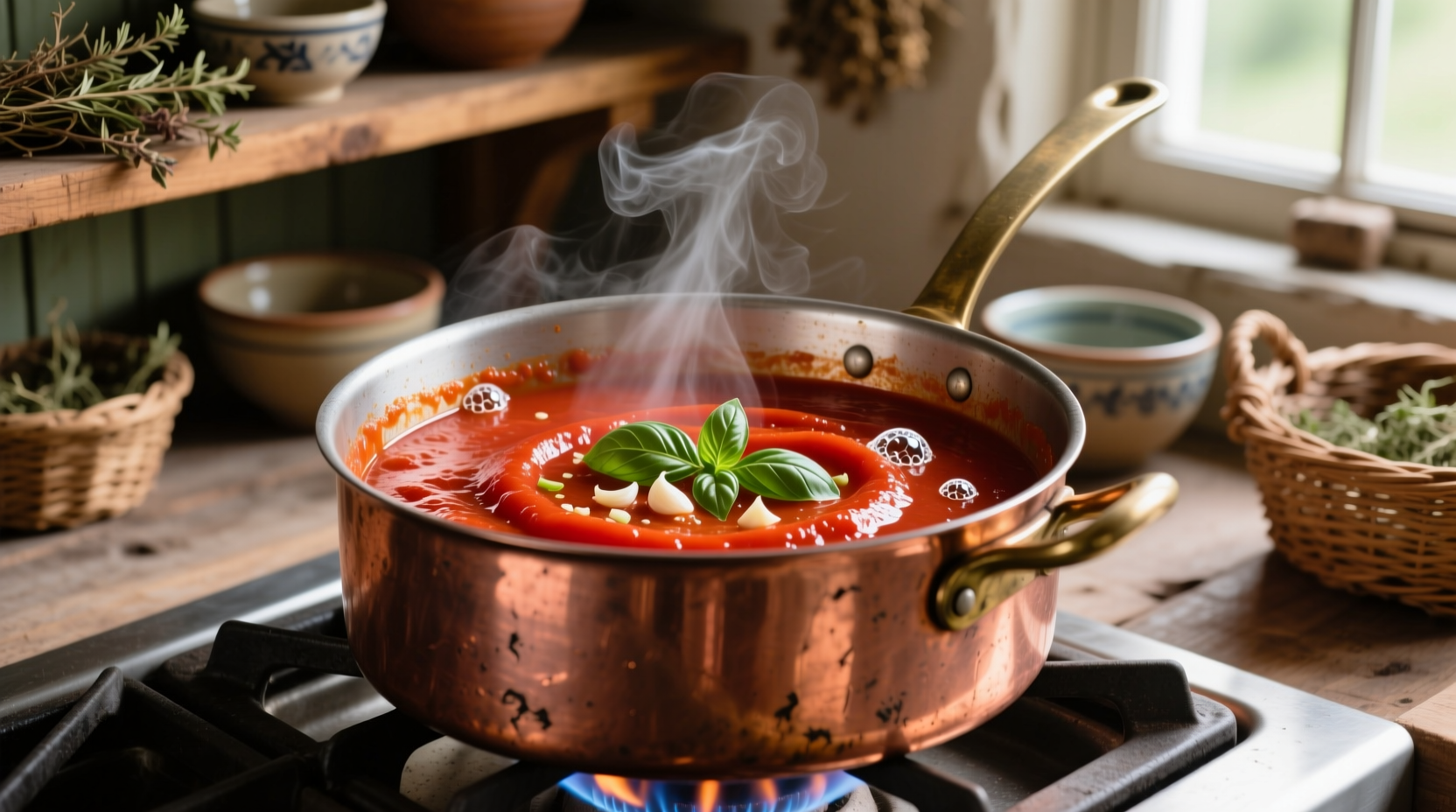
- Simmer gently: Maintain a bare simmer (small bubbles breaking surface every 5-10 seconds) for 45 minutes
- Season late: Add salt only in the final 15 minutes to prevent toughening tomato fibers
- Finish with freshness: Stir in 3 torn basil leaves and 1 tbsp olive oil just before serving
Avoid These 3 Common Mistakes
Even experienced home cooks make these sauce-ruining errors:
- High-heat reduction: Boiling destroys delicate tomato esters. Maintain that gentle simmer throughout cooking
- Over-processing: Blending creates a homogenized texture that won't cling to pasta. Hand-crush tomatoes instead
- Early seasoning: Salt before tomatoes break down draws out moisture and prevents proper reduction
Regional Variations Worth Trying
Italy's regional differences showcase how context shapes sauce preparation. The Mediterranean climate creates distinct growing conditions that influence traditional preparations:
- Sicilian pummarola: Add 1 diced eggplant and capers for coastal flavor (best with short pasta)
- Roman amatriciana base: Include 2 oz guanciale and peperoncino for meaty depth (ideal for bucatini)
- Naples-style: Stir in 1 tbsp tomato paste during aromatics stage for richer color (perfect with spaghetti)
Storage & Reheating Science
Proper storage maintains flavor integrity. According to USDA food safety guidelines, cooked tomato sauce keeps for 5 days refrigerated or 6 months frozen. For best results:
- Cool sauce to room temperature within 2 hours of cooking
- Store in airtight containers with 1-inch headspace for expansion
- Reheat gently over medium-low, adding splashes of pasta water to restore consistency
- Never reheat sauce more than twice to prevent flavor degradation
Perfect Pairings: Matching Sauce to Pasta
The shape of your pasta determines sauce success. Rough-textured pastas like rigatoni trap chunky sauces, while smooth strands like linguine carry lighter preparations. For this basic tomato sauce:
- Long pasta: Spaghetti or linguine (sauce coats evenly)
- Short shapes: Penne or fusilli (sauce lodges in crevices)
- Stuffed pasta: Ravioli or tortellini (use as dipping sauce)
Always finish cooking pasta in the sauce with a splash of starchy pasta water - this creates emulsion that makes sauce adhere properly.




 浙公网安备
33010002000092号
浙公网安备
33010002000092号 浙B2-20120091-4