
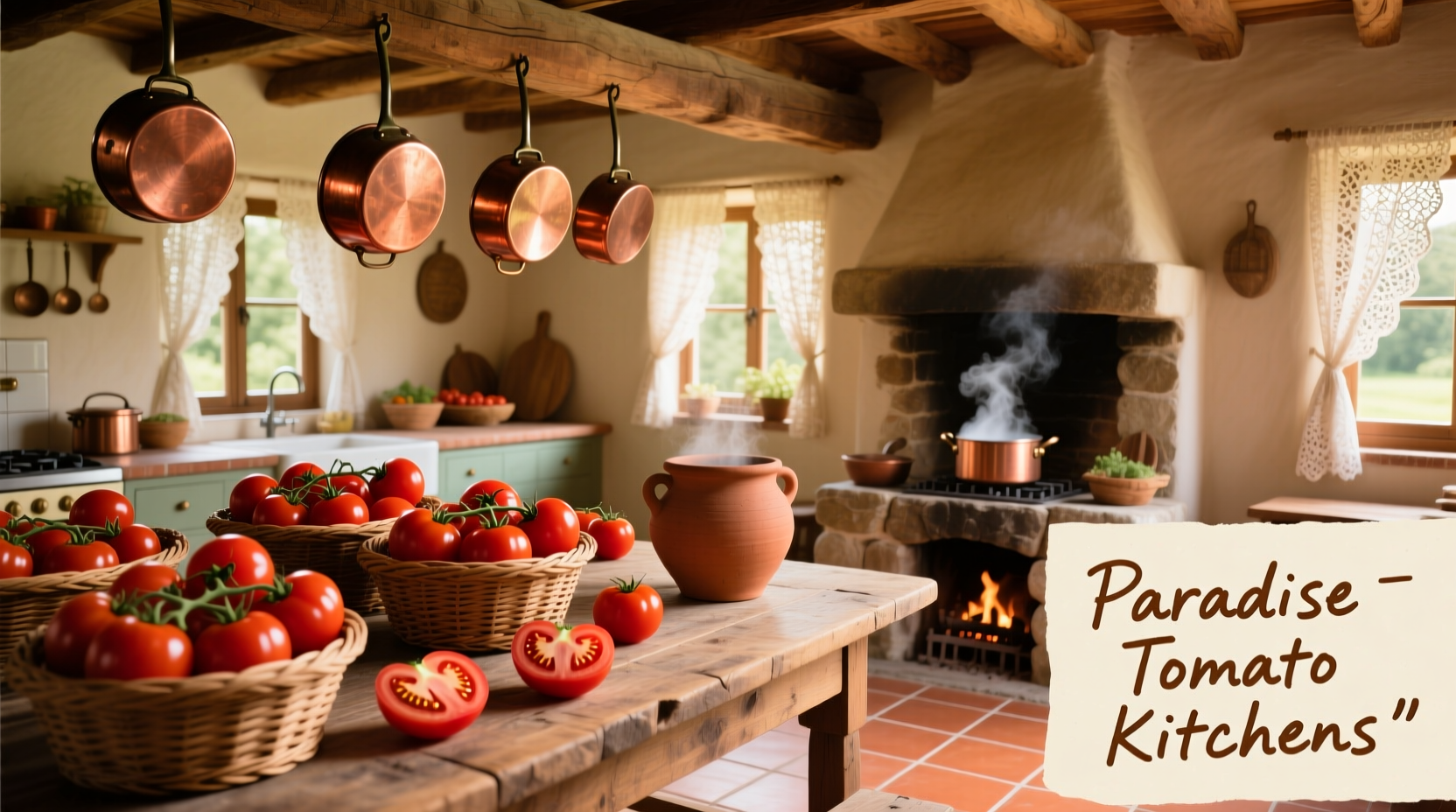
Tomatoes form the vibrant heart of countless global cuisines, yet many home cooks struggle with proper storage, seasonal availability, and efficient preparation. Paradise Tomato Kitchens solve these challenges through intentional design that bridges gardening and cooking spaces. Unlike generic kitchen layouts, this concept creates seamless transitions from harvest to table while maintaining optimal conditions for this delicate fruit.
Understanding the Tomato-Centric Kitchen Concept
Contrary to what the name might suggest, Paradise Tomato Kitchens represent a design philosophy rather than a specific product line. This approach recognizes tomatoes' unique requirements compared to other produce. While standard kitchens treat all fruits and vegetables similarly, tomato-focused designs address specific challenges like ethylene sensitivity, temperature requirements, and processing needs.
| Standard Kitchen | Paradise Tomato Kitchen |
|---|---|
| Single storage area for all produce | Dedicated zones for different tomato varieties and ripeness stages |
| Refrigeration as primary storage | Temperature-controlled non-refrigerated storage |
| General-purpose prep areas | Specialized tomato processing stations |
| No integration with growing spaces | Seamless indoor-outdoor growing connections |
Essential Design Elements for Tomato Optimization
Creating an effective Paradise Tomato Kitchen requires understanding tomatoes' biological needs. The University of California Agriculture and Natural Resources emphasizes that "ripe tomatoes should be stored at room temperature away from direct sunlight" while "refrigeration diminishes flavor and texture." This scientific insight forms the foundation of proper tomato kitchen design.
Temperature-Controlled Ripening Zones
Professional tomato growers utilize specific temperature ranges to control ripening. Your kitchen should incorporate:
- A dedicated countertop area (68-72°F) for actively ripening tomatoes
- A slightly cooler zone (55-60°F) for slowing ripening of excess harvest
- A separate area for immediate use tomatoes requiring no further ripening
Specialized Storage Solutions
According to USDA food safety guidelines, "tomatoes should be stored stem-side down to reduce moisture loss and prevent bruising." Your Paradise Tomato Kitchen should feature:
- Shallow, ventilated baskets instead of deep containers
- Individual compartments to prevent bruising between fruits
- Darkened areas for certain heirloom varieties sensitive to light
Seasonal Adaptation Strategies
The tomato growing season varies significantly by region, creating distinct kitchen requirements throughout the year. Successful Paradise Tomato Kitchens evolve with these seasonal changes:
| Season | Primary Focus | Key Design Feature |
|---|---|---|
| Spring | Seed starting and transplanting | Indoor growing station with grow lights |
| Summer | Harvest and immediate use | Expanded counter space for processing |
| Early Fall | Preservation and storage | Dedicated canning and drying stations |
| Late Fall-Winter | Stored tomato utilization | Optimized root cellar access or storage |
Integrating Growing Spaces with Kitchen Functionality
The true essence of a Paradise Tomato Kitchen lies in minimizing the distance between harvest and preparation. Consider these integration strategies:
- Create a direct pathway from garden to kitchen prep area
- Install a "harvest window" for passing freshly picked tomatoes directly into the kitchen
- Incorporate indoor growing options for year-round production
- Design sink placement to face outdoor growing areas for immediate washing
Avoiding Common Tomato Kitchen Mistakes
Many well-intentioned tomato enthusiasts make critical errors that compromise their harvest. Food safety experts from the National Center for Home Food Preservation warn that "improperly canned tomatoes can create conditions for dangerous bacteria growth." Avoid these pitfalls:
- Never store tomatoes in sealed plastic bags where moisture accumulates
- Avoid refrigerating unripe tomatoes as cold temperatures halt ripening enzymes
- Don't overcrowd storage areas which promotes premature spoilage
- Never process tomatoes on surfaces previously used for raw meat without thorough cleaning
Practical Implementation for Any Kitchen Size
You don't need a large space to create effective tomato-focused zones. Apartment dwellers and small kitchen owners can implement these solutions:
- Use wall-mounted racks for ripening tomatoes vertically
- Convert a single cabinet into a temperature-stable storage zone
- Create a dedicated "tomato prep" caddy with essential tools
- Utilize balcony or windowsill space for compact growing
Enhancing Culinary Outcomes Through Design
Research from the Culinary Institute of America demonstrates that "tomatoes processed within 2 hours of harvest retain up to 30% more flavor compounds." A well-designed Paradise Tomato Kitchen reduces the time between harvest and preparation, maximizing flavor potential. Consider adding:
- A dedicated "fresh sauce" station with immediate processing tools
- Specialized cutting boards for different tomato varieties
- Integrated straining solutions for efficient seed and pulp removal
- Temperature-controlled resting areas before cooking




 浙公网安备
33010002000092号
浙公网安备
33010002000092号 浙B2-20120091-4