
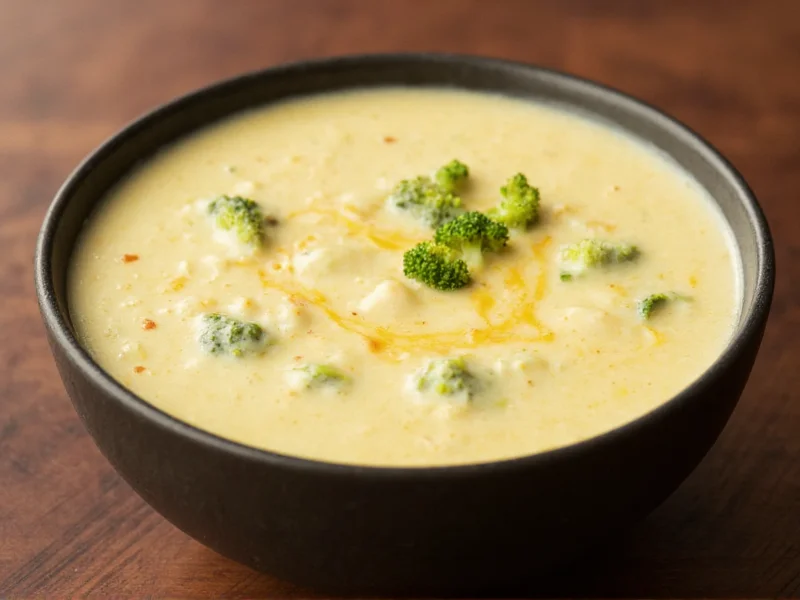
Understanding Panera's Broccoli Cheddar Soup Composition
When customers search for panera broccoli and cheese soup ingredients, they're often seeking transparency about what goes into this popular menu item. Panera's version combines fresh broccoli florets with a rich cheddar cheese base, creating a comforting texture that has made it a seasonal favorite. The soup's distinctive flavor comes from a balanced blend of vegetables and high-quality cheese, without artificial preservatives or flavors.
Unlike many restaurant versions, Panera's broccoli cheddar soup uses a traditional roux as its base rather than heavy cream, giving it a slightly lighter profile while maintaining that signature creamy consistency. The company emphasizes using real ingredients you can see and pronounce, which aligns with their 'No No List' of artificial additives they've committed to removing from their menu.
Nutritional Profile Breakdown
| Serving Size | Calories | Total Fat | Carbohydrates | Protein | Sodium |
|---|---|---|---|---|---|
| Cup (8 fl oz) | 230 | 13g | 20g | 9g | 960mg |
| Bowl (16 fl oz) | 310 | 18g | 27g | 12g | 1310mg |
This nutritional information represents Panera's standard preparation. For those searching panera broccoli cheddar soup calories, these figures provide accurate planning data. The soup contains dairy and gluten (from the roux), making it unsuitable for those with related dietary restrictions. It's not vegetarian as it contains chicken stock, though Panera does offer a vegetarian alternative in some markets.
Seasonal Availability and Menu Status
One of the most common questions is is panera broccoli cheddar soup seasonal. Yes, this item typically appears on Panera's menu from October through March, though availability can vary by location and year. During spring and summer months, Panera often rotates in lighter soup options.
Customers wondering when does panera have broccoli cheddar soup should check their local bakery-cafe's current menu online or via the Panera app, as seasonal timing isn't always consistent across all 2,000+ locations. Some regions may offer it slightly earlier or later based on local preferences.
Creating an Authentic Copycat Recipe at Home
For those seeking how to make panera broccoli cheddar soup recipe, the key is balancing the cheese-to-broccoli ratio and achieving that signature smooth texture without graininess. Here's what professional chefs note about recreating it:
- Use sharp cheddar for authentic flavor (avoid pre-shredded cheese which contains anti-caking agents)
- Steam broccoli rather than boiling to preserve texture and color
- Create a proper roux with equal parts butter and flour before adding liquids
- Add cheese gradually off-heat to prevent separation
- Include a small amount of Dijon mustard for depth (a common restaurant technique)
Many home cooks searching for panera broccoli cheddar soup copycat recipe find success with versions that incorporate a blend of white and orange cheddar cheeses, along with the classic mirepoix of onions, carrots, and celery that gives the soup its aromatic base.
Common Dietary Modifications and Alternatives
For customers with specific dietary needs searching is panera broccoli cheddar soup gluten free, the answer is no—the traditional recipe contains wheat flour in the roux. However, some locations may offer a gluten-friendly version upon request.
Those exploring panera broccoli cheddar soup dairy free option will be disappointed to learn there isn't an official dairy-free version, as cheese is central to the recipe. Some customers create their own alternatives using nutritional yeast and cashew cream when making copycat versions at home.
Vegans should note this soup contains both dairy and chicken stock. For panera broccoli soup vegetarian status, check with your specific location as some markets offer a vegetarian version without chicken stock.
Proper Storage and Reheating Techniques
If you've purchased extra soup or made a batch at home searching for how to store panera broccoli cheddar soup, follow these food safety guidelines:
- Refrigerate within two hours of cooking or purchase
- Store in airtight containers for up to 3-4 days
- Freeze in portion-sized containers for up to 3 months
- Reheat gently over medium-low heat, stirring frequently
- Never boil reheated cheese soups (can cause separation)
For those wondering can you freeze panera broccoli cheddar soup, the answer is yes, though the texture may change slightly upon thawing. Adding a small amount of cream or milk when reheating can restore creaminess.
Frequently Asked Questions
Does Panera broccoli cheddar soup contain bacon?
No, Panera's standard broccoli cheddar soup recipe does not contain bacon or any meat products. However, it does contain chicken stock, so it's not vegetarian in most markets. Some locations may offer a vegetarian version upon request.
Is Panera's broccoli cheddar soup gluten free?
No, Panera's traditional broccoli cheddar soup is not gluten free as it contains a roux made with wheat flour. Some locations may offer a gluten-friendly version upon request, but you should always verify with restaurant staff about current offerings and potential cross-contamination.
How many calories are in Panera's broccoli cheddar soup?
A cup (8 fl oz) of Panera's broccoli cheddar soup contains approximately 230 calories, while a bowl (16 fl oz) has about 310 calories. The soup contains 13g fat per cup and 960mg sodium, with 9g of protein providing some satiety.
When is broccoli cheddar soup available at Panera?
Panera typically offers broccoli cheddar soup seasonally from October through March, though availability can vary by location. It's not on the permanent menu year-round. The best way to check current availability is through the Panera website or mobile app, which shows real-time menu offerings for your local bakery-cafe.
Can I get Panera broccoli cheddar soup without broccoli?
No, you cannot order Panera's broccoli cheddar soup without broccoli, as it's a defining ingredient. The soup's name and recipe center around the broccoli and cheddar combination. If you dislike broccoli, Panera offers other soup options like tomato basil or low-fat black bean soup that might better suit your preferences.




 浙公网安备
33010002000092号
浙公网安备
33010002000092号 浙B2-20120091-4