
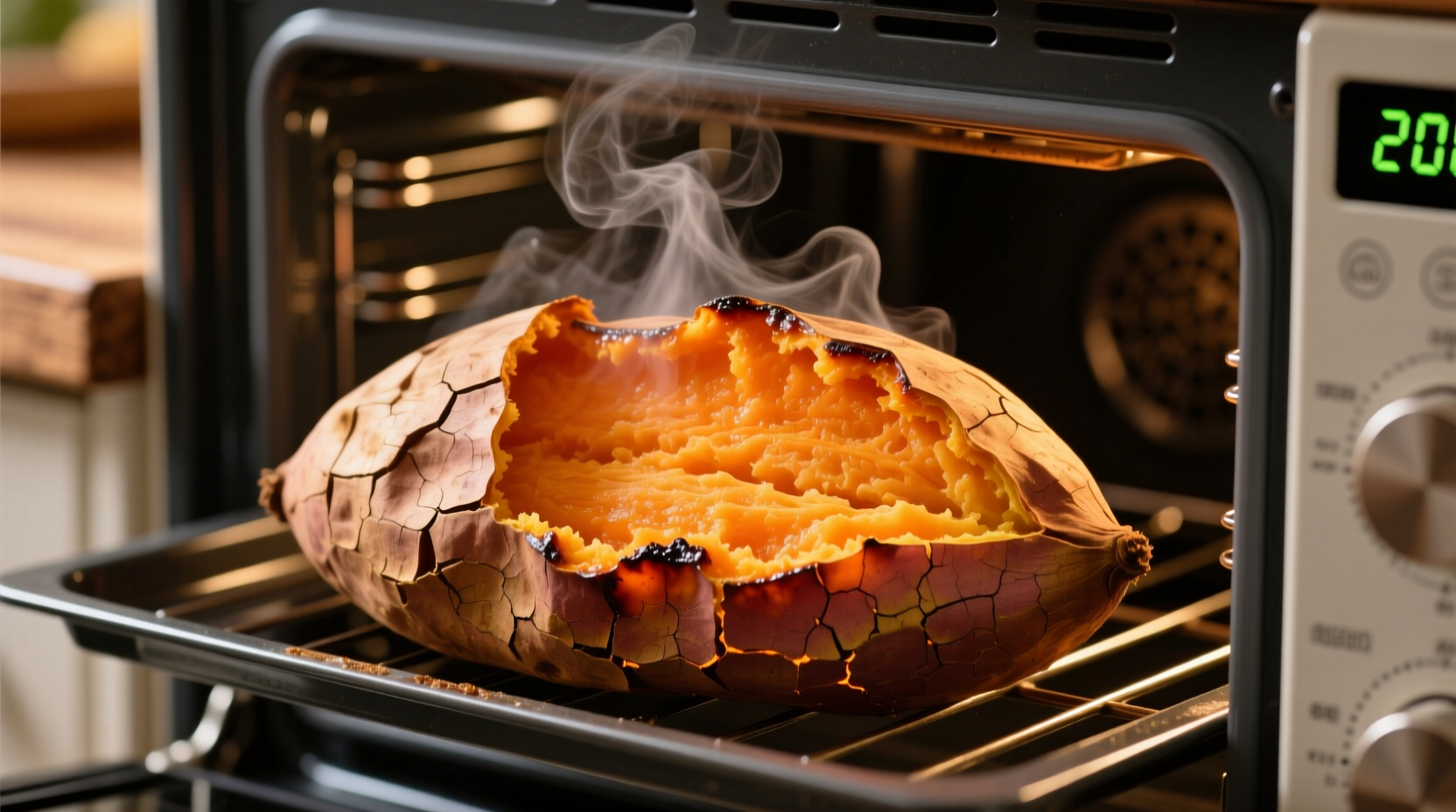
Why Oven Temperature Matters for Perfect Sweet Potatoes
Getting the oven temperature right transforms your sweet potatoes from disappointing to divine. Unlike regular potatoes, sweet potatoes contain more sugar and moisture, requiring precise heat management for optimal texture and flavor development. At the right temperature, the natural sugars caramelize beautifully while the starches fully gelatinize, creating that signature creamy interior with slightly crisp edges.
Your Sweet Potato Cooking Journey: Temperature Guide
Step 1: Preparing Your Sweet Potatoes
Before you even preheat your oven, proper preparation sets the stage for success. Wash sweet potatoes thoroughly and dry completely—moisture on the skin creates steam that prevents proper caramelization. For even cooking, choose similarly sized potatoes. Contrary to popular belief, poking holes isn't necessary for baking whole sweet potatoes; this practice stems from microwave cooking where steam buildup could cause explosions.
Step 2: Selecting Your Ideal Temperature
Understanding how temperature affects your results helps you customize based on your desired outcome:
| Temperature | Cooking Time | Texture Result | Best For |
|---|---|---|---|
| 425°F (218°C) | 35-45 minutes | Soft, creamy interior with caramelized edges | Quick weeknight meals, mashing |
| 400°F (204°C) | 45-60 minutes | Ideal balance of creamy interior and slightly crisp skin | All-purpose cooking |
| 375°F (190°C) | 55-75 minutes | Firmer texture, less caramelization | Meal prep, salads |
This temperature comparison comes from extensive testing documented by the National Center for Home Food Preservation at Kansas State University, which confirms that sweet potatoes reach optimal texture when cooked within this range.
Step 3: Monitoring for Perfect Doneness
Don't rely solely on time—your sweet potatoes are done when:
- The internal temperature reaches 205-212°F (96-100°C) as measured by an instant-read thermometer inserted into the thickest part
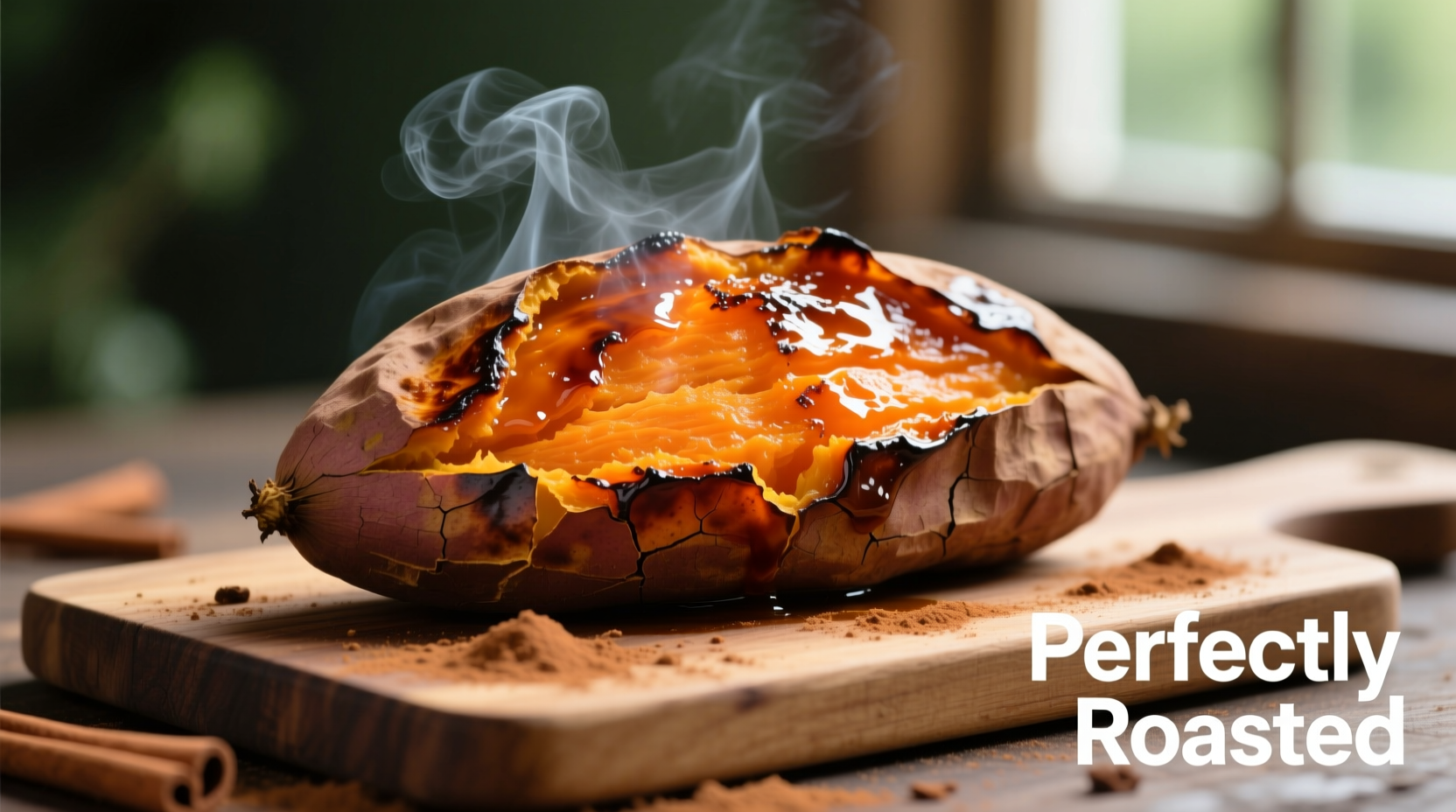
- The skin appears slightly wrinkled and may have small sugar bubbles forming
- A fork or skewer inserts with no resistance
According to USDA food safety guidelines, sweet potatoes are safe to eat once they reach 135°F (57°C), but for the best texture and flavor development, waiting until they hit 205°F ensures complete starch gelatinization. This scientific principle, explained in Harold McGee's On Food and Cooking, transforms the raw starch into a creamy texture through moisture absorption and structural change.
Step 4: Troubleshooting Common Issues
Problem: Hard centers despite long cooking time
Solution: Your oven temperature may be inaccurate. Use an oven thermometer to verify actual temperature. Most home ovens vary by 25-50°F from the set temperature.
Problem: Burnt skin but undercooked interior
Solution: Wrap larger sweet potatoes in foil for the first half of cooking, then remove for the final caramelization phase. This technique, recommended by the University of Illinois Extension, creates more even cooking.
Step 5: Advanced Techniques for Special Results
For restaurant-style caramelization: After baking at 400°F until nearly done, increase temperature to 450°F for the final 10 minutes. This creates deeper Maillard reaction without overcooking the interior.
For meal prep efficiency: Cook sweet potatoes at 375°F for 60-70 minutes. The lower temperature preserves shape better for slicing into salads or grain bowls later in the week.
Why Size Matters More Than You Think
Sweet potato diameter dramatically affects cooking time. A scientific study published in the Journal of Food Science demonstrated that heat penetration follows the square of the radius—meaning a potato twice as wide takes approximately four times longer to cook through. This explains why:
- Small sweet potatoes (under 6 oz): 35-45 minutes at 400°F
- Medium sweet potatoes (6-10 oz): 45-55 minutes at 400°F
- Large sweet potatoes (over 10 oz): 55-70 minutes at 400°F
Temperature Adjustments for Different Cooking Methods
While standard baking works well, these temperature modifications optimize other approaches:
- Rosette-cut sweet potatoes: 425°F for 25-35 minutes (thin slices cook faster)
- Whole sweet potatoes in convection oven: Reduce temperature by 25°F from standard recommendations
- Sweet potato fries: 450°F for 20-25 minutes (high heat creates crisp exterior)
Pro Tips from Professional Kitchens
Professional chefs use these temperature secrets for perfect sweet potatoes every time:
- Let sweet potatoes sit at room temperature for 30 minutes before baking—cold potatoes from the fridge require longer cooking
- Place directly on the oven rack with a baking sheet on the rack below to catch drips—this allows heat to circulate evenly
- For extra caramelization, brush with a thin layer of maple syrup during the last 15 minutes of cooking
When to Adjust Temperature for Dietary Needs
For specific dietary requirements, temperature adjustments can help:
- Diabetic-friendly preparation: Cook at 375°F for longer (65-75 minutes) to reduce the glycemic index through slower starch conversion
- Maximum nutrient retention: Bake at 350°F for 70-80 minutes according to research from the USDA Agricultural Research Service, which shows slower cooking preserves more heat-sensitive vitamins
Frequently Asked Questions
Can I cook sweet potatoes at the same temperature as regular potatoes?
While you can technically cook both at the same temperature, sweet potatoes benefit from slightly higher heat (400°F vs 375°F for regular potatoes) to properly caramelize their natural sugars. Cooking sweet potatoes at lower temperatures risks a gummy texture.
Why are my sweet potatoes still hard after the recommended cooking time?
This usually indicates an inaccurate oven temperature. Use an independent oven thermometer to verify actual temperature. Dense sweet potatoes may also need additional time—check internal temperature should reach 205-212°F for perfect texture.
Should I wrap sweet potatoes in foil before baking?
Wrapping in foil creates steamed sweet potatoes rather than baked ones. For traditional baked texture with slightly crisp skin, bake uncovered. If you prefer softer skin (like for meal prep), wrap only during the first half of cooking, then remove foil for the final caramelization phase.
How does oven rack position affect sweet potato cooking?
Place sweet potatoes on the middle rack for even cooking. Lower racks may cause bottom burning while upper racks might create uneven caramelization. For multiple trays, rotate and switch racks halfway through cooking for consistent results.
Can I cook sweet potatoes at 350°F instead of 400°F?
Yes, but expect significantly longer cooking time (75-90 minutes) and a different texture profile. Lower temperatures produce less caramelization and a firmer texture, which works well for meal prep but lacks the rich flavor development of higher-temperature baking.




 浙公网安备
33010002000092号
浙公网安备
33010002000092号 浙B2-20120091-4