
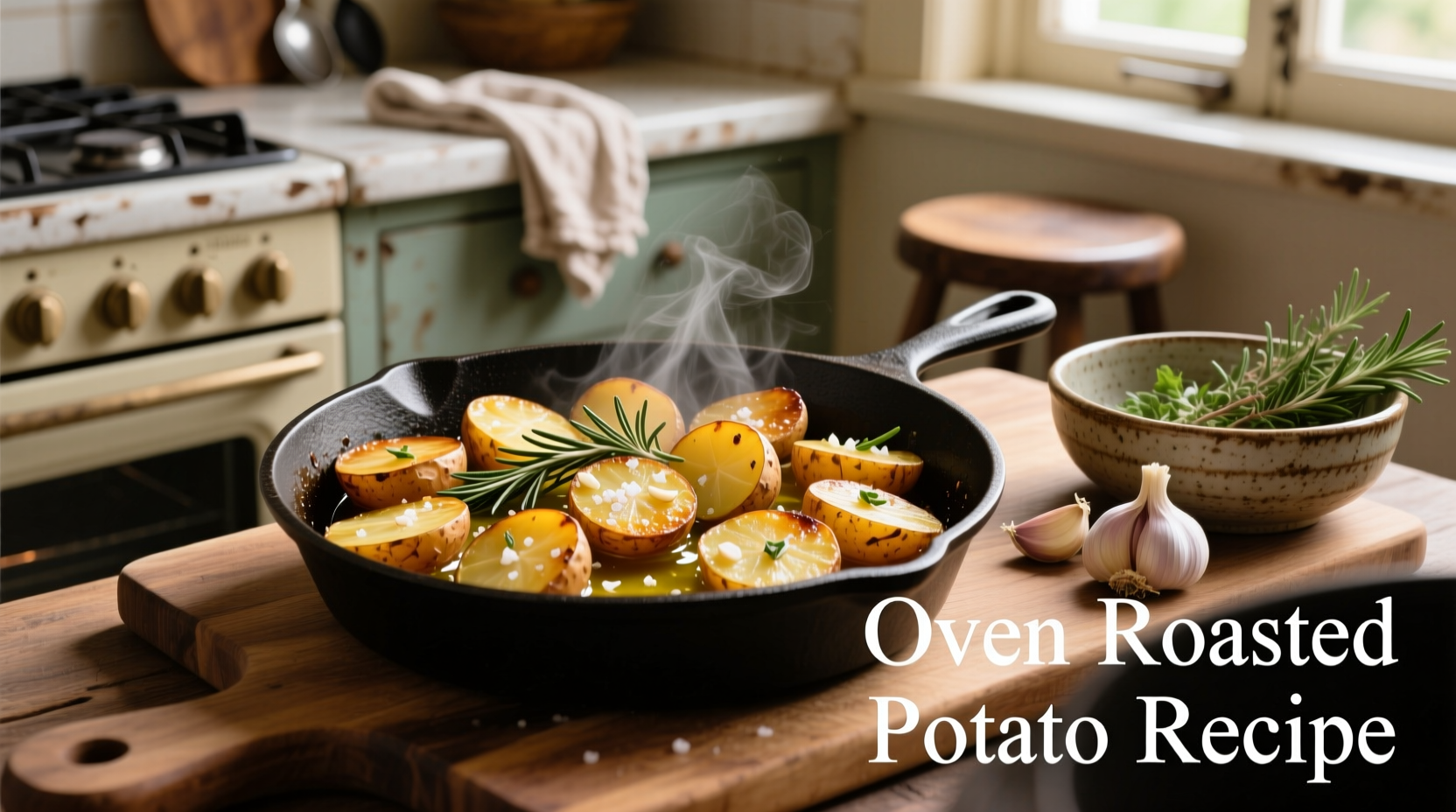
Nothing beats the satisfying crunch of perfectly roasted potatoes paired with a cloud-like interior. While seemingly simple, oven potatoes often turn out soggy or unevenly cooked due to overlooked scientific principles. This guide reveals the precise techniques professional chefs use to guarantee success, backed by food science research from the USDA Agricultural Research Service on starch gelatinization and Maillard reaction optimization.
The Science Behind Perfect Crispiness
Understanding potato chemistry transforms your results. When potatoes reach 190°F, starch granules absorb water and swell, creating that signature fluffy texture. Simultaneously, the Maillard reaction (occurring between 284-329°F) develops complex flavors and golden browning. The National Center for Biotechnology Information confirms that parboiling initiates starch gelatinization before roasting, preventing undercooked centers while allowing exterior crisping.
| Potato Variety | Starch Content | Best For | Texture Result |
|---|---|---|---|
| Russet | High (22-25%) | Crispy roasting | Fluffiest interior |
| Yukon Gold | Medium (18-20%) | Balanced texture | Creamy yet crisp |
| Red Bliss | Low (15-17%) | Boiling/salads | Firm, less fluffy |
Essential Equipment Checklist
Your pan choice significantly impacts results. Heavy-gauge metal pans (like cast iron or carbon steel) distribute heat evenly and maintain temperature when adding potatoes. Avoid non-stick pans—their coatings prevent proper browning. The National Center for Home Food Preservation recommends preheating pans for 5 minutes before adding potatoes to ensure immediate sizzle upon contact.
Step-by-Step Perfect Potato Method
- Prep potatoes: Cut 2 lbs Russets into 1½-inch chunks (uniform size ensures even cooking)
- Parboil scientifically: Simmer in salted water at 190°F for exactly 5 minutes (use thermometer)
- Roughen edges: Shake parboiled potatoes in colander to create starch-rich surfaces
- Oil selection: Toss with 2 tbsp avocado oil (smoke point 520°F) – higher than olive oil's 375°F
- Preheat strategically: Oven at 425°F with rack in upper third for optimal browning
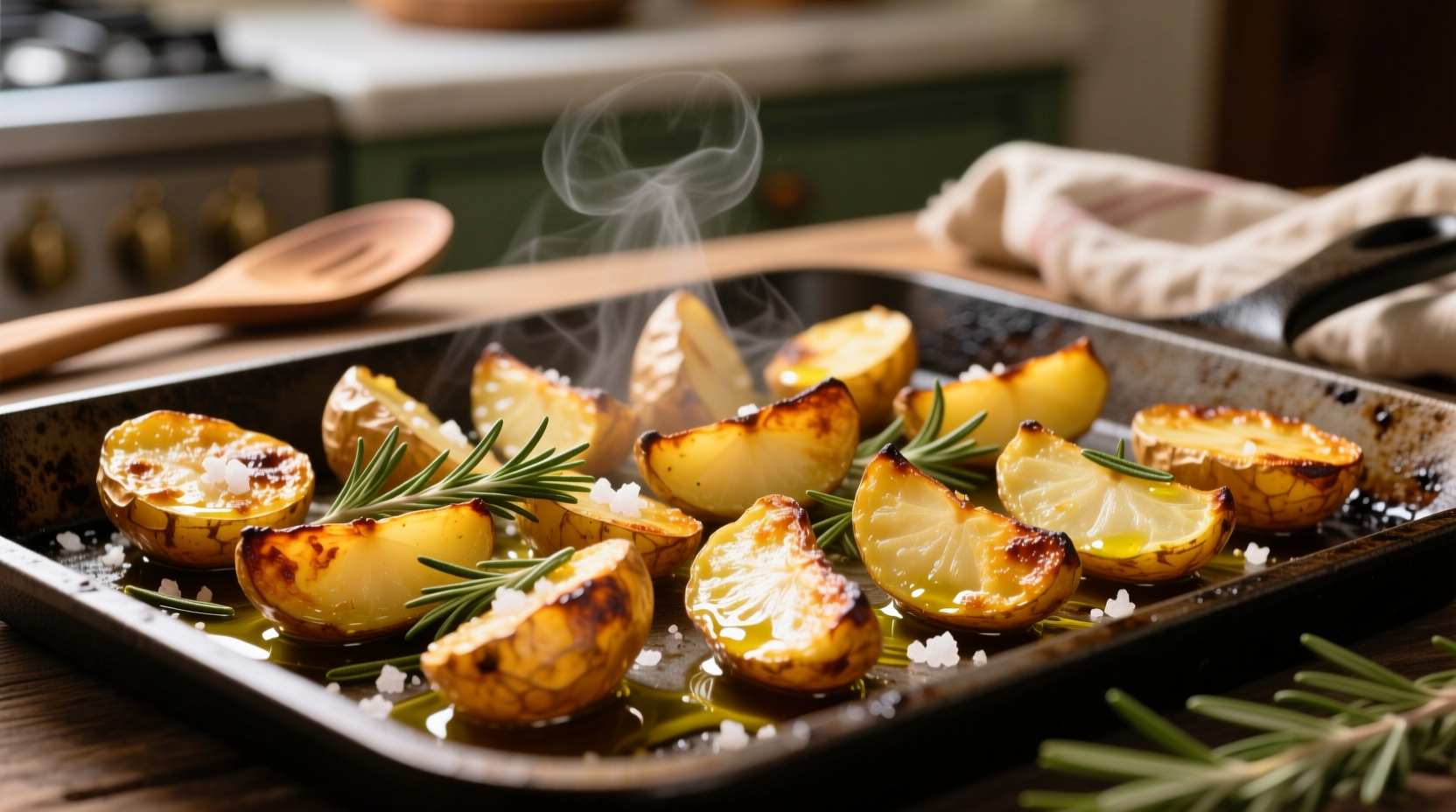
- Roast with precision: Spread on preheated pan, roast 20 minutes, flip, then roast 15-20 more minutes
Troubleshooting Common Failures
Soggy potatoes? Likely caused by overcrowded pans or insufficient preheating. Maintain 1-inch spacing between pieces. Burnt edges? Your oven temperature may be inaccurate—calibrate with an independent thermometer. The FDA Food Code recommends checking oven thermostats annually for accuracy within ±25°F.
Flavor Variations That Actually Work
Herb-infused: Add 2 sprigs rosemary and 3 garlic cloves to parboiling water. Spicy option: Toss with 1 tsp smoked paprika and ¼ tsp cayenne before roasting. For vegan crispiness, replace duck fat with refined coconut oil (smoke point 450°F). These adaptations maintain the critical 425°F roasting temperature while adding flavor complexity.
Serving and Storage Guidelines
Serve immediately for peak crispness—potatoes lose 30% of their crunch within 10 minutes. For leftovers, store cooled potatoes in airtight containers for up to 3 days. Reheat in 400°F oven for 8-10 minutes (not microwave) to restore crispness. The USDA confirms proper reheating to 165°F internal temperature ensures food safety.




 浙公网安备
33010002000092号
浙公网安备
33010002000092号 浙B2-20120091-4