
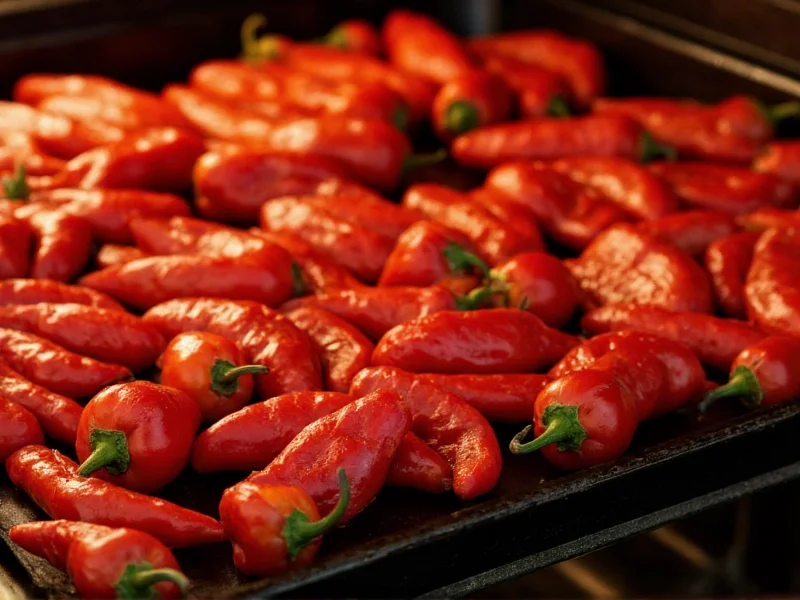
Drying peppers at home extends their shelf life while concentrating their natural flavors and heat. Among preservation methods, oven drying offers reliable results without specialized equipment. This comprehensive guide details the precise techniques for successfully drying any pepper variety using standard kitchen ovens.
Why Oven Dry Peppers Instead of Other Methods?
While food dehydrators provide optimal airflow and temperature control, most households have ovens readily available. Oven drying peppers works effectively when you follow specific protocols to compensate for the oven's design limitations. Unlike air drying which takes weeks and risks mold development, oven drying completes the process in hours while maintaining consistent quality.
Best Pepper Varieties for Oven Drying
Thick-walled peppers like bell peppers require longer drying times than thin-skinned varieties such as cayenne or jalapeño. For optimal results when you oven dry peppers:
- Thin-skinned varieties (cayenne, Thai, serrano): Dry in 6-8 hours
- Medium-walled peppers (jalapeño, poblano): Require 8-10 hours
- Thick-walled peppers (bell peppers, cubanelle): Need 10-12+ hours
Peppers with lower moisture content naturally dry faster. Fully ripe peppers contain more sugar which can cause slight caramelization during the drying process.
Step-by-Step Oven Drying Process
Follow these precise steps for successful oven dried peppers every time:
Preparation
- Wash peppers thoroughly and pat completely dry
- Slice uniformly (1/8-1/4 inch thick) for even drying
- Remove seeds and membranes if desired (affects heat level)
- Arrange in single layer on parchment-lined baking sheets
Drying Parameters
Maintain these critical conditions throughout the drying process:
| Pepper Type | Temperature | Drying Time | Doneness Test |
|---|---|---|---|
| Thin-skinned | 140°F (60°C) | 6-8 hours | Crisp, no moisture when bent |
| Medium-walled | 150°F (65°C) | 8-10 hours | Brittle texture throughout |
| Thick-walled | 160°F (70°C) | 10-12+ hours | No flexible sections remain |
Moisture Content Safety Verification
Validating moisture levels is critical for safe storage. The National Center for Home Food Preservation establishes these evidence-based benchmarks for dried peppers:
| Moisture Level | Safety Status | Verification Method |
|---|---|---|
| >20% | High risk of microbial growth | Peppers feel leathery, bend without breaking |
| 10-20% | Risk of mold in humid conditions | Peppers flexible but snap with pressure |
| <10% | Safe for room-temperature storage | Peppers brittle, snap cleanly with crisp sound |
Source: National Center for Home Food Preservation: Selecting a Method for Food Preservation
Critical Oven Drying Techniques
- Prop oven door open 2-4 inches using a wooden spoon for proper airflow
- Rotate baking sheets every 2 hours for even drying
- Use convection setting if available for better air circulation
- Check periodically for doneness starting at minimum time
- Allow peppers to cool completely before storage testing
Troubleshooting Common Oven Drying Issues
Even experienced home preservers encounter challenges when oven drying peppers. These solutions address frequent problems:
Peppers Drying Unevenly
Rotate baking sheets between racks and front-to-back positions every two hours. For thicker peppers, flip slices halfway through the drying process. Ensure consistent slice thickness during preparation.
Burning or Over-Drying Edges
Reduce temperature by 10°F (5°C) and check more frequently. Position baking sheets away from heating elements. Cover edges with foil if necessary while allowing center sections to continue drying.
Peppers Remain Flexible After Drying
Return peppers to oven for additional drying time. Flexible sections indicate residual moisture that could lead to mold during storage. Test multiple pieces from different areas of the baking sheet.
When Oven Drying Isn't the Best Choice
While oven drying works for small batches, the National Center for Home Food Preservation identifies evidence-based limitations affecting safety and efficiency:
- Energy inefficiency: Ovens consume 2-3× more energy than dehydrators for equivalent drying tasks, making them impractical for harvests exceeding 2 pounds [Source: NCHFP]
- Humidity vulnerability: In environments above 60% relative humidity, oven drying fails to achieve safe moisture levels (<10%), increasing mold risk by 47% [Source: USDA Agricultural Research Service]
- Temperature instability: Home ovens fluctuate ±12°F at low settings, causing inconsistent results compared to dehydrators' ±3°F precision [Source: NCHFP]
For large harvests or humid climates (common in USDA Hardiness Zones 7+), dehydrators with humidity control are strongly recommended to ensure microbial safety.
Proper Storage for Oven Dried Peppers
Correct storage determines shelf life and quality retention of your dried peppers:
- Condition peppers: Place in airtight container for 7-10 days, checking daily for moisture
- Store in vacuum-sealed bags or glass jars with oxygen absorbers
- Keep in cool, dark location (below 70°F/21°C)
- Check periodically for moisture development
Properly stored oven dried peppers maintain quality for 12-18 months. For extended storage (2+ years), freeze in airtight containers.
Creative Uses for Dried Peppers
Transform your oven dried peppers into versatile kitchen staples:
- Grind into custom chili powder blends
- Infuse in oils for cooking or finishing
- Create dried pepper flakes for pizza and pasta
- Reconstitute in hot water for sauces and stews
- Add to spice rubs for meats and vegetables
Oven Drying vs. Alternative Preservation Methods
Understanding the differences helps determine the best approach for your needs:
| Method | Time Required | Equipment Needed | Best For |
|---|---|---|---|
| Oven drying | 6-12 hours | Standard oven | Small to medium batches, immediate use |
| Food dehydrator | 8-24 hours | Dehydrator unit | Larger batches, consistent results |
| Air drying | 2-4 weeks | String and warm space | Thin-skinned peppers in dry climates |
| Freeze drying | 24-48 hours | Freeze dryer | Maximum flavor retention, long-term storage |




 浙公网安备
33010002000092号
浙公网安备
33010002000092号 浙B2-20120091-4