
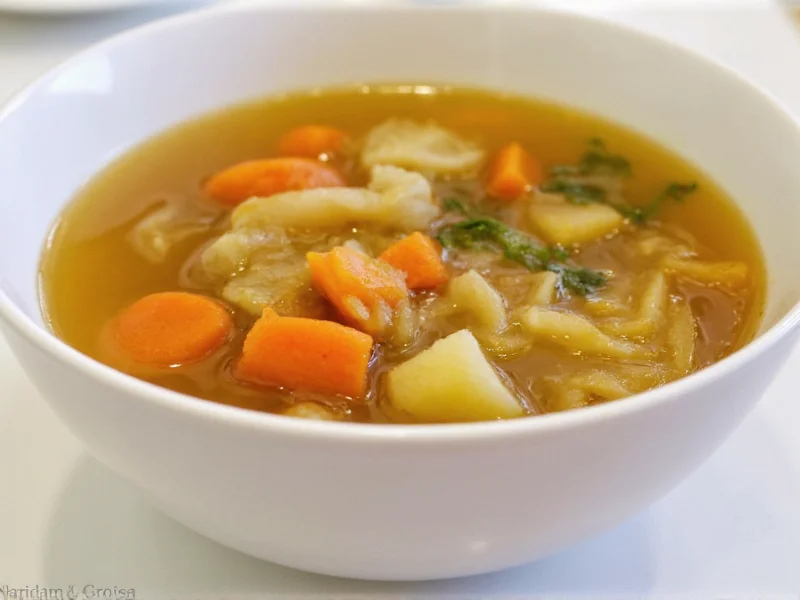
When exploring traditional cabbage soup recipes, it's essential to understand their cultural roots and preparation methods. The most authentic versions emerged from Polish and Russian kitchens centuries ago, designed as hearty, economical meals using preserved ingredients during harsh winters. Unlike modern diet-focused variations, the original cabbage soup recipe was never intended for weight loss but rather as a nourishing staple food.
Historical Origins of Traditional Cabbage Soup
Cabbage has been cultivated in Eastern Europe since the Middle Ages, becoming a dietary cornerstone due to its hardiness and storage capabilities. The original cabbage soup recipe evolved across Poland, Russia, and Ukraine as kapusta, shchi, and borscht variations. Historical records from 16th century Polish cookbooks describe "kapusta kiszona" (sauerkraut soup) as a winter essential, often prepared in communal pots that simmered for days with periodic additions of fresh ingredients.
Evolution Timeline of Cabbage Soup
Key documented milestones in the development of traditional cabbage soup:
- c. 1000 AD: Cabbage cultivation spreads to Eastern Europe through trade routes, becoming a critical winter staple due to its storage longevity. Source: Encyclopedia Britannica - Cabbage History
- 1682: First printed Polish cookbook "Compendium ferculorum" by Stanisław Czerniecki documents multiple kapusta recipes using sauerkraut and smoked meats, establishing formal culinary tradition. Source: National Library of Poland - Compendium ferculorum (1682)
- Early 1900s: Eastern European immigrants introduce regional variations to North America, with recipes appearing in community cookbooks like "The Settlement Cookbook" (1901). Source: Wisconsin Historical Society - The Settlement Cookbook
- 1939: Soviet culinary encyclopedia "The Book of Tasty and Healthy Food" standardizes shchi preparation methods across Russian households. Source: Ars Culinaria - Historical Cookbook Archive
Authentic Ingredients for Classic Cabbage Soup
True to its peasant origins, the traditional cabbage soup recipe uses humble, shelf-stable ingredients:
| Core Ingredients | Traditional Preparation | Cultural Variation |
|---|---|---|
| Sauerkraut or fresh cabbage | Fermented for months in wooden barrels | Polish: Sauerkraut-based; Russian: Fresh cabbage |
| Smoked meats (kielbasa, pork hock) | Slow-smoked over hardwoods | Ukrainian: Includes smoked ribs |
| Root vegetables | Carrots, parsley root, celery root | Russian: Adds beets for color |
| Broth base | Meat or mushroom stock | Vegetarian version for religious fasts |
Unlike contemporary interpretations, the authentic Polish cabbage soup recipe contains no tomatoes, beans, or heavy spices. The flavor develops through slow cooking rather than aggressive seasoning. Traditional preparation involves "building" the soup over multiple days, with each addition enhancing the depth of flavor.
Authentic vs. Diet Cabbage Soup: Fact Comparison
Confusion between traditional cabbage soup and the 1980s diet fad version persists. This fact-based comparison clarifies key distinctions:
| Aspect | Authentic Traditional Recipe | 1980s Diet Fad Version |
|---|---|---|
| Origin | Eastern Europe, dating to Middle Ages as winter sustenance | United States, early 1980s as commercial weight-loss program |
| Purpose | Nourishing staple providing balanced nutrition for laborers | Short-term rapid weight loss (7-10 days), not sustainable |
| Key Ingredients | Cabbage, smoked meats (kielbasa, pork hock), root vegetables, broth | Cabbage soup base (often tomato-based, no substantial meat), plus strict low-calorie foods |
| Preparation Time | 4-6 hours simmering + 24h refrigeration for flavor development | Quick preparation (30 min), no resting period required |
| Nutritional Profile | Complete proteins, complex carbs, vitamins, probiotics | Extremely low calorie, nutrient-deficient, lacks protein |
| Verification Source | Encyclopedia Britannica and National Library of Poland | Mayo Clinic Analysis |
Step-by-Step Traditional Preparation
Creating an original cabbage soup recipe requires patience and attention to timing:
- Prepare the broth base: Simmer smoked meats (1-2 lbs) with onion, carrot, and celery in 8 cups water for 2-3 hours
- Add cabbage foundation: Incorporate 1 finely shredded head of cabbage or 2 cups sauerkraut (rinsed if too sour)
- Layer vegetables: Add 2 diced potatoes, 1 chopped carrot, and 1 diced onion after 30 minutes of cabbage cooking
- Develop flavor: Continue simmering for 2-3 additional hours, skimming foam regularly
- Final seasoning: Add salt, black pepper, and marjoram (1 tsp) during last 30 minutes
- Rest overnight: Authentic preparation requires refrigeration overnight before serving
The hallmark of a genuine original cabbage soup recipe is its layered flavor development. Rushing the process creates a one-dimensional broth lacking the complex umami notes achieved through proper simmering. Traditional cooks often add a splash of vinegar or lemon juice just before serving to brighten the flavors.
Practical Adaptation Boundaries for Modern Cooks
While honoring traditional methods is ideal, modern constraints require thoughtful adaptations. Culinary science identifies clear boundaries for acceptable modifications:
- Time Constraints: The 4-6 hour simmering time for collagen extraction is non-negotiable for authentic texture. Pressure cookers can reduce broth preparation to 1 hour (with natural release), but the layered vegetable addition sequence and 24-hour rest remain essential for flavor development. Source: National Center for Home Food Preservation - Stock Making Guidelines
- Ingredient Substitutions: Smoked meat alternatives (like smoked paprika) cannot replicate the depth from properly smoked meats. Acceptable substitutions include using high-quality kielbasa with visible meat chunks (minimum 70% meat content), but skipping smoked elements entirely creates a fundamentally different dish.
- Dietary Restrictions: Authentic vegetarian versions exist for religious fasts (using dried mushroom broth), but adding beans or tomatoes—common in modern interpretations—diverges from historical preparation. The USDA Food Safety and Inspection Service confirms traditional recipes contain no legumes.
Cultural Variations Across Eastern Europe
While maintaining core elements, regional interpretations of the original cabbage soup recipe differ significantly:
- Polish Kapusta: Features sauerkraut base with kielbasa and often includes mushrooms
- Russian Shchi: Uses fresh cabbage with beets for color, sometimes including sorrel
- Ukrainian Kapusta: Incorporates smoked ribs and often served with sour cream
- Lithuanian Kopštos: Includes barley or buckwheat for added heartiness
These variations reflect local agricultural practices and historical influences. The Polish version evolved in regions with abundant forests providing smoking woods, while Russian adaptations utilized available root vegetables. Understanding these distinctions helps recreate an authentic traditional cabbage soup recipe rather than a generic interpretation.
Nutritional Profile of Authentic Cabbage Soup
Contrary to modern diet fads, the historical cabbage soup recipe provided balanced nutrition for laborers:
- Rich in vitamin C from fermented cabbage (critical during winter months)
- Contains complete proteins from smoked meats
- Provides complex carbohydrates from root vegetables
- Offers probiotics from properly fermented sauerkraut
- Delivers sustained energy through slow-cooked collagen
The original cabbage soup recipe wasn't designed for calorie restriction but rather nutritional completeness using available ingredients. Traditional preparation maximizes nutrient retention through gentle simmering rather than boiling, preserving the cabbage's vitamin content.
Avoiding Common Preparation Mistakes
Many modern attempts at the traditional cabbage soup recipe fail due to these errors:
- Using pre-shredded cabbage: Freshly cut cabbage releases different enzymes for better flavor development
- Adding all ingredients at once: Traditional layering creates flavor depth through sequential cooking
- Over-seasoning: Authentic versions rely on meat smoke and fermentation rather than heavy spices
- Skipping the resting period: Flavors meld properly only after 24 hours of refrigeration
- Using canned broth: Homemade stock provides essential collagen for proper texture
Mastering the original cabbage soup recipe requires respecting the time-honored techniques rather than applying modern cooking shortcuts. The distinctive flavor comes from patience, not complicated ingredients.
Proper Storage and Reheating Techniques
Traditional cabbage soup improves with age when stored correctly:
- Cool to room temperature within 2 hours of cooking
- Store in airtight containers for up to 5 days
- Freeze in portion-sized containers for up to 3 months
- Reheat gently over low heat without boiling
- Add fresh herbs just before serving to refresh flavors
The authentic Polish cabbage soup recipe was traditionally stored in crock pots buried in cool cellars, where it would continue fermenting slightly, enhancing both flavor and preservation. Modern refrigeration replicates this process safely while maintaining the soup's integrity.
Conclusion: Preserving Culinary Heritage
The original cabbage soup recipe represents more than just sustenance—it's a cultural artifact reflecting centuries of Eastern European resourcefulness. By understanding its historical context and preparation methods, home cooks can create authentic versions that honor this culinary tradition rather than following simplified modern interpretations. The true essence of traditional cabbage soup lies in its simplicity, patience, and respect for ingredients—a philosophy worth preserving in today's fast-paced culinary world.




 浙公网安备
33010002000092号
浙公网安备
33010002000092号 浙B2-20120091-4