
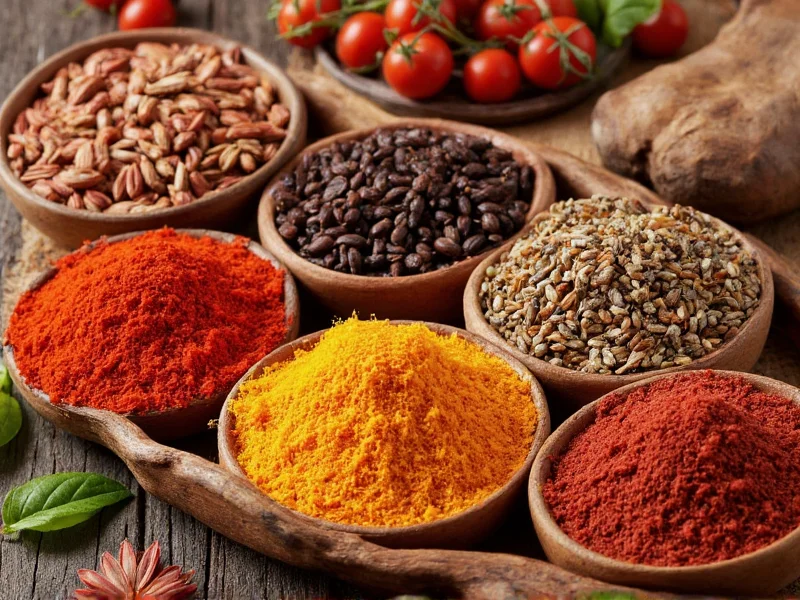
Oriental spices encompass a diverse range of aromatic ingredients fundamental to Asian culinary traditions. While the term "oriental" has become somewhat dated in general usage, it remains prevalent in culinary contexts to describe spices originating from East, Southeast, and South Asian regions. These spices aren't merely flavor enhancers—they represent centuries of cultural exchange, trade routes, and culinary evolution that continue to influence global cooking today.
Defining Authentic Oriental Spices
The term "oriental spices" broadly covers ingredients used throughout Asian cooking traditions, though regional variations exist. Unlike generic "Asian spice" blends found in Western supermarkets, authentic oriental spices maintain distinct characteristics specific to their cultural origins. Understanding these differences is crucial for achieving genuine flavors in traditional recipes.
Essential Oriental Spices and Their Characteristics
Certain spices form the backbone of authentic Asian cooking. Recognizing their unique properties helps home cooks create dishes with genuine flavor profiles rather than approximations.
| Spice | Primary Regions | Flavor Profile | Common Uses |
|---|---|---|---|
| Star Anise | China, Vietnam | Sweet licorice-like, warm | Pho broth, braised dishes, five-spice powder |
| Szechuan Peppercorns | Sichuan Province, China | Citrusy, floral, numbing sensation | Kung pao chicken, mapo tofu, spice blends |
| Galangal | Thailand, Indonesia | Sharp, citrusy, pine-like | Tom yum soup, curry pastes, stir-fries |
| Turmeric | India, Southeast Asia | Earthy, slightly bitter, peppery | Curries, rice dishes, marinades |
Regional Spice Traditions
Asian culinary traditions feature distinct spice approaches that reflect local ingredients and historical influences. Understanding these regional differences prevents the common mistake of treating "Asian cuisine" as a monolith.
Chinese Spice Traditions
Chinese cooking relies on balanced spice combinations rather than individual ingredients. The famous five-spice powder (containing star anise, cloves, Chinese cinnamon, Szechuan peppercorns, and fennel seeds) exemplifies this philosophy. Northern Chinese cuisine favors garlic and ginger, while Sichuan cooking embraces the distinctive numbing heat of Szechuan peppercorns. Cantonese cooking typically uses more subtle spice applications that enhance rather than dominate ingredients.
Southeast Asian Spice Profiles
Southeast Asian cuisines feature complex spice pastes that form the flavor foundation of many dishes. Thai cooking combines galangal, lemongrass, and kaffir lime leaves in curry pastes, while Vietnamese cuisine balances star anise, cinnamon, and cloves in pho broth. Indonesian rendang relies on a complex blend including turmeric, galangal, and candlenut. These spice combinations create the distinctive aromatic profiles that define regional specialties.
Historical Evolution of Oriental Spices Trade
The journey of oriental spices from their origins to global pantries spans millennia, shaped by trade routes and cultural exchanges. Key milestones include:
- 200 BCE - 200 CE: The Silk Road emerges, enabling the exchange of Chinese spices like star anise and Szechuan peppercorns with Central Asia and the Middle East. (Source: The Metropolitan Museum of Art)
- 7th - 15th Century: Arab traders dominate the spice trade, introducing Southeast Asian spices such as galangal to the Mediterranean. (Source: Encyclopaedia Britannica)
- 15th - 17th Century: European colonial expansion, particularly by the Portuguese and Dutch, establishes direct sea routes to spice-producing regions, leading to the global dissemination of Asian spices. (Source: National Geographic)
- 20th Century - Present: Industrialization of spice production and globalization make authentic oriental spices accessible worldwide, though quality varies significantly. (Source: FAO - The FAO Corporate Document Repository)
Practical Guidance for Using Oriental Spices
Proper handling and application of oriental spices significantly impacts final dish quality. Many home cooks make avoidable mistakes that compromise authentic flavor development.
Storage Techniques for Maximum Freshness
Proper storage preserves the volatile oils that give oriental spices their distinctive aromas. Whole spices maintain potency significantly longer than ground versions. Store spices in airtight containers away from light and heat—never above the stove. For maximum freshness, buy small quantities of whole spices and grind them as needed using a dedicated spice grinder. Szechuan peppercorns and star anise particularly benefit from this approach, as their complex flavor compounds degrade quickly when exposed to air.
Common Substitutions and Their Limitations
Finding authentic oriental spices can be challenging outside major metropolitan areas. While substitutions are sometimes necessary, understanding their limitations prevents flavor compromises:
- Galangal: Can substitute with ginger, but expect a less citrusy, more pungent flavor
- Szechuan Peppercorns: Black or pink peppercorns provide heat but lack the characteristic numbing sensation
- Shallots: Red onions with a pinch of sugar offer a similar sweetness
- Fresh Curry Leaves: Dried versions work in a pinch but lack aromatic complexity
For authentic Asian cooking spices, seek out Asian grocery stores or reputable online specialty retailers that guarantee freshness and origin.
Contextual Boundaries of Key Spices
Understanding where and how spices are used within their cultural context prevents inappropriate substitutions and preserves culinary authenticity. The following table outlines critical usage boundaries verified by culinary authorities:
| Spice | Essential Context | Substitution Limitation | Source |
|---|---|---|---|
| Star Anise | Required in Vietnamese pho broth for authentic flavor; also in Chinese five-spice powder | Anise seed lacks the complex notes and makes broth overly sweet due to different chemical composition (anethole vs. anisaldehyde) | Britannica - Star Anise |
| Szechuan Peppercorns | Critical for authentic Sichuan cuisine, providing the characteristic 'ma' (numbing) sensation | Black peppercorns only provide heat without the tingling vibration effect, altering the dish's fundamental sensory experience | Britannica - Sichuan Peppercorn |
| Galangal | Required in Thai tom yum and Indonesian rendang for authentic flavor; cannot be replaced without cultural deviation | Ginger creates a dish that's biologically distinct (lacks 1,8-cineole compounds), resulting in non-traditional flavor profiles | University of Illinois Extension - Thai Herbs |
Avoiding Common Mistakes with Oriental Spices
Several pitfalls can undermine your efforts to create authentic dishes with oriental spices:
Overheating Delicate Spices
Many oriental spices contain volatile compounds that degrade at high temperatures. Adding delicate spices like curry leaves or fresh turmeric too early in cooking diminishes their flavor impact. Instead, add these toward the end of cooking or use them in raw applications like chutneys.
Misunderstanding Heat Levels
Szechuan peppercorns provide a unique tingling sensation rather than pure heat. Many Western cooks mistakenly treat them like chili peppers, resulting in unbalanced dishes. Similarly, fresh Thai chilies vary dramatically in heat intensity—always taste before adding to avoid overwhelming other flavors.
Incorrect Spice Grinding Techniques
Using the same grinder for all spices transfers flavors between batches. Dedicate one grinder exclusively for strong spices like turmeric to prevent color and flavor contamination. For traditional spice pastes, a mortar and pestle often produces superior results compared to blenders by better releasing essential oils.
Building Flavor Complexity
Authentic Asian cooking builds flavor through layered spice application rather than single additions. The proper sequence matters:
- Start with aromatics like ginger or garlic in hot oil
- Add harder spices (cinnamon, star anise) to infuse the oil
- Incorporate ground spices after aromatics have softened
- Finish with delicate herbs and fresh spices
This technique, fundamental to traditional oriental cooking methods, creates depth that single additions cannot achieve. Understanding these principles transforms how you approach authentic Asian cooking spices in your kitchen.




 浙公网安备
33010002000092号
浙公网安备
33010002000092号 浙B2-20120091-4