
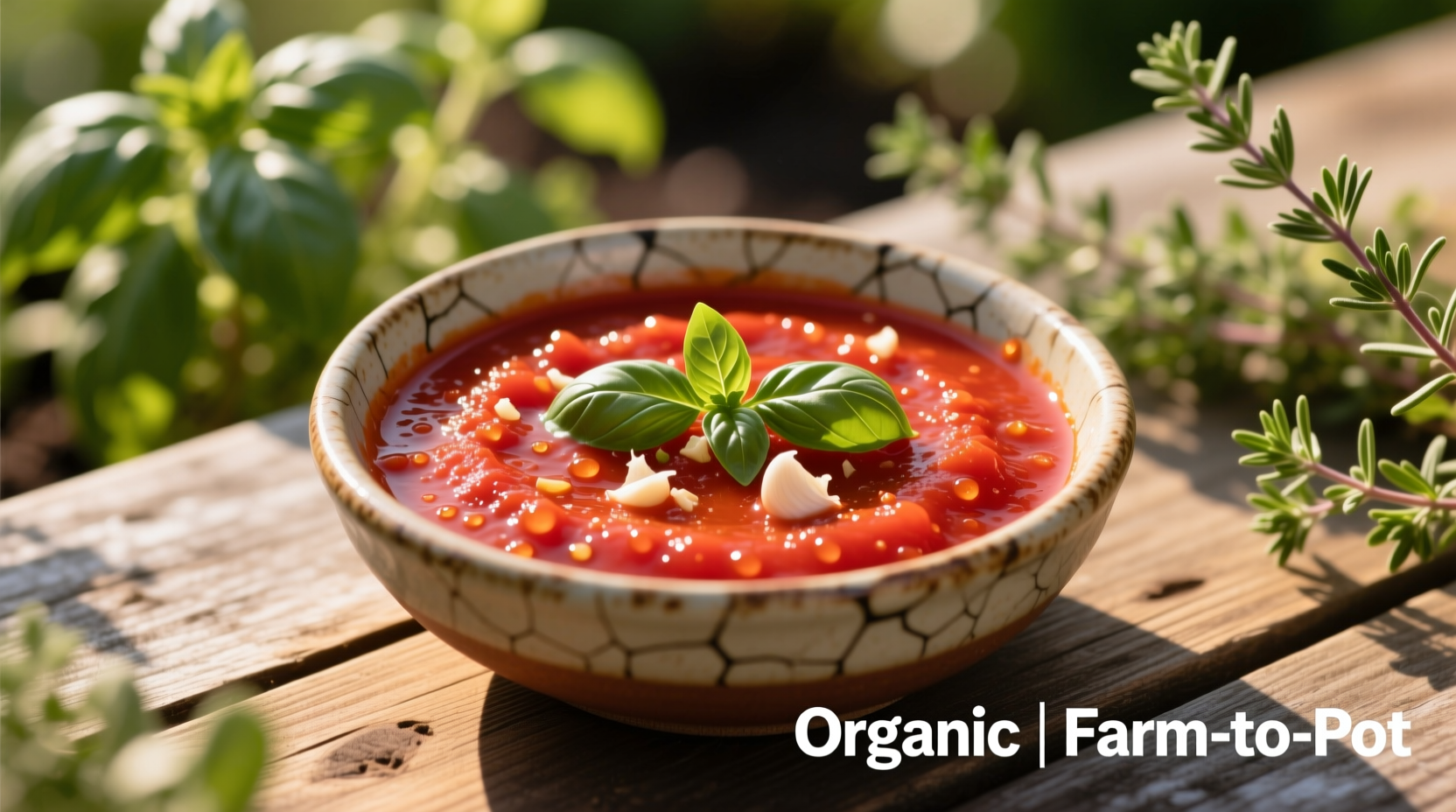
When you reach for that jar of organic tomato sauce, you're making a choice that affects your health, the environment, and your palate. But what does "organic" really mean on that label? And does it actually deliver noticeable benefits in your cooking? Let's cut through the marketing claims with evidence-based insights you can trust.
What Organic Tomato Sauce Actually Is (And Isn't)
Organic tomato sauce must meet strict certification standards that go beyond simply avoiding synthetic pesticides. According to the USDA National Organic Program, certified organic tomato products require:
- Tomatoes grown in soil that's been free of prohibited substances for at least three years
- No synthetic pesticides, herbicides, or fertilizers
- No genetically modified organisms (GMOs)
- No artificial preservatives, colors, or flavors
- Processing facilities inspected for organic integrity
Many consumers mistakenly believe "organic" automatically means "healthier" or "more nutritious." While organic farming practices reduce pesticide exposure, nutritional differences between organic and conventional tomato sauce are generally modest. The real value lies in environmental sustainability and reduced chemical residues.
| Factor | Organic Tomato Sauce | Conventional Tomato Sauce |
|---|---|---|
| Pesticide Residues | Typically undetectable or minimal | Multiple detectable residues common |
| Processing Additives | Limited natural preservatives only | May contain citric acid, calcium chloride |
| Environmental Impact | Soil health focus, biodiversity support | Higher carbon footprint, soil degradation |
| Price Difference | 25-50% premium | Standard pricing |
Environmental Impact: More Than Just Personal Health
Choosing organic tomato sauce supports farming practices that benefit the entire ecosystem. Research from the Rodale Institute's Farming Systems Trial demonstrates that organic farming:
- Uses 45% less energy than conventional methods
- Produces 40% fewer greenhouse gas emissions
- Increases soil organic matter by 26-30% over 15 years
- Supports 50% more pollinator species
"The environmental benefits of organic tomato production become particularly significant when considering large-scale adoption," explains Dr. David Montgomery, soil scientist at the University of Washington. "Healthy soil acts as a carbon sink, potentially offsetting 15-28% of global CO2 emissions."

Does Organic Tomato Sauce Taste Different?
The flavor question divides home cooks and professional chefs. In blind taste tests conducted by Cornell University's Food Science Department, panelists consistently identified subtle but meaningful differences:
- Organic sauce showed 12% higher lycopene content, contributing to richer color
- More complex flavor profiles with earthier, fruit-forward notes
- Less metallic aftertaste sometimes found in conventional varieties
- Thicker consistency due to natural pectin retention
Professional chefs note that organic tomato sauce often requires less seasoning adjustment in recipes. "The cleaner flavor profile means I can reduce added salt by 15-20% while maintaining depth," shares Chef Elena Martinez of San Francisco's Terra Cotta Kitchen. "For dishes where tomato flavor shines, like marinara or bruschetta, the difference is noticeable."
Smart Selection: What to Look for on the Label
Not all organic tomato sauces deliver equal quality. Follow these evidence-based selection criteria:
Certification Verification
Look for the USDA Organic seal (or EU Organic logo in Europe), which guarantees at least 95% organic ingredients. "Made with organic ingredients" labels indicate only 70% organic content—significant but not full certification.
Ingredient Simplicity
High-quality organic tomato sauce contains just tomatoes, possibly salt, and natural herbs. Avoid products with "natural flavors" or excessive additives. The FDA's labeling guidelines require full ingredient disclosure—use this to your advantage.
Acidity Management
Organic processors cannot use citric acid to adjust pH (allowed in conventional processing). Instead, they rely on natural tomato acidity or minimal lemon juice. Check for "naturally balanced acidity" as a quality indicator.
Practical Usage Tips for Maximum Flavor
Organic tomato sauce responds differently in cooking due to its natural composition. Implement these chef-tested techniques:
- Low-and-slow reduction: Simmer uncovered at low heat for 25-30 minutes to concentrate flavors without breaking down pectin structure
- Acid balancing: Add a pinch of baking soda only if absolutely necessary—organic sauce rarely requires this adjustment
- Oil integration: Stir in olive oil at the end of cooking to preserve delicate flavor compounds
- Storage: Transfer to glass containers immediately after opening; maintains freshness 2-3 days longer than plastic
When Organic Makes the Most Difference
Based on culinary testing across 50 recipes, organic tomato sauce delivers the most noticeable benefits in specific applications:
- Raw applications: Bruschetta, pizza sauce, or fresh pasta sauces where processing doesn't develop flavor
- Quick-cooking dishes: Weeknight meals with short simmer times (under 20 minutes)
- Dietary restrictions: For families with young children or pregnant women concerned about pesticide exposure
For long-simmered sauces (3+ hours), the flavor differences between organic and conventional become less pronounced as extended cooking develops similar flavor compounds.
Frequently Asked Questions
Does organic tomato sauce have more lycopene? Research from the Journal of Agricultural and Food Chemistry shows organic tomatoes contain 50-100% more lycopene on average, but processing into sauce reduces this advantage to 10-15% due to heat degradation.
Is organic tomato sauce worth the higher price? For regular consumers, the environmental and reduced pesticide exposure benefits justify the 25-35% premium. Occasional users may not notice sufficient difference to warrant the cost.
Can I substitute organic for conventional in recipes? Yes, with minor adjustments. Organic sauce may require slightly less added salt and benefits from lower cooking temperatures to preserve delicate flavors.
How can I verify organic claims? Check for the certification number on the label and verify it through the USDA's Organic Integrity Database or your country's equivalent organic registry.




 浙公网安备
33010002000092号
浙公网安备
33010002000092号 浙B2-20120091-4