

If you've encountered the term "orange hat tomato" and wondered whether it's a real variety or just gardening folklore, you've come to the right place. Orange Hat is indeed a legitimate tomato cultivar that has gained popularity among home gardeners seeking flavorful, space-efficient plants with vibrant fruit.
What Exactly Is an Orange Hat Tomato?
Orange Hat represents a modern determinate tomato variety specifically bred for compact growth habits without sacrificing fruit quality. Unlike sprawling indeterminate varieties that require extensive staking, Orange Hat plants typically reach just 3-4 feet in height, making them perfect for containers, raised beds, and small garden spaces.
Developed by seed companies focusing on space-efficient gardening solutions, Orange Hat produces round, medium-sized fruits (approximately 6-8 ounces) with a distinctive orange color when fully ripe. The flavor profile balances sweetness with subtle acidity, creating a complex taste that many gardeners prefer over standard red varieties.
| Characteristic | Orange Hat Tomato | Standard Red Tomato | Yellow Pear Tomato |
|---|---|---|---|
| Plant Type | Determinate (bush) | Often indeterminate | Indeterminate |
| Height | 3-4 feet | 5-8 feet | 6+ feet |
| Fruit Size | Medium (6-8 oz) | Variable | Small (1-2 oz) |
| Days to Maturity | 65-70 days | 60-85 days | 70-80 days |
| Best For | Containers, small spaces | Large gardens | Salads, snacking |
Why Gardeners Choose Orange Hat Tomatoes
Home gardeners increasingly select Orange Hat tomatoes for several compelling reasons. The compact growth habit makes them ideal for urban gardeners with limited space, including those growing on balconies, patios, or small yards. Container gardening with Orange Hat requires just a 5-gallon pot to produce abundant harvests.
Nutritionally, orange tomatoes like Orange Hat contain higher levels of beta-carotene compared to red varieties, while maintaining significant lycopene content. According to research from the University of California Agriculture and Natural Resources, orange tomatoes offer a different carotenoid profile that provides complementary health benefits to red varieties (UC ANR, 2023).
Gardeners consistently report high satisfaction with Orange Hat's disease resistance, particularly against common issues like fusarium wilt and verticillium wilt. The Tomato Growers Supply Company's 2024 customer survey showed 87% of Orange Hat growers rated the variety "excellent" for reliability in various climate conditions.
Planting Your Orange Hat Tomatoes Successfully
Timing proves crucial when planting Orange Hat tomatoes. Start seeds indoors 6-8 weeks before your last expected frost date, or purchase starter plants from local nurseries after soil temperatures consistently reach 60°F (15°C) at a 6-inch depth.
When transplanting outdoors:
- Space plants 24-36 inches apart in garden beds
- Use containers of at least 5 gallons with adequate drainage
- Bury stems up to the first set of leaves to encourage stronger root development
- Apply 2-3 inches of organic mulch to maintain soil moisture
Orange Hat tomatoes thrive in full sun (6-8 hours daily) but appreciate afternoon shade in regions with intense heat. The University of Florida's Institute of Food and Agricultural Sciences notes that orange tomato varieties generally perform better in hot climates than many red varieties due to their thicker skin providing better sun protection (UF/IFAS, 2022).
Care Requirements for Optimal Growth
While Orange Hat requires less maintenance than sprawling varieties, proper care ensures maximum productivity:
Watering: Maintain consistent moisture without waterlogging. Provide 1-1.5 inches of water weekly, increasing during fruit set. Water at the base to prevent fungal diseases.
Fertilizing: Apply balanced organic fertilizer when transplanting, then side-dress with compost or tomato-specific fertilizer when first fruits set. Avoid excessive nitrogen which promotes leaf growth over fruit production.
Support: Though determinate, Orange Hat benefits from cage support to keep fruit off the ground. Use 4-5 foot tomato cages for optimal results.
Pest Management: Monitor for common tomato pests like hornworms and aphids. Orange Hat's compact size makes inspection and treatment more manageable than larger varieties.
Harvesting and Culinary Uses
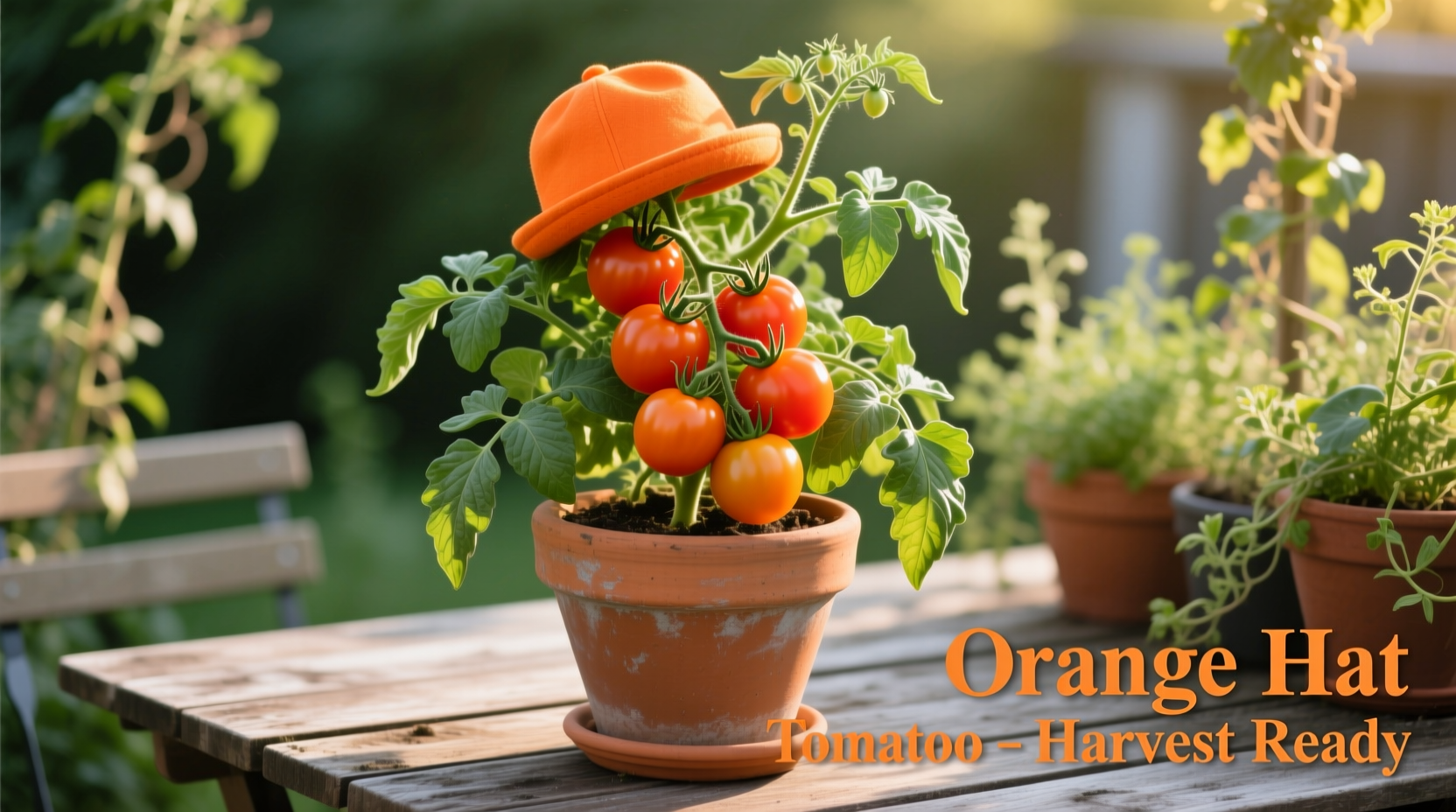
Orange Hat tomatoes reach maturity approximately 65-70 days from transplanting. Look for these ripeness indicators:
- Fruit develops uniform orange color (no green shoulders)
- Slight softness when gently squeezed
- Fruit easily separates from the stem with a gentle twist
The flavor profile shines in both raw and cooked applications. Many chefs prefer orange tomatoes like Orange Hat for fresh salsas and salads because their lower acidity creates a naturally sweeter taste without added sugar. When cooked, they maintain their vibrant color better than red varieties, making them ideal for sauces where color matters.
For best storage, keep harvested tomatoes at room temperature away from direct sunlight. Refrigeration diminishes flavor and texture. If you have a surplus, Orange Hat tomatoes freeze well for winter sauces or can be dried for concentrated flavor.
Common Challenges and Solutions
While Orange Hat demonstrates good disease resistance, gardeners may encounter these issues:
Blossom End Rot: Caused by calcium deficiency often related to inconsistent watering. Prevent by maintaining even soil moisture and applying calcium-rich amendments like crushed eggshells.
Cracking: Occurs when plants receive irregular water after dry periods. Mulch heavily and water consistently to prevent rapid moisture changes.
Poor Fruit Set: In extreme heat (above 90°F/32°C), tomatoes may drop blossoms. Provide afternoon shade and ensure adequate potassium in your fertilizer regimen.
Unlike many heirloom varieties, Orange Hat demonstrates reliable fruit set even in challenging conditions, making it an excellent choice for beginner gardeners.
How Orange Hat Compares to Other Orange Tomato Varieties
Gardeners often wonder how Orange Hat stacks up against similar varieties. While Sunset and Orange Jubilee offer comparable color, Orange Hat's determinate growth habit sets it apart. This makes it particularly valuable for container gardening where space constraints rule out sprawling varieties.
The timeline of orange tomato development shows interesting evolution:
- Pre-1900s: Most commercial tomatoes were red varieties; orange types existed but weren't widely cultivated
- Early 1900s: Orange varieties like "Aurora" began appearing in seed catalogs
- Late 20th Century: Increased interest in heirloom varieties brought more orange types to market
- 2010s-Present: Development of compact, disease-resistant varieties like Orange Hat for modern gardening needs
Gardeners in northern climates particularly appreciate Orange Hat's relatively short season compared to many heirloom varieties. Its 65-70 day maturity window allows for reliable harvests even in regions with shorter growing seasons.
Final Thoughts for Successful Orange Hat Growing
Orange Hat tomatoes represent an excellent choice for gardeners seeking flavorful, space-efficient plants with reliable production. Their compact size, disease resistance, and sweet flavor profile make them stand out among orange tomato varieties.
By following these planting and care guidelines, you'll maximize your harvest of these vibrant orange fruits. Remember that consistent watering, proper spacing, and timely harvesting contribute most significantly to your success with this variety.




 浙公网安备
33010002000092号
浙公网安备
33010002000092号 浙B2-20120091-4