
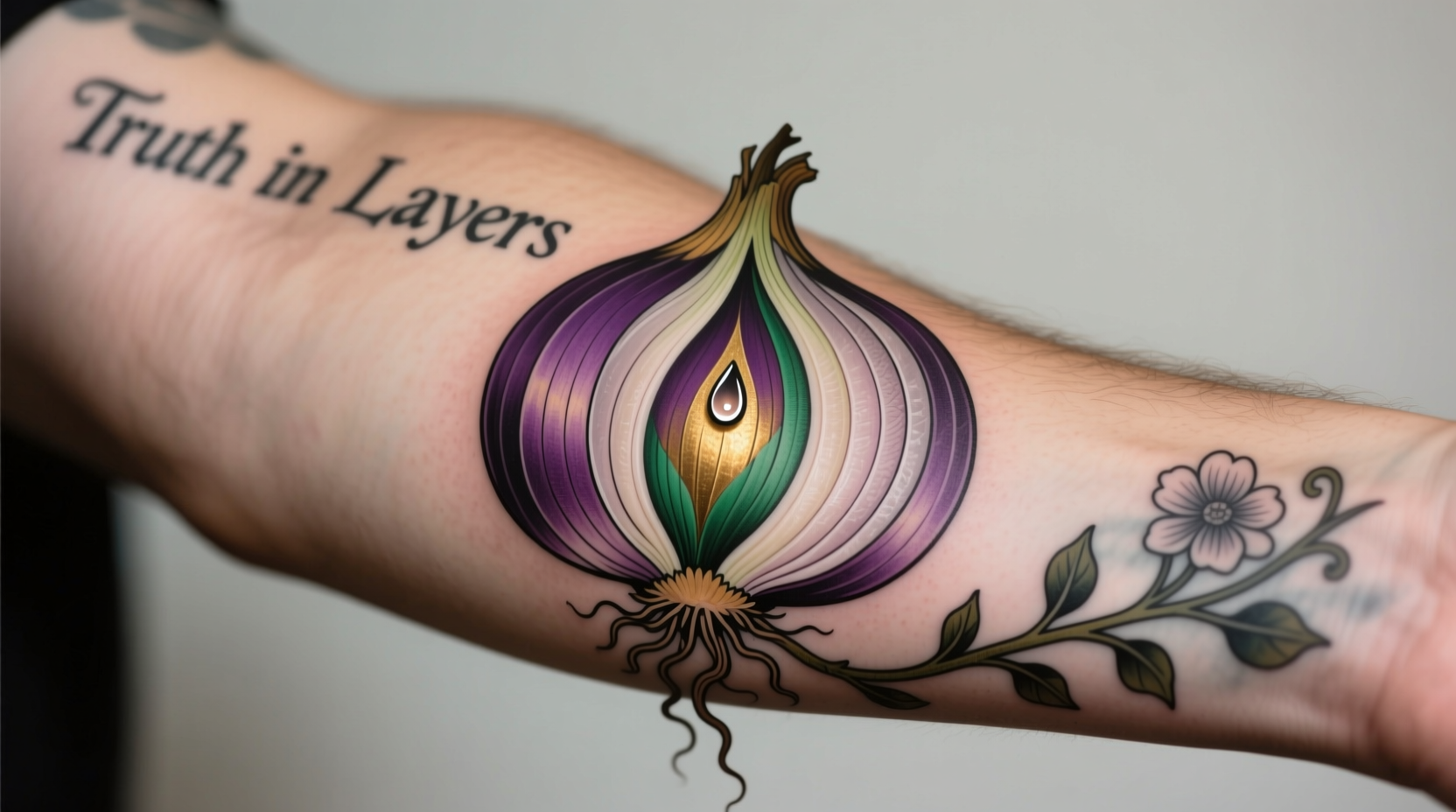
While not among the most common tattoo subjects, onion tattoos have gained subtle popularity as people seek meaningful alternatives to traditional floral or animal designs. This guide explores why individuals choose this unexpected symbol, what it communicates across different cultures, and how to create a design that resonates with your personal story.
The Symbolic Layers of Onion Tattoos
Unlike roses symbolizing love or skulls representing mortality, onion tattoos carry nuanced meanings rooted in both historical context and modern interpretation. The most prevalent symbolism connects to the vegetable's physical structure—each layer representing different aspects of life, personality, or emotional protection.
Historically, onions have held significant cultural value across civilizations. Ancient Egyptians considered them sacred symbols of eternity due to their concentric rings, often placing them in tombs as offerings. In Eastern European folklore, onions were hung in homes to ward off evil spirits, creating a protective symbolism that occasionally translates to modern tattoo interpretations.
| Cultural Context | Traditional Onion Symbolism | Modern Tattoo Interpretation |
|---|---|---|
| Ancient Egypt | Eternity, life cycle, cosmic order | Personal evolution, spiritual journey |
| Eastern European Folklore | Protection from evil, household guardian | Emotional resilience, personal boundaries |
| Modern Culinary Culture | Nourishment, family traditions, simplicity | Heritage connection, grounding in simplicity |
| Contemporary Psychology | Emotional complexity, vulnerability | Self-awareness, therapeutic growth |
This fact comparison reveals how onion symbolism has evolved from practical agricultural significance to complex psychological metaphors. Modern tattoo recipients often cite the "layers" concept as their primary motivation—viewing personal growth as a process of gradually revealing deeper aspects of themselves, sometimes through challenging experiences that bring tears, much like cutting an onion.
Design Evolution: From Kitchen Motifs to Artistic Statements
Food-themed tattoos have followed a distinct evolution path, moving from literal representations to sophisticated artistic interpretations. The timeline below shows how onion tattoos specifically have transformed within broader tattoo culture:
| Era | Design Characteristics | Cultural Context |
|---|---|---|
| 1970s-1980s | Rare; usually part of larger kitchen still-life scenes | Tattoos primarily nautical, traditional, or memorial |
| 1990s-2000s | Emerging as standalone designs among culinary professionals | Rise of foodie culture and chef tattoos |
| 2010s | Stylized interpretations, geometric patterns incorporating layers | Growth of illustrative and watercolor tattoo styles |
| 2020s | Abstract representations, symbolic rather than literal depictions | Personal meaning prioritized over visual accuracy |
Contemporary onion tattoo designs frequently move beyond photorealistic depictions. Many feature:
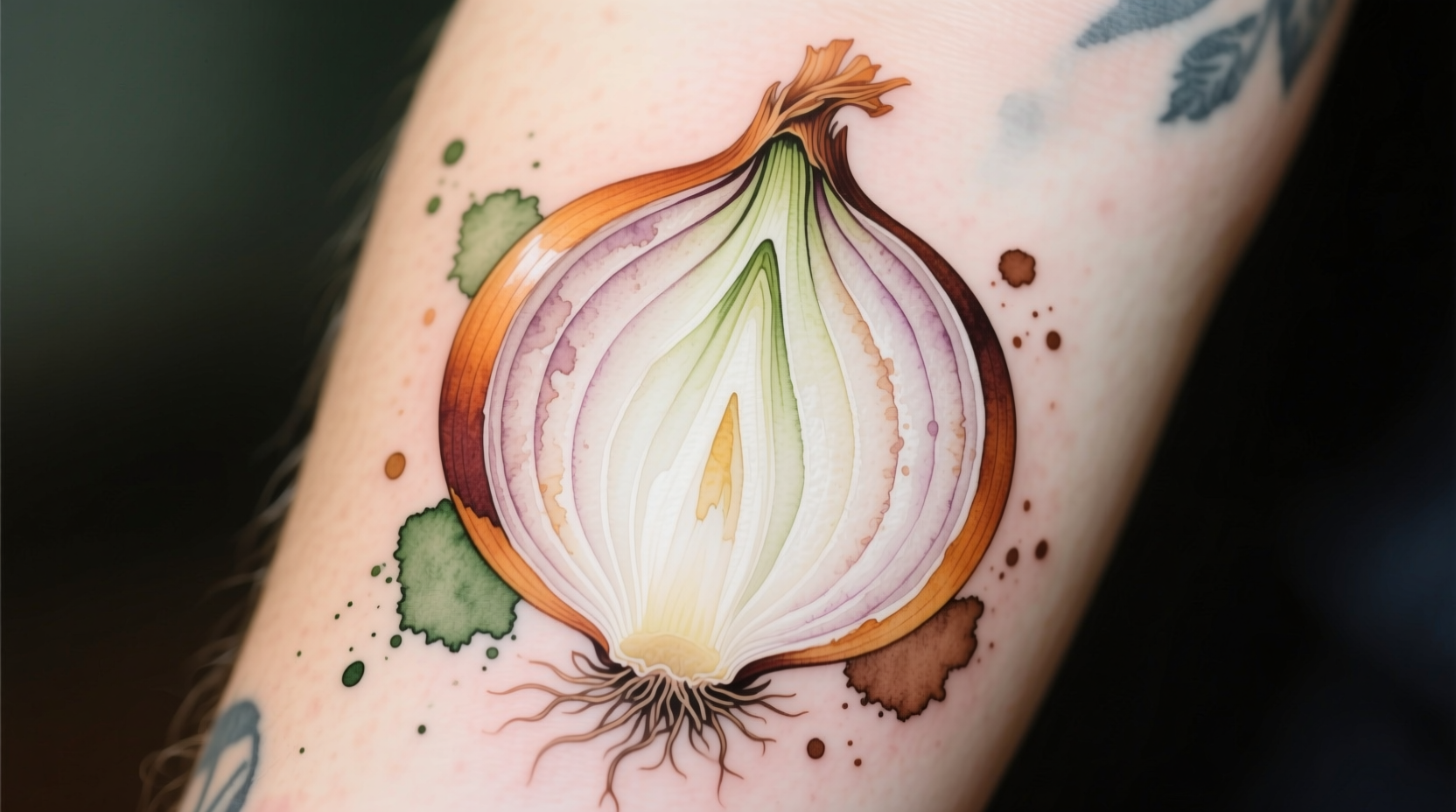
- Peeling layer effects showing partial cross-sections to emphasize the "layers of life" metaphor
- Geometric integration where concentric circles form mandala-like patterns
- Watercolor splashes suggesting tears or emotional release
- Combined elements with herbs (like thyme for courage) or kitchen implements for personalized narratives
Placement Considerations and Pain Factors
The body location significantly impacts both the visual effectiveness and pain experience of an onion tattoo. Unlike symbolic placements for traditional tattoos (like roses on hands representing love), onion designs work best where their layered structure can be fully appreciated.
Recommended placements:
- Forearm or calf – Provides sufficient space to showcase detailed layering without excessive distortion
- Ribcage – Aligns with the "emotional layers" symbolism, though notably more painful
- Shoulder blade – Allows for larger designs that can incorporate surrounding elements
According to research published in the Journal of Cutaneous Medicine and Surgery, areas with thinner skin and more nerve endings (like the inner arm) register higher pain levels for detailed work. The American Academy of Dermatology notes that curved surfaces like the shoulder require more passes from the tattoo needle, potentially extending healing time (aad.org/tattoo-aftercare).
Creating a Meaningful Design With Your Artist
When commissioning an onion tattoo, focus on translating personal significance into visual elements. Rather than simply requesting "an onion tattoo," consider these conversation points with your artist:
- Which aspect resonates most: protection, layered growth, culinary heritage, or emotional resilience?
- Should the design emphasize realism (showing actual onion structure) or abstraction (using circles and patterns)?
- Would incorporating complementary elements enhance the meaning? (e.g., a chef's knife for culinary professionals, specific herbs for additional symbolism)
- How might seasonal variations affect the design? (red onions carry different cultural connotations than white or yellow varieties)
Professional tattoo artists recommend bringing reference images that capture the feeling you want, not just literal onion pictures. A skilled artist can translate your personal story into appropriate visual language while maintaining anatomical accuracy for the placement area.
Aftercare and Long-Term Appearance
Like all tattoos, onion designs require proper aftercare to maintain their intended appearance. The layered detail in these tattoos makes aftercare particularly crucial—blurring during healing can diminish the symbolic layer effect that makes the design meaningful.
Follow these evidence-based aftercare practices:
- Keep the tattoo covered for 2-4 hours post-session, then gently wash with fragrance-free soap
- Apply a thin layer of specialized tattoo ointment 2-3 times daily for the first week
- Avoid direct sunlight for at least 4 weeks—onion tattoos on visible areas like forearms need extra sun protection long-term
- Moisturize regularly once healed to maintain crisp lines, especially important for detailed layer work
Over time, onion tattoos may experience subtle changes:
- Highly detailed layer lines may soften slightly after 5-10 years
- Color tattoos may require touch-ups every 7-10 years to maintain vibrancy
- Placement on high-movement areas (like elbows) accelerates fading of fine details
When an Onion Tattoo Might Not Be Appropriate
While meaningful for many, onion tattoos carry context-specific considerations:
- Professional environments – Visible food-themed tattoos may be misinterpreted in conservative workplaces
- Cultural sensitivity – In some Eastern European communities, the protective symbolism is taken seriously and using it decoratively might be viewed as disrespectful
- Personal associations – Those with negative experiences related to onions (culinary failures, family conflicts around food) might unintentionally trigger unpleasant memories
Consider creating a temporary version using body-safe henna first to test your emotional response to seeing the design on your skin before committing to permanent ink.
Final Considerations for Your Onion Tattoo Journey
An onion tattoo works best when it connects to a specific personal narrative rather than following trends. The most satisfying designs emerge when recipients can articulate exactly why this particular symbol resonates with their life story—whether honoring family culinary traditions, representing emotional growth through difficult experiences, or celebrating resilience.
Take time to reflect on what the layers mean to you personally before scheduling your appointment. This reflection process often reveals deeper significance that can be incorporated into the design, transforming a simple vegetable depiction into a powerful personal emblem that continues to resonate throughout your life.




 浙公网安备
33010002000092号
浙公网安备
33010002000092号 浙B2-20120091-4