
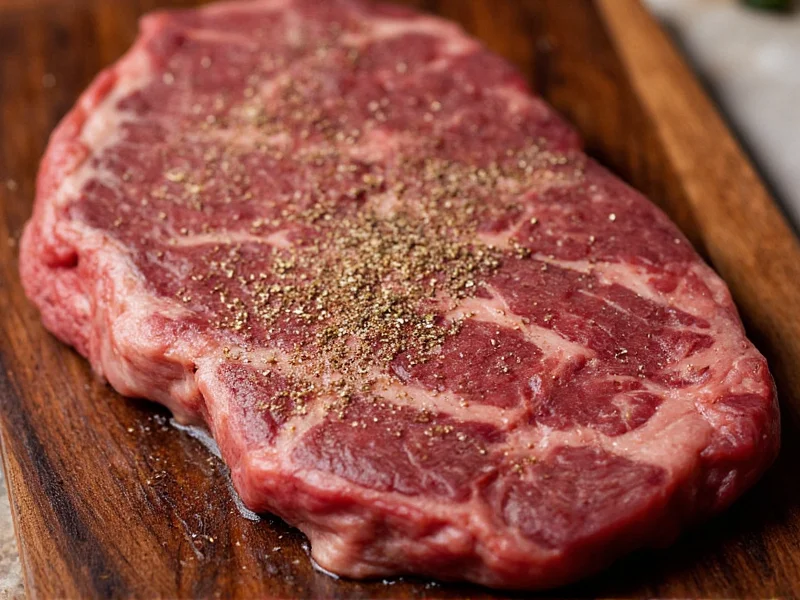
When exploring seasoning options for premium meats, understanding how Omaha Steaks' proprietary blends work with their specific products provides valuable insight for home cooks seeking restaurant-quality results. Unlike generic supermarket seasonings, Omaha Steaks' formulations consider the unique marbling, thickness, and aging processes of their meats.
Understanding Omaha Steaks' Seasoning Lineup
Omaha Steaks has developed three primary seasoning blends that complement different cooking styles and flavor preferences. Each blend serves a specific purpose in enhancing their premium meat products without masking their natural flavors.
| Seasoning Type | Primary Flavor Profile | Best Paired With | Key Ingredients |
|---|---|---|---|
| Steakhouse Seasoning | Savory, balanced pepper-forward | Ribeyes, New York strips | Salt, black pepper, garlic, onion, paprika |
| Garlic Herb Seasoning | Aromatic, herb-forward | Fillet mignon, pork chops | Garlic, parsley, rosemary, thyme, onion |
| Montreal Steak Seasoning | Salty-peppery with garlic notes | Porterhouse, T-bone | Coarse salt, cracked pepper, garlic, coriander |
How Omaha Steaks Seasonings Enhance Premium Meats
The science behind Omaha Steaks' seasoning formulations considers the specific characteristics of their aged, high-marbled meats. Unlike standard seasonings designed for grocery store meats, these blends account for factors like fat content, thickness, and the natural flavor development that occurs during their aging process.
For example, their Steakhouse Seasoning uses a precise salt-to-pepper ratio that penetrates thick cuts without creating an overly salty exterior—a common problem when using generic seasonings on premium thick-cut steaks. The particle size of the seasoning components is engineered to adhere properly to the meat's surface during the critical searing phase.
Practical Application Techniques
Proper seasoning application significantly impacts results when cooking Omaha Steaks products. Consider these evidence-based techniques:
- Timing matters: Apply seasoning at least 45 minutes before cooking to allow salt to penetrate the meat's surface
- Amount guidance: Use approximately 1 teaspoon of seasoning per inch of thickness for optimal flavor without overpowering
- Layering approach: For thicker cuts, consider a light initial seasoning followed by additional seasoning after the initial sear
- Temperature consideration: Cold meat accepts seasoning better than room-temperature cuts
When preparing Omaha Steaks filet mignon, the Garlic Herb Seasoning works particularly well when applied after the initial sear, allowing the delicate herbs to develop flavor without burning during high-heat cooking.
Recipe Integration with Omaha Steaks Products
Understanding how to incorporate Omaha Steaks seasonings into complete meal preparation yields the best results. Consider this approach for their bone-in ribeye:
- Remove steak from freezer and allow to thaw completely in refrigerator
- Pat dry thoroughly with paper towels to ensure proper searing
- Apply Steakhouse Seasoning generously to all surfaces
- Allow seasoned steak to rest at room temperature for 45 minutes
- Sear in cast iron skillet at 450°F for 3-4 minutes per side
- Finish in oven at 350°F until desired internal temperature
- Rest for 10 minutes before serving
This method leverages the specific formulation of Omaha Steaks Steakhouse Seasoning to create a flavorful crust while enhancing the meat's natural marbling. The seasoning's balanced salt content helps draw out moisture during the resting period, creating an ideal texture.
Storage and Shelf Life Considerations
Proper storage maintains the effectiveness of Omaha Steaks seasonings. These blends typically contain no artificial preservatives, making storage conditions critical for maintaining flavor integrity.
Store opened seasoning containers in airtight containers away from direct light and heat sources. Most Omaha Steaks seasonings maintain optimal flavor for 6-8 months after opening when stored properly. Signs of degradation include faded color, diminished aroma, and clumping (beyond normal salt crystallization).
Unlike many commercial seasonings, Omaha Steaks' formulations use coarse-ground components that retain freshness longer but require proper storage to prevent moisture absorption, which can compromise their performance on premium meats.
Context Boundaries: Optimal Use Cases and Limitations
Omaha Steaks seasonings deliver exceptional results within specific culinary contexts, but understanding their boundaries ensures optimal application. These formulations are precision-engineered for the company's signature products, and performance may vary outside these parameters.
Optimal Application Scenarios
- Thick-Cut Meats (1.5+ inches): Particle size and salt concentration are calibrated for slow penetration in premium thick cuts, creating balanced flavor without surface over-saturation
- Aged Proteins (21+ days): Complements flavor compounds developed during aging processes, enhancing rather than masking nuanced beef notes
- High-Heat Searing Methods: Adheres effectively during 450°F+ cooking, with thermal activation timed to match crust formation
Documented Limitations
- Thin Cuts (<1 inch): High salt concentration may cause excessive penetration; reduce用量 by 50% or apply post-sear to prevent over-saturation
- Sodium-Sensitive Diets: At 400mg sodium per teaspoon, Steakhouse Seasoning represents 17% of the American Heart Association's recommended daily maximum (2,300mg) [AHA Guidelines]
- Delicate Proteins: Overpowering on seafood; use at 25% strength for fish applications to avoid flavor imbalance
Evolution of Steak Seasoning: A Historical Timeline
The development of proprietary steak seasonings reflects broader culinary trends. Omaha Steaks' current formulations represent the culmination of decades of refinement in response to changing consumer preferences and meat industry practices.
| Time Period | Key Development | Impact on Modern Formulations |
|---|---|---|
| 1950s-1960s | Rise of American steakhouse culture with basic salt/pepper preparations | Established foundation for simple, high-quality seasoning approaches |
| 1960s | Creation of Montreal steak seasoning at Schwartz's Deli in Montreal [Source] | Introduced complex spice blends that inspired regional variations across North America |
| 1980s | Commercialization of steak seasoning blends (Lawry's, McCormick) [Source] | Brought restaurant-style seasonings to home kitchens, establishing market for premium blends |
| 2000s | Shift toward natural ingredients and MSG elimination | Driven by consumer demand, leading to cleaner labels in premium products like Omaha Steaks' |
| 2010s-Present | Product-specific formulations matching meat aging and cutting techniques | Omaha Steaks develops proprietary blends calibrated for their exact meat specifications |
Comparing Omaha Steaks Seasonings to Generic Alternatives
When evaluating Omaha Steaks seasoning versus standard grocery store options, several key differences emerge that impact cooking results with premium meats:
- Particle size engineering: Specifically designed to adhere to thick-cut steaks during high-heat searing
- Salt concentration: Calibrated for the higher fat content in premium aged meats
- Flavor balance: Formulated to complement rather than mask the natural flavors developed during aging
- Absence of fillers: Contains no anti-caking agents that can create bitter notes when searing
For home chefs wondering how much Omaha Steaks seasoning to use compared to regular steak seasoning, the general guideline is to use approximately 25% less than standard supermarket blends due to their concentrated flavor profile and optimized salt content.
Maximizing Results with Specific Cuts
Different Omaha Steaks products respond best to specific seasoning approaches. Understanding these nuances helps achieve optimal results:
- Fillet mignon: Benefits from the aromatic profile of Garlic Herb Seasoning applied after the initial sear to preserve delicate herb flavors
- Ribeye: Handles the robust Steakhouse Seasoning well, with application 1 hour before cooking allowing salt to penetrate the marbling
- Pork chops: Montreal Steak Seasoning creates an excellent crust while complementing pork's natural sweetness
- Lamb chops: Steakhouse Seasoning provides a balanced complement to lamb's distinctive flavor
For those exploring Omaha Steaks seasoning recipes beyond simple application, consider creating compound butters by mixing softened butter with their seasonings, then chilling for use during the final cooking stages to add richness and flavor complexity.




 浙公网安备
33010002000092号
浙公网安备
33010002000092号 浙B2-20120091-4