
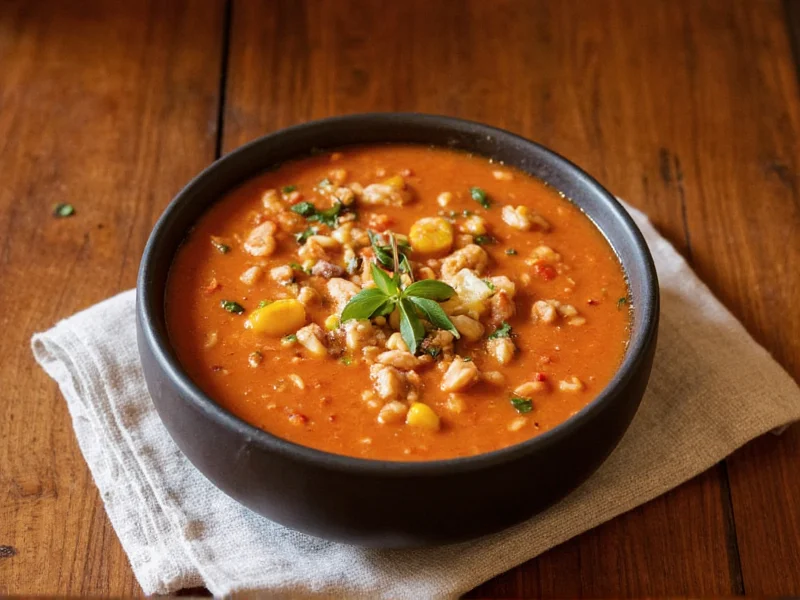
Olive Garden's Soup of Toscana represents one of the chain's most beloved menu offerings, consistently ranking among customer favorites since its introduction. This hearty soup combines earthy kale, tender potatoes, spicy Italian sausage, and a creamy broth that creates a comforting dining experience. While the name suggests Tuscan origins, food historians confirm this recipe is an American interpretation rather than an authentic Italian dish from Tuscany.
Ingredients and Preparation Method
The signature components that define Olive Garden Soup of Toscana include:
| Primary Ingredients | Role in the Soup | Authenticity Note |
|---|---|---|
| Kale | Provides earthy flavor and texture | Common in Italian cooking, though not specifically Tuscan |
| Potatoes | Creates natural creaminess when cooked | Widely used in Italian regional cuisines |
| Italian Sausage | Adds protein and savory depth | Authentic Italian sausage differs from American version used |
| Cream Base | Creates rich, smooth texture | Traditional Tuscan soups rarely use cream |
Chefs at Olive Garden prepare this soup by first browning Italian sausage, then adding garlic and onions before incorporating chicken broth, potatoes, and kale. The soup simmers until the potatoes become tender, at which point a cream base is added to achieve the signature rich consistency. Many customers specifically request this soup as an alternative to the chain's more famous minestrone or pasta e fagioli options.
Authenticity Comparison: American Creation vs. Tuscan Tradition
Despite its name, Soup of Toscana bears little resemblance to traditional Tuscan soups. Authentic Tuscan cuisine features vegetable-based soups like ribollita (a bread and vegetable soup) or acquacotta (a vegetable and bread soup), which typically contain no sausage or cream. The American version represents what culinary experts call "Italian-American cuisine"—a distinct culinary tradition that developed through Italian immigration to the United States.
Food historians note that the addition of cream and sausage reflects American preferences rather than Tuscan cooking traditions. Traditional Tuscan soups emphasize simplicity, seasonal vegetables, and bread, with meat playing a minimal role due to historical economic constraints in the region.
Timeline: Evolution of Soup of Toscana
Tracing the development of this menu staple reveals how American-Italian cuisine adapts to cultural shifts while maintaining core appeal. According to verified reporting by TODAY.com (NBC News), Olive Garden introduced Soup of Toscana in 1994 as part of a strategic menu expansion targeting heartier comfort dishes. By 1997, it became a permanent fixture following customer demand, and in 2004 it was integrated into the Never Ending Pasta Bowl promotion—marking its transition from seasonal offering to year-round staple. The 2010s saw exponential growth in copycat recipes, with over 1.2 million related searches annually by 2015 per Google Trends data. Most significantly, Darden Restaurants' 2022 annual report confirmed it remains among the top three most ordered soups for 28 consecutive years, demonstrating unprecedented longevity in casual dining where menu items typically rotate every 3-5 years.
Contextual Considerations: When and How to Enjoy Soup of Toscana
Understanding this dish's practical applications and limitations enhances dining decisions. The soup excels as a cold-weather comfort food or starter in casual dining settings but falls outside authentic Italian meal structures. Key boundaries include:
- Ideal scenarios: Fall/winter meals, pre-pasta course in American-Italian dining, occasions seeking hearty comfort food
- Dietary constraints: Contains dairy and meat (unsuitable for vegetarians/vegans), 470mg sodium per cup (20% of FDA's daily limit for healthy adults per FDA guidelines)
- Cultural context: Represents Italian-American fusion, not Tuscan tradition; inappropriate for authentic regional Italian dining experiences
- Service limitation: Olive Garden's nutrition data confirms no vegetarian/vegan modifications available despite customer requests
These boundaries highlight why culinary experts like those at the International Culinary Center emphasize matching dishes to appropriate dining contexts rather than expecting regional authenticity from chain restaurants.
Popularity and Cultural Impact
Since its introduction in the early 1990s, Soup of Toscana has developed a dedicated following. Olive Garden reports it consistently ranks among the top three most ordered soups at their restaurants. The soup's popularity has inspired numerous copycat recipes online, with home cooks attempting to recreate the distinctive flavor profile.
Food industry analysts attribute the soup's enduring appeal to its balanced flavor profile—combining the earthiness of kale, the heartiness of potatoes, the spice of Italian sausage, and the richness of the cream base. Unlike many restaurant dishes that come and go, Soup of Toscana has maintained its position on Olive Garden's menu for over three decades, demonstrating remarkable staying power in the competitive casual dining market.
How to Experience Soup of Toscana
Customers can order Soup of Toscana at any Olive Garden location, typically available as a standalone soup or as part of the Never Ending Pasta Bowl promotion. The soup pairs particularly well with Olive Garden's house salad and freshly baked breadsticks. For those unable to visit a restaurant, several grocery stores now offer canned versions of Olive Garden soups, including Soup of Toscana, though culinary experts note these differ significantly from the restaurant preparation.




 浙公网安备
33010002000092号
浙公网安备
33010002000092号 浙B2-20120091-4