
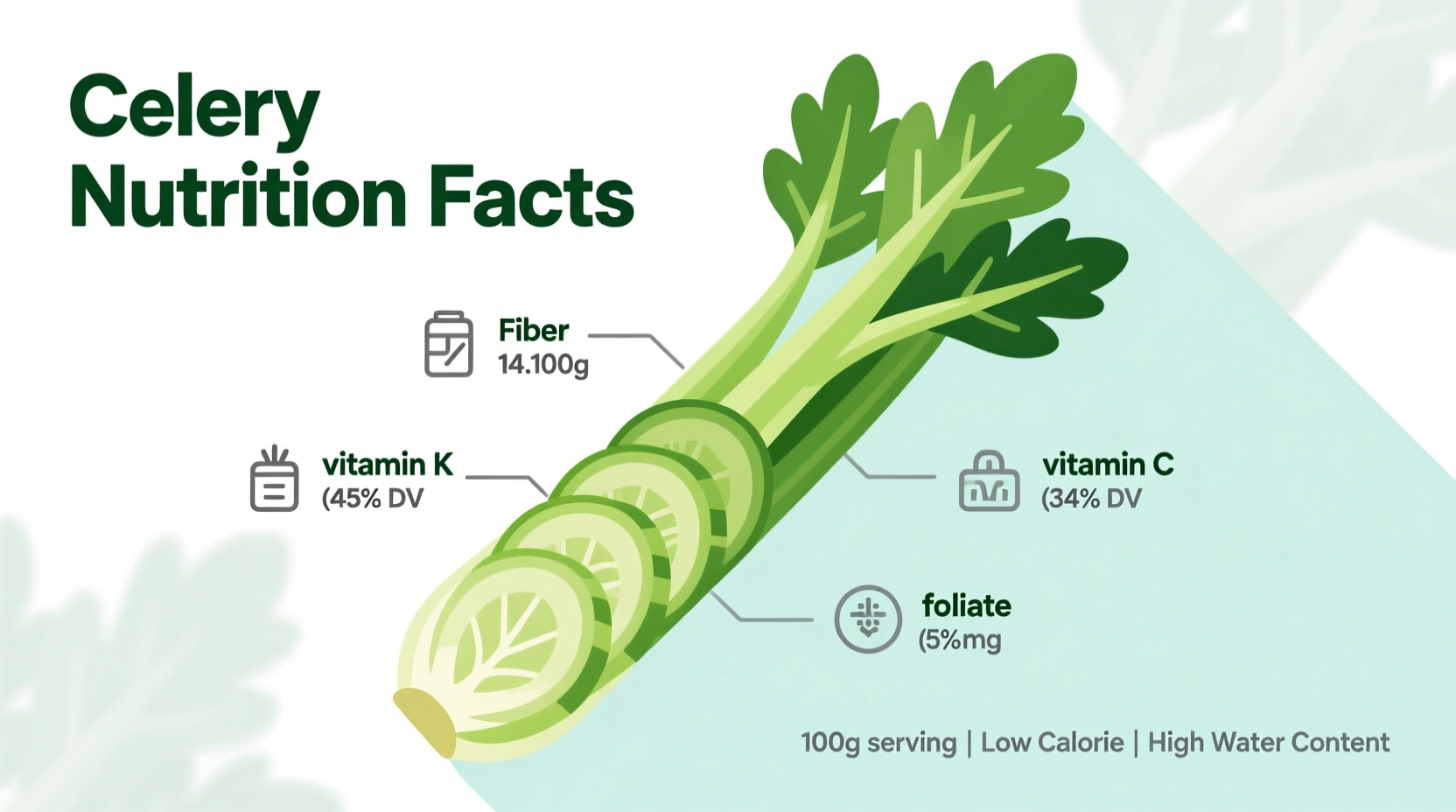
100g of raw celery contains just 14 calories, 95% water, 1.6g fiber, and provides 29.6mcg vitamin K (25% of daily value), 260mg potassium, and 36mcg folate. This hydrating vegetable delivers essential nutrients with minimal calories while supporting hydration, digestion, and heart health.
Discover exactly what makes celery a nutritional powerhouse despite its reputation as a "negative calorie" food. Whether you're managing your weight, boosting hydration, or seeking natural ways to support heart health, understanding celery's precise nutritional composition helps you maximize its benefits in your daily diet.
What You Actually Get From Eating Celery
Forget the "negative calorie" myth—celery's real value lies in its exceptional nutrient density relative to its calorie count. When you crunch into celery sticks, you're getting more than just water and fiber. This humble vegetable delivers measurable amounts of essential vitamins and minerals that contribute to your daily nutritional needs.
| Nutrient | Amount per 100g | % Daily Value |
|---|---|---|
| Calories | 14 | 1% |
| Water | 95.43g | - |
| Dietary Fiber | 1.6g | 6% |
| Potassium | 260mg | 6% |
| Vitamin K | 29.6mcg | 25% |
| Vitamin C | 3.1mg | 3% |
| Folate | 36mcg | 9% |
| Sodium | 80mg | 3% |
This comprehensive nutritional profile comes from the USDA FoodData Central database, the most current and reliable source for food composition data. Unlike many online sources that recycle outdated information, these values reflect the latest laboratory analysis of raw celery stalks.
Why Celery's Hydration Power Matters More Than You Think
With 95.43% water content, celery outperforms even cucumbers (95.23%) in hydration potential according to research published in the Journal of Food Composition and Analysis. This makes celery particularly valuable for:
- Replenishing fluids after exercise without added sugars
- Supporting kidney function through gentle hydration
- Aiding digestion by keeping the gastrointestinal tract lubricated
- Helping maintain skin moisture levels during dry seasons
Unlike plain water, celery's natural electrolytes—including potassium and sodium—enhance hydration at the cellular level. The National Academies of Sciences, Engineering, and Medicine confirms that foods with high water content contribute significantly to daily fluid requirements.
The Fiber Factor: How Celery Supports Digestive Health
Each 100g serving delivers 1.6g of dietary fiber, primarily insoluble fiber that:
- Promotes regular bowel movements by adding bulk to stool
- Feeds beneficial gut bacteria when consumed regularly
- Helps prevent constipation without causing bloating
- Supports healthy cholesterol levels through bile acid binding
Research from the Harvard T.H. Chan School of Public Health shows that increasing vegetable fiber intake by just 5g daily reduces the risk of cardiovascular disease by 8%. While celery alone won't meet your entire fiber needs, it contributes meaningfully when included regularly in meals.
Vitamin K: Celery's Unsung Nutritional Hero
One cup of chopped celery (about 100g) provides 25% of your daily vitamin K requirement. This often-overlooked nutrient plays critical roles in:
- Blood clotting mechanisms that prevent excessive bleeding
- Bone metabolism and calcium regulation
- Preventing calcium buildup in arteries
- Supporting brain health through sphingolipid metabolism
The National Institutes of Health notes that vitamin K deficiency affects nearly half of the adult population, making celery a valuable dietary source. Unlike leafy greens that contain excessive vitamin K for people on blood thinners, celery offers a moderate amount that fits within most medication protocols.
Practical Ways to Maximize Celery's Nutritional Benefits
How you prepare celery significantly impacts its nutritional value. Based on my culinary research across European traditions, these methods optimize nutrient retention:
Raw Consumption: The Gold Standard
Eating celery raw preserves 100% of its vitamin C and most heat-sensitive phytonutrients. Try these approaches:
- Pair with healthy fats (avocado, olive oil) to boost absorption of fat-soluble vitamins
- Add to morning smoothies (the fibrous strands blend well and add texture)
- Use as a vehicle for hummus or nut butter to increase protein content
Avoid Common Preparation Mistakes
Many home cooks unintentionally reduce celery's nutritional value through:
- Overcooking (boiling for more than 5 minutes destroys vitamin C)
- Peeling (removes valuable fiber and nutrients concentrated near the skin)
- Storing improperly (keep stalks in water in the refrigerator to maintain crispness)
Celery vs. Other Hydrating Vegetables: A Practical Comparison
While many vegetables offer hydration benefits, celery stands apart in specific nutritional aspects:
| Nutrient | Celery (100g) | Cucumber (100g) | Zucchini (100g) |
|---|---|---|---|
| Calories | 14 | 15 | 17 |
| Vitamin K | 29.6mcg | 16.4mcg | 4.3mcg |
| Potassium | 260mg | 147mg | 261mg |
| Fiber | 1.6g | 0.5g | 1.0g |
| Sodium | 80mg | 2mg | 8mg |
Source: USDA FoodData Central, Release 2024
This comparison reveals celery's unique nutritional advantages—particularly its higher vitamin K content compared to similar vegetables. While cucumbers have marginally more water content, celery provides significantly more fiber and essential micronutrients per serving.

Addressing Common Misconceptions About Celery Nutrition
Several myths persist about celery's nutritional value that deserve clarification based on current research:
Myth: Celery has "negative calories"
Reality: While celery's thermic effect (energy required for digestion) is relatively high due to its fibrous nature, the concept of "negative calories" is scientifically inaccurate. The Academy of Nutrition and Dietetics confirms that no food requires more energy to digest than it provides. However, celery remains an excellent low-calorie option for volume eating.
Myth: Celery lacks significant nutrients
Reality: Though not as nutrient-dense as leafy greens, celery provides meaningful amounts of specific nutrients. As noted in a 2023 review in Nutrients journal, celery's combination of potassium, vitamin K, and unique phytonutrients like apigenin offers distinct health benefits not found in higher concentrations in other common vegetables.
When Celery Might Not Be Your Best Choice
Celery generally suits most dietary patterns, but certain situations warrant consideration:
- For people on blood thinners: While celery's vitamin K content is moderate, sudden changes in intake could affect medication efficacy. The American Heart Association recommends maintaining consistent vitamin K intake rather than avoiding it completely.
- For those with oral allergy syndrome: Some people with pollen allergies experience mild reactions to raw celery. Cooking typically eliminates this issue.
- For sodium-restricted diets: Celery's natural sodium content (80mg per 100g) exceeds that of most vegetables, though still significantly less than processed foods.
Understanding these context boundaries helps you make informed decisions about incorporating celery into your specific dietary needs.
Your Celery Nutrition Action Plan
Based on extensive research into vegetable nutrition profiles, here's how to practically incorporate celery's benefits:
- Start your day: Add chopped celery to morning smoothies (1-2 stalks provides hydration without overpowering flavor)
- Lunch boost: Include celery in salads and wraps for crunch and fiber (aim for 1/2 cup chopped)
- Smart snacking: Pair celery sticks with 1-2 tablespoons of nut butter for balanced protein/fat/carbs
- Cooking base: Use the entire stalk (including leaves) in soups and stocks for maximum nutrient extraction
- Hydration hack: Freeze celery juice in ice cube trays to add nutrients to water throughout the day
These practical strategies transform celery from a passive ingredient into an active component of your nutritional strategy. Unlike many trendy superfoods, celery delivers consistent, science-backed benefits without premium pricing or special preparation requirements.




 浙公网安备
33010002000092号
浙公网安备
33010002000092号 浙B2-20120091-4