
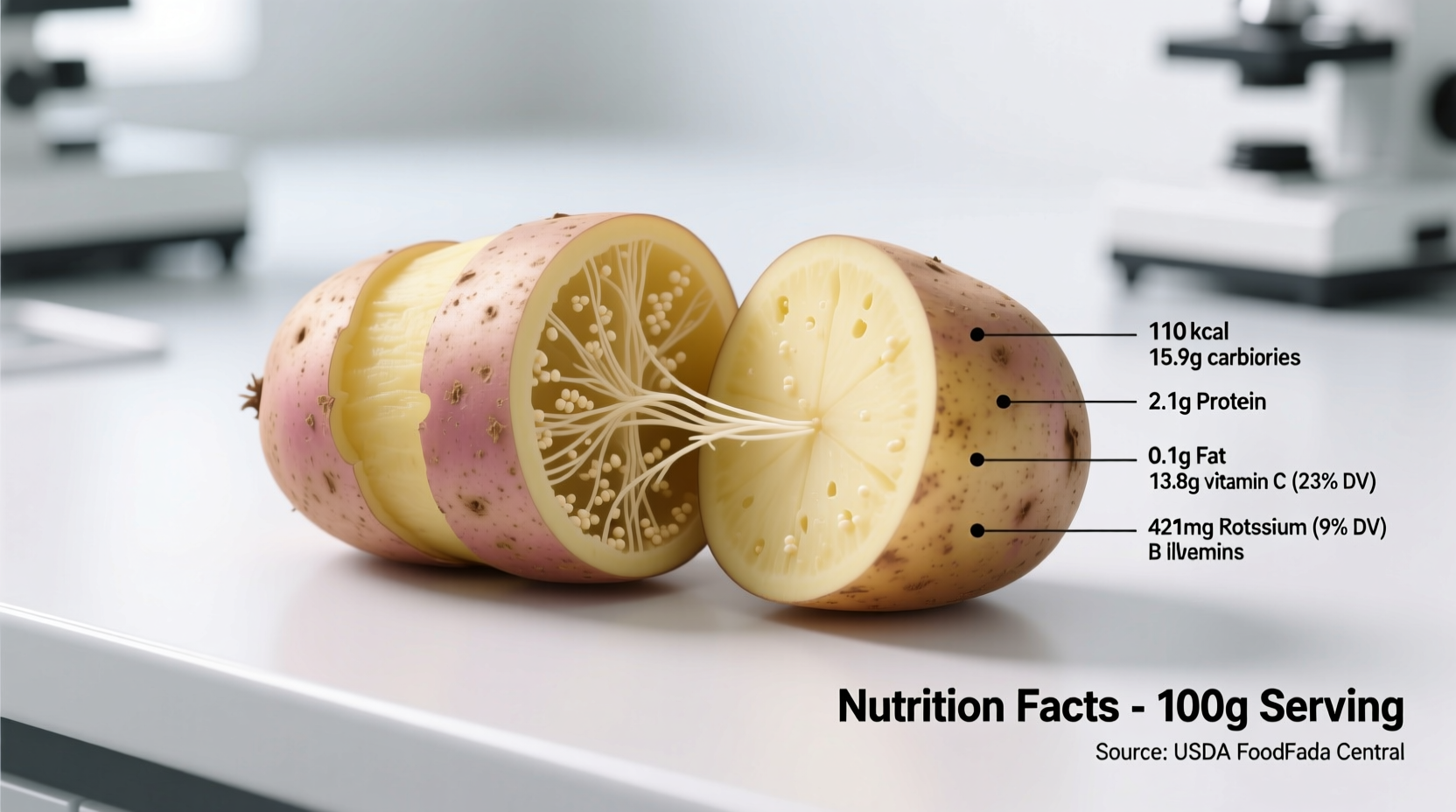
Discover why potatoes deserve a regular spot in your balanced diet. Despite common misconceptions, this versatile vegetable offers remarkable nutritional benefits when prepared properly. Let's explore the science-backed facts that make potatoes a valuable component of healthy eating patterns worldwide.
Core Nutritional Profile: What's Inside a Potato?
Understanding the complete nutritional composition helps you make informed dietary choices. Potatoes contain essential nutrients that support various bodily functions, with significant variations based on preparation method and whether the skin is consumed.
| Nutrient | Per 100g Raw Potato | % Daily Value | Key Health Benefits |
|---|---|---|---|
| Calories | 77 kcal | 4% | Energy source |
| Carbohydrates | 17.5g | 6% | Brain function, energy |
| Dietary Fiber | 2.1g | 8% | Digestive health, satiety |
| Vitamin C | 19.7mg | 22% | Immune function, collagen synthesis |
| Potassium | 421mg | 12% | Blood pressure regulation, muscle function |
| Vitamin B6 | 0.3mg | 18% | Metabolism, brain development |
Data sourced from USDA FoodData Central, reflecting raw Russet potato values. Note that cooking methods significantly impact final nutritional content.
Health Benefits Backed by Research
Potatoes offer more than just carbohydrates. Recent studies reveal their contribution to overall health when consumed as part of balanced eating patterns:
- Cardiovascular Support: The potassium content helps maintain healthy blood pressure levels, with research showing diets rich in potassium reduce stroke risk by 24% (CDC)
- Digestive Health: Resistant starch formed when cooled after cooking feeds beneficial gut bacteria, improving microbiome diversity
- Blood Sugar Management: When prepared properly (boiled and cooled), potatoes have a lower glycemic impact than many processed carbohydrate sources
- Nutrient Density: Potatoes provide more potassium than bananas and more vitamin C than tomatoes by weight
Preparation Methods: Maximizing Nutritional Value
Your cooking technique dramatically affects the nutritional profile. Here's how common preparation methods compare:
| Preparation Method | Vitamin C Retention | Fiber Content | Glycemic Impact |
|---|---|---|---|
| Boiled with skin | 75-80% | High (skin included) | Moderate |
| Steamed | 85-90% | High | Moderate |
| Baked | 70-75% | Moderate | Moderate-High |
| Fried | 40-50% | Low | High |
| Boiled then cooled | 65-70% | High (resistant starch increases) | Low-Moderate |
Research from the National Institutes of Health confirms that cooling potatoes after cooking increases resistant starch content by up to 50%, improving their metabolic response profile.
Context Boundaries: When Potatoes Fit Your Diet
Understanding the appropriate context for potato consumption helps maximize benefits while minimizing potential drawbacks:
- Portion Considerations: A standard serving is 1 medium potato (150g) or 1 cup diced. Larger portions can lead to excessive carbohydrate intake for some individuals
- Diabetes Management: Pair potatoes with protein and healthy fats to moderate blood sugar response. The American Diabetes Association recommends including potatoes in moderation as part of balanced meal planning
- Weight Management: Potatoes have high satiety value—studies show they rank highest for fullness among common foods, helping reduce overall calorie intake
- Preparation Matters: Avoid excessive added fats and sodium. Try roasting with herbs instead of frying, or enjoy boiled potatoes with Greek yogurt instead of sour cream
Potato Varieties: Nutritional Differences
Not all potatoes offer identical nutritional profiles. Understanding variety differences helps you select the best option for your dietary goals:
- Russet: Higher in starch, ideal for baking and frying, with slightly more potassium
- Red Potatoes: Waxy texture, lower glycemic index, with more vitamin C and iron
- Sweet Potatoes: Technically a different plant family, offering significantly more vitamin A but also more calories
- Fingerling: Rich in antioxidants, particularly when skin is consumed
A 2022 study published in Food Chemistry analyzed 25 potato varieties and found significant differences in antioxidant content, with purple and red varieties containing up to 4 times more antioxidants than white varieties.
Debunking Common Potato Myths
Let's address some persistent misconceptions about potatoes:
- Myth: Potatoes are "empty calories" with no nutritional value Fact: Potatoes provide significant potassium, vitamin C, and fiber—more potassium than bananas by weight
- Myth: All potatoes cause rapid blood sugar spikes Fact: Cooling potatoes after cooking creates resistant starch that lowers glycemic impact by up to 25-30%
- Myth: Potato skins are unsafe to eat Fact: Most nutrients concentrate in or near the skin. Properly washed potatoes with skin provide maximum nutritional benefit
Practical Incorporation Strategies
Make potatoes work for your health goals with these evidence-based approaches:
- For Athletes: Include potatoes in post-workout meals—they provide ideal carbohydrate-to-potassium ratios for recovery
- For Weight Management: Enjoy cooled potato salads with vinegar-based dressings to enhance resistant starch content
- For Family Meals: Roast mixed potato varieties with herbs for colorful, nutrient-dense side dishes
- For Budget Conscious: Potatoes offer exceptional nutrient density per dollar compared to many vegetables
Remember that dietary context matters most. The Dietary Guidelines for Americans emphasize potatoes as part of healthy eating patterns when prepared with minimal added fats and sugars.
Frequently Asked Questions
Are potatoes healthy for weight loss?
Yes, when prepared properly. Potatoes rank highest for satiety among common foods, helping you feel full longer. A medium boiled potato contains only 161 calories and provides 26% of daily fiber needs. For weight management, focus on preparation methods like boiling or baking instead of frying, and include the skin for maximum fiber content.
How do potatoes compare nutritionally to rice?
Potatoes generally offer superior nutrient density compared to white rice. A medium potato provides 28% of daily vitamin C, 27% of vitamin B6, and 26% of potassium needs, while white rice contains minimal vitamins and minerals. Potatoes also have higher fiber content when consumed with skin. However, rice may be preferable for those managing nightshade sensitivity, as potatoes belong to the nightshade family.
Can diabetics eat potatoes safely?
Yes, with strategic preparation. Cooling potatoes after cooking increases resistant starch content by up to 50%, lowering their glycemic impact. Pair potatoes with protein and healthy fats to moderate blood sugar response. The American Diabetes Association recommends including potatoes in moderation as part of balanced meal planning, with portion control being key (1/2 cup cooked).
Which potato variety has the highest nutritional value?
Purple and red potato varieties generally offer the highest nutritional value due to their elevated antioxidant content. Research shows they contain up to 4 times more antioxidants than white varieties. All potato varieties provide significant potassium and vitamin C, but colored varieties contain additional phytonutrients like anthocyanins that support cardiovascular health and reduce inflammation.
Does cooking method affect potato nutrition significantly?
Yes, cooking method dramatically impacts nutritional value. Boiling with skin retains 75-80% of vitamin C, while frying reduces it to 40-50%. Steaming preserves the most nutrients overall. Cooling potatoes after cooking increases resistant starch content by up to 50%, improving their metabolic response profile. For maximum nutrition, choose boiling or steaming with skin intact, and consider cooling before consumption for additional health benefits.




 浙公网安备
33010002000092号
浙公网安备
33010002000092号 浙B2-20120091-4