
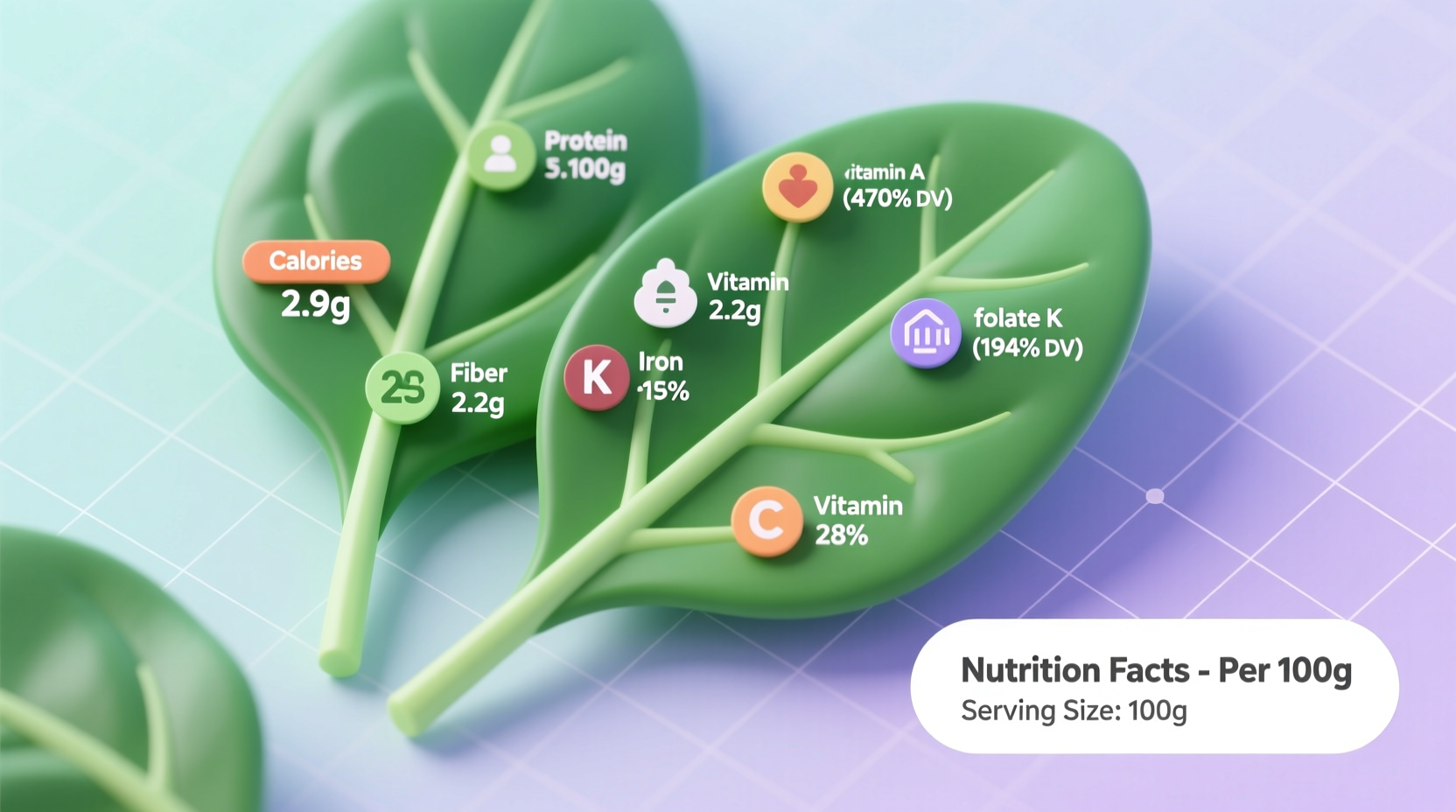
One cup (30g) of raw spinach contains just 7 calories while delivering 181% of your daily vitamin K, 56% of vitamin A, and 15% of folate. This nutrient-dense leafy green also provides significant amounts of manganese, magnesium, iron, and vitamin C, making it one of the most nutritionally valuable vegetables you can eat.
Spinach isn't just Popeye's favorite superfood—it's a nutritional powerhouse backed by decades of scientific research. Whether you're managing blood pressure, building stronger bones, or simply trying to eat cleaner, understanding exactly what makes spinach so special can transform how you incorporate it into your daily meals. This guide delivers the complete nutritional profile you need, plus practical tips for maximizing absorption and health benefits.
Complete Nutritional Breakdown of Spinach
Let's examine the detailed nutritional composition of spinach based on USDA FoodData Central measurements. The values below represent one cup (30g) of raw spinach, the most common serving size people consume in salads and smoothies.
| Nutrient | Amount per Cup (30g) | Daily Value % |
|---|---|---|
| Calories | 7 | 0% |
| Protein | 0.9g | 2% |
| Total Fat | 0.1g | 0% |
| Carbohydrates | 1.1g | 0% |
| Dietary Fiber | 0.7g | 3% |
| Vitamin K | 145mcg | 181% |
| Vitamin A | 58mcg RAE | 56% |
| Folate | 58mcg | 15% |
| Vitamin C | 8.4mg | 10% |
| Magnesium | 24mg | 6% |
| Manganese | 0.16mg | 7% |
| Iron | 0.81mg | 4% |
According to the USDA FoodData Central, spinach contains over 20 different vitamins and minerals, plus numerous phytonutrients that don't appear on standard nutrition labels but contribute significantly to health benefits.
Why Spinach's Nutrient Profile Stands Out
What makes spinach truly exceptional isn't just the quantity of nutrients, but their quality and bioavailability. Unlike supplements, spinach delivers nutrients in their natural forms alongside co-factors that enhance absorption.
Vitamin K: The Bone and Heart Protector
With 181% of your daily vitamin K in just one cup, spinach significantly outperforms most other vegetables. Vitamin K1 (phylloquinone) in spinach plays a crucial role in blood clotting and bone metabolism. Research from the National Institutes of Health shows that adequate vitamin K intake correlates with reduced risk of osteoporosis and cardiovascular disease.
Vitamin A: Vision and Immunity Support
Spinach provides vitamin A primarily as beta-carotene, which your body converts to active vitamin A as needed. This natural regulation prevents the toxicity risks associated with excessive preformed vitamin A supplements. The NIH Office of Dietary Supplements confirms that plant-based carotenoids like those in spinach offer protective benefits without the risks of supplementation.
Iron Bioavailability: Maximizing Absorption
While spinach contains iron, its bioavailability differs from animal sources. The iron in spinach is non-heme iron, which absorbs better when paired with vitamin C-rich foods. This explains why traditional pairings like spinach salad with citrus dressing or strawberries aren't just tasty—they're scientifically sound nutrition strategies. Studies published in the American Journal of Clinical Nutrition demonstrate that adding vitamin C can increase non-heme iron absorption from plant foods by up to 400%.
Spinach vs. Other Leafy Greens: Nutritional Comparison
How does spinach stack up against other popular greens? This comparison shows key nutritional differences per 100g raw:
| Nutrient | Spinach | Kale | Romaine | Arugula |
|---|---|---|---|---|
| Vitamin K (mcg) | 483 | 389 | 102 | 25.3 |
| Vitamin A (mcg RAE) | 469 | 681 | 436 | 119 |
| Vitamin C (mg) | 28.1 | 120 | 24 | 15 |
| Folate (mcg) | 194 | 141 | 136 | 97 |
| Calcium (mg) | 99 | 150 | 33 | 160 |
While kale contains more vitamin C and calcium, spinach delivers significantly more vitamin K and comparable folate. Romaine offers a middle ground with decent vitamin A and folate, while arugula provides peppery flavor with moderate nutrients. The best approach? Rotate through different greens to maximize your nutrient diversity.
Maximizing Health Benefits: Practical Application
Knowing spinach's nutrition facts is valuable, but understanding how to apply this knowledge makes the difference. Here's how to get the most from your spinach:
Cooking Methods That Preserve Nutrients
Contrary to popular belief, cooking spinach can actually increase the bioavailability of certain nutrients. Light steaming (just 1-2 minutes) breaks down oxalic acid, which improves calcium and iron absorption. However, boiling for extended periods leaches water-soluble vitamins like vitamin C and folate. For maximum benefit:
- Steam briefly (60-90 seconds) to preserve most nutrients while improving mineral absorption
- Add to smoothies raw for maximum vitamin C retention
- Sauté with healthy fats (olive oil, avocado) to enhance absorption of fat-soluble vitamins
Strategic Pairings for Enhanced Nutrition
Combine spinach with these foods to boost nutrient absorption:
- Vitamin C sources (citrus, bell peppers, strawberries) - increases iron absorption by up to 400%
- Healthy fats (avocado, nuts, olive oil) - enhances absorption of fat-soluble vitamins A, E, and K
- Vinegar or lemon juice - reduces oxalate content, improving calcium availability
Addressing Common Misconceptions
Several myths about spinach persist despite scientific evidence to the contrary:
Myth: Spinach is high in absorbable iron
While spinach contains iron, its bioavailability is limited by oxalic acid. The iron in spinach absorbs at about 1.7-2.9% efficiency compared to 14-18% for meat sources. Pairing with vitamin C dramatically improves this, but spinach shouldn't be your primary iron source if you have deficiency concerns.
Myth: Raw is always better than cooked
Research from the Journal of Agricultural and Food Chemistry shows that cooking spinach increases the bioavailability of carotenoids like beta-carotene and lutein by breaking down cell walls. The key is using proper cooking methods—steaming preserves more nutrients than boiling.
Myth: Frozen spinach is nutritionally inferior
Actually, flash-frozen spinach often retains more nutrients than "fresh" spinach that's been transported long distances. The freezing process locks in nutrients at peak ripeness, while fresh spinach can lose up to 50% of its folate content within 8 days of harvest.
When Spinach Might Not Be Ideal
While spinach benefits most people, certain health conditions require moderation:
- Kidney stone formers - Spinach's high oxalate content (750mg per cup cooked) may contribute to calcium oxalate stones
- Those on blood thinners - The extremely high vitamin K content requires consistent daily intake to avoid medication interactions
- Infants under 6 months - Nitrate content in spinach can cause methemoglobinemia ("blue baby syndrome")
For most adults, however, the health benefits of regular spinach consumption far outweigh potential concerns. The US Dietary Guidelines recommend 1.5-2 cups of dark leafy greens weekly as part of a healthy dietary pattern.
Frequently Asked Questions
How much spinach should I eat daily for optimal health benefits?
For most adults, consuming 1-2 cups of raw spinach or 1/2 cup cooked spinach daily provides substantial nutritional benefits without excessive oxalate intake. This amount delivers significant vitamins K, A, and folate while keeping oxalate levels within safe ranges for most people. Those with kidney stone history may want to limit to 1/2 cup cooked spinach daily and ensure adequate calcium intake from other sources.
Does cooking spinach destroy its nutrients?
Cooking affects different nutrients differently. Water-soluble vitamins like vitamin C and some folate decrease with cooking, but fat-soluble vitamins (A, E, K) and carotenoids actually become more bioavailable. Light steaming for 1-2 minutes preserves most nutrients while breaking down oxalic acid, which improves mineral absorption. The key is using appropriate cooking methods—steaming or quick sautéing preserves more nutrients than boiling.
Is raw or cooked spinach more nutritious?
Both forms offer benefits. Raw spinach provides more vitamin C and folate, while cooked spinach offers better absorption of carotenoids, iron, and calcium. For maximum nutritional diversity, include both in your diet—add raw spinach to smoothies and salads, and cook it lightly for dishes where you want enhanced mineral absorption. Research shows cooked spinach provides up to 3 times more beta-carotene absorption than raw.
Can spinach help with weight loss?
Spinach can support weight management due to its extremely low calorie density (just 7 calories per cup raw) and high fiber content. The fiber promotes satiety, helping you feel full with fewer calories. Studies published in Appetite journal show that adding leafy greens like spinach to meals can reduce overall calorie intake by up to 12% without compromising satisfaction. For best results, incorporate spinach into meals rather than eating it alone.
What's the best way to store spinach to maintain freshness and nutrients?
Store unwashed spinach in airtight containers with a paper towel to absorb excess moisture. Keep it in the high-humidity crisper drawer of your refrigerator. Properly stored, fresh spinach maintains quality for 5-7 days. For longer storage, blanch spinach briefly (30-60 seconds), cool in ice water, then freeze in airtight bags—frozen spinach retains nutrients for 8-12 months. Avoid washing spinach until ready to use, as moisture accelerates spoilage.




 浙公网安备
33010002000092号
浙公网安备
33010002000092号 浙B2-20120091-4