
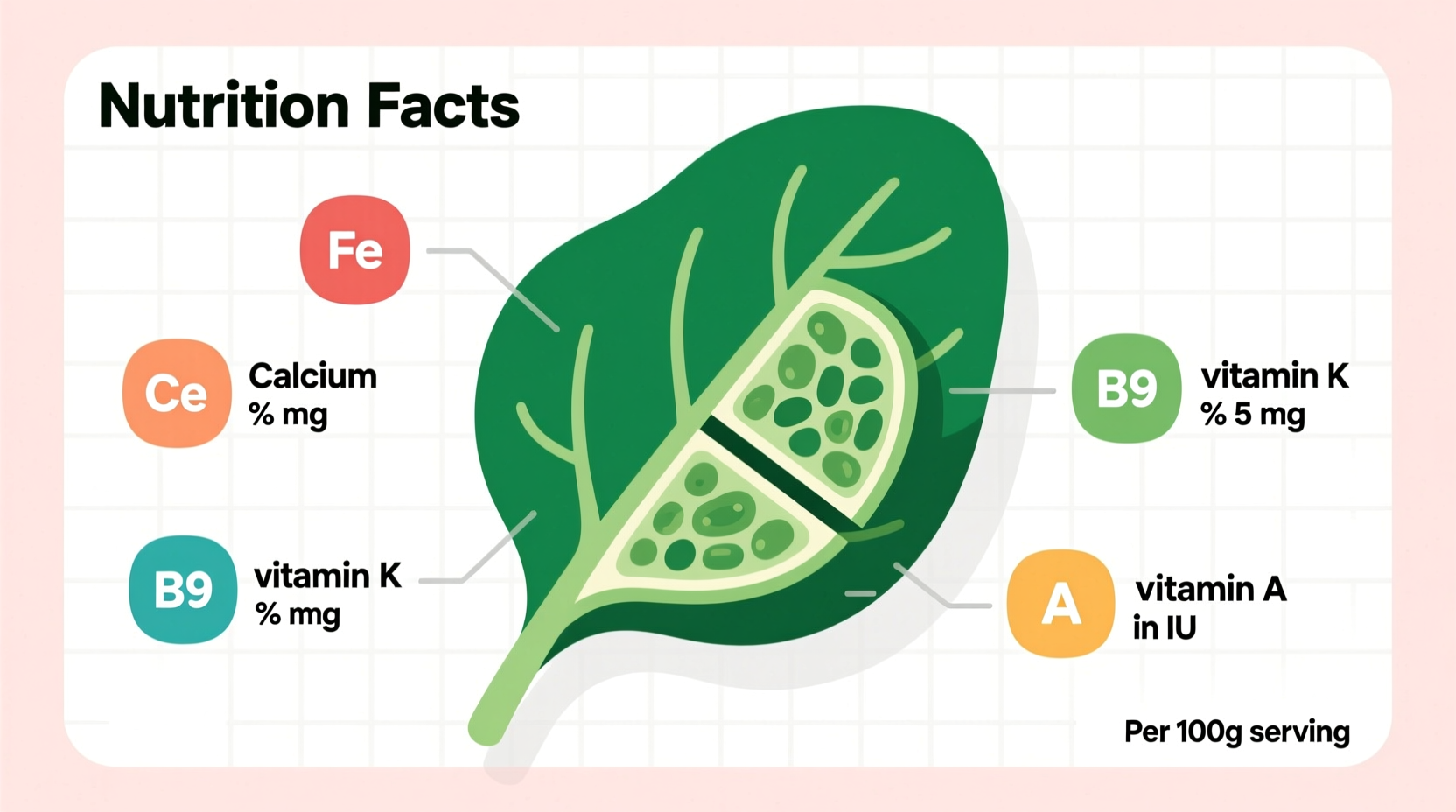
Discover exactly how this leafy green powerhouse can transform your diet with science-backed nutrition data you can trust. Whether you're planning meals, tracking macros, or optimizing for specific health goals, understanding raw spinach nutrition facts per 100g gives you precise control over your nutrient intake.
Complete Spinach Nutrition Profile: Raw vs. Cooked
| Nutrient | Raw Spinach (100g) | Cooked Spinach (100g) |
|---|---|---|
| Calories | 23 kcal | 28 kcal |
| Protein | 2.9g | 3.0g |
| Dietary Fiber | 2.2g | 2.4g |
| Vitamin K | 483% DV | 725% DV |
| Vitamin A | 188% DV | 377% DV |
| Folate | 49% DV | 48% DV |
| Iron | 15% DV | 21% DV |
| Calcium | 10% DV | 12% DV |
Data sourced from the USDA FoodData Central database (Release 17). Note that cooking concentrates nutrients by reducing water content, but some heat-sensitive vitamins like vitamin C decrease during cooking.
Vitamin and Mineral Powerhouse: What Makes Spinach Special
Spinach earns its superfood status through an exceptional concentration of essential nutrients. Let's examine the most significant components that make spinach nutritional value per serving so impressive:
Vitamin K: The Blood and Bone Guardian
Just one cup of cooked spinach delivers more than seven times your daily vitamin K requirement. This fat-soluble vitamin plays a critical role in blood clotting and bone metabolism. Research from the National Institutes of Health confirms that adequate vitamin K intake supports bone density and reduces fracture risk, particularly important for aging populations.
Beta-Carotene: Nature's Pro-Vitamin A
Spinach contains abundant beta-carotene, which your body converts to active vitamin A. This powerful antioxidant supports vision health, immune function, and skin integrity. Unlike preformed vitamin A (found in animal products), beta-carotene provides a safe, regulated conversion process that prevents toxicity concerns.
Folate: Essential for Cellular Function
With nearly half your daily folate needs in 100g, spinach supports DNA synthesis and repair. This is particularly crucial during pregnancy for preventing neural tube defects. The NIH Office of Dietary Supplements emphasizes folate's role in red blood cell formation and homocysteine regulation, potentially reducing cardiovascular disease risk.

Maximizing Nutrient Absorption: Practical Strategies
Understanding how to absorb iron from spinach effectively transforms how you incorporate this vegetable into your meals. Spinach contains non-heme iron (plant-based iron), which has lower bioavailability than heme iron from animal sources. However, you can significantly boost absorption with these evidence-based techniques:
- Pair with vitamin C: Consuming spinach with citrus fruits, bell peppers, or tomatoes increases iron absorption by up to 67% according to research published in the American Journal of Clinical Nutrition
- Avoid calcium during iron-rich meals: Dairy products consumed simultaneously can reduce iron absorption by 50-60%
- Cook wisely: Light steaming breaks down oxalic acid (which binds minerals) while preserving most nutrients
- Add healthy fats: Vitamin K and carotenoids require fat for optimal absorption—toss with olive oil or avocado
Contextual Considerations: When Spinach Nutrition Has Limits
While spinach offers exceptional nutrition, certain contexts affect its benefits. Understanding these spinach nutritional limitations and considerations ensures you maximize its advantages:
Oxalate Content: Spinach contains moderate levels of oxalates (about 750mg per 100g), which can bind calcium and iron, reducing their absorption. For most people, this isn't problematic, but those with kidney stone predisposition should moderate intake. The National Kidney Foundation recommends varying leafy green sources if you're prone to calcium-oxalate stones.
Warfarin Users: Due to its exceptionally high vitamin K content, spinach consumption must remain consistent for those taking blood thinners like warfarin. Sudden increases or decreases can interfere with medication efficacy. The American Heart Association advises maintaining consistent vitamin K intake rather than eliminating nutrient-dense foods.
Daily Incorporation: Making Spinach Work for Your Goals
How much spinach should you eat daily to reap health benefits of eating spinach regularly? Research suggests:
- General health maintenance: 1-2 cups raw or ½ cup cooked daily provides substantial nutrient benefits without overwhelming your system
- Iron optimization: For plant-based diets, include 1 cup cooked spinach 3-4 times weekly paired with vitamin C sources
- Eye health support: Regular consumption of lutein and zeaxanthin-rich foods like spinach (at least 10mg daily) may reduce age-related macular degeneration risk according to National Eye Institute research
Try these simple integration strategies that preserve maximum nutrition:
- Add raw spinach to smoothies (vitamin C from fruits enhances iron absorption)
- Lightly steam and season with lemon juice and olive oil
- Use as pizza topping during the last minute of baking
- Create spinach pesto with garlic, pine nuts, and olive oil
Beyond Basic Nutrition: Emerging Research on Spinach Benefits
Recent studies reveal additional scientifically proven health benefits of spinach that extend beyond its impressive vitamin profile:
Thylakoids, chloroplast membranes found in spinach, show promise for appetite regulation. A study in Appetite journal found that consuming thylakoid-rich spinach extract reduced hunger hormones and increased satiety hormones, potentially supporting weight management efforts. While more research is needed, incorporating whole spinach into meals may provide similar benefits through its natural thylakoid content.
Additionally, spinach contains nitrates that convert to nitric oxide in the body, supporting vascular health. Research from American Heart Association journals indicates dietary nitrates from leafy greens may help lower blood pressure through improved endothelial function.




 浙公网安备
33010002000092号
浙公网安备
33010002000092号 浙B2-20120091-4