
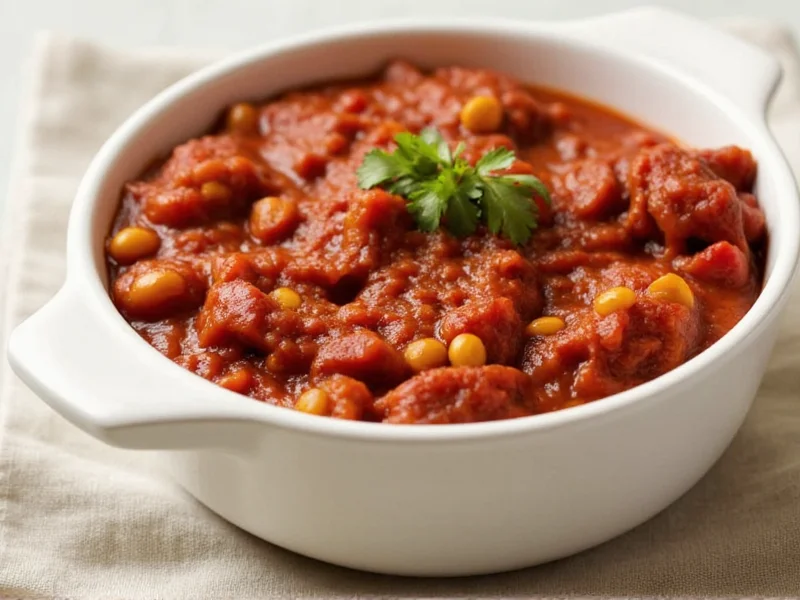
Many people mistakenly believe chili must be spicy to be authentic, but traditional chili con carne actually varies widely across regions, with many versions focusing on deep, complex flavors rather than heat. Whether you're cooking for children, managing dietary restrictions, or simply prefer milder flavors, non spicy chili can be just as satisfying and flavorful as its spicy counterparts.
Understanding Flavor Without Heat
The misconception that chili must be spicy comes from confusing the dish "chili" with the ingredient "chili peppers." Authentic Texas-style chili often contains no tomatoes and gets its flavor from meat and chili peppers, but countless regional variations exist that focus on rich, savory notes rather than heat.
Creating non spicy chili recipes successfully requires understanding flavor building blocks:
- Umami - Found in tomatoes, mushrooms, and well-browned meat
- Smokiness - Achieved through smoked paprika or a touch of liquid smoke
- Earthy notes - From ingredients like cocoa powder or coffee
- Sweetness - Balanced with carrots, sweet potatoes, or a touch of maple syrup
- Acidity - Brightened with vinegar or citrus at the end
Evolution of Chili: From Spicy to Mild Variations
Chili con carne has evolved significantly since its origins, with non-spicy versions emerging as regional preferences and dietary needs changed. Understanding this timeline helps appreciate why non-spicy chili is not only valid but historically grounded:
- Late 1800s: Chili con carne was popularized in Texas by trail drivers and immigrants, often using dried chili peppers for heat and preservation. However, early recipes varied widely in spiciness depending on available ingredients (Texas State Historical Association, source).
- 1937: The first documented Cincinnati chili recipe appeared, which is typically served over spaghetti and has a mild, spiced-sweet flavor profile. This style intentionally avoids heat to complement its unique serving method (Cincinnati USA, source).
- 1950s-1970s: As chili spread nationally, family-oriented cookbooks began including milder versions. The rise of health-conscious eating in the 1970s further popularized non-spicy adaptations that focused on complex flavors without irritation.
- Today: Non-spicy chili is a mainstream option, with regional adaptations and dietary-specific versions (e.g., for sensitive stomachs) widely accepted as authentic expressions of this versatile dish.
Regional Chili Styles: Spice Levels and Key Characteristics
Chili varies dramatically across the United States, with many regional styles naturally being mild. This table compares authentic regional variations that often omit heat in favor of other flavor profiles:
| Regional Style | Typical Spice Level | Key Non-Spicy Flavor Elements | Historical Context |
|---|---|---|---|
| Texas Red | Hot (traditional), but mild adaptations common | Beef, cumin, garlic | Original trail driver recipes varied by available peppers; modern family versions often reduce heat while maintaining depth (Texas State Historical Association) |
| Cincinnati Chili | Mild | Cinnamon, cloves, allspice, Worcestershire | Created by Macedonian immigrants in 1922; specifically designed as a mild, Mediterranean-spiced sauce for spaghetti (Cincinnati USA) |
| Midwest Bean Chili | Mild | Beans, tomatoes, sweet paprika | Developed during the Great Depression as an affordable, family-friendly meal; naturally low-heat due to emphasis on beans and tomatoes (National Council for Home Safety and Mail Education) |
Essential Substitutions for Non Spicy Chili
When adapting traditional chili recipes to be non-spicy, focus on these key substitutions that maintain complexity without heat:
| Traditional Spicy Ingredient | Non-Spicy Alternative | Flavor Contribution |
|---|---|---|
| Chili powder (spicy) | Sweet paprika + cumin | Earthy, smoky depth without heat |
| Cayenne pepper | Black pepper + touch of cinnamon | Warmth without burning sensation |
| Jalapeños | Bell peppers (any color) | Vegetal sweetness and texture |
| Hot sauce | Worcestershire sauce | Umami and tang without spice |
| Red pepper flakes | Crumbled bacon or smoked salt | Smoky complexity |
Three Family-Friendly Non Spicy Chili Recipes
1. Classic Mild Beef Chili (Non Spicy Chili Recipe Without Peppers)
This hearty non spicy chili recipe serves 6 and takes 1 hour 15 minutes (20 minutes prep, 55 minutes cooking).
Ingredients
- 1.5 lbs ground beef (85% lean)
- 1 large yellow onion, finely diced
- 1 red bell pepper, finely diced
- 3 cloves garlic, minced
- 2 (15oz) cans kidney beans, drained and rinsed
- 1 (28oz) can crushed tomatoes
- 1 (6oz) can tomato paste
- 2 cups beef broth
- 2 tbsp sweet paprika
- 1.5 tbsp ground cumin
- 1 tsp dried oregano
- 1 tsp cocoa powder
- 1 tbsp brown sugar
- 1 tsp Worcestershire sauce
- Salt and black pepper to taste
Instructions
- Brown the ground beef in a large pot over medium-high heat, breaking into small pieces. Drain excess fat.
- Add onion and bell pepper, cooking until softened (5-7 minutes).
- Stir in garlic and cook for 1 minute until fragrant.
- Add tomato paste and cook for 2 minutes, stirring constantly to deepen flavor.
- Stir in all spices (paprika, cumin, oregano, cocoa powder) and cook for 1 minute.
- Add crushed tomatoes, beef broth, kidney beans, brown sugar, and Worcestershire sauce.
- Bring to a simmer, then reduce heat to low. Cover and cook for 45 minutes, stirring occasionally.
- Season with salt and black pepper to taste. For richer flavor, let sit off heat for 15 minutes before serving.
Flavor profile: Rich, savory, with subtle sweetness and earthy depth. Perfect mild chili recipe for kids that still satisfies adult palates.
2. Non Spicy Vegetarian Three-Bean Chili
A hearty meatless option that's naturally non spicy while delivering complex flavors.
Key Flavor Builders
- 2 tbsp olive oil
- 1 large onion, diced
- 1 orange bell pepper, diced
- 8 oz mushrooms, finely chopped
- 3 cloves garlic, minced
- 1 (15oz) can black beans
- 1 (15oz) can pinto beans
- 1 (15oz) can white beans
- 1 (28oz) can fire-roasted tomatoes (mild version)
- 2 cups vegetable broth
- 2 tbsp smoked paprika
- 1.5 tbsp cumin
- 1 tsp dried thyme
- 1 tbsp balsamic vinegar
- 1 small sweet potato, peeled and diced (optional)
Method
The secret to this non spicy vegetarian chili recipe is the mushrooms and smoked paprika, which provide umami depth without any heat. Sauté mushrooms until deeply browned before adding other ingredients to maximize flavor. For extra richness, add 1 diced sweet potato with the broth. Simmer for at least 40 minutes to allow flavors to meld. Finish with balsamic vinegar to brighten the flavors.
3. Turkey and White Bean Non Spicy Chili
This lighter option proves non spicy chili recipes can be both healthy and deeply flavorful.
Pro Tips for Maximum Flavor
- Use ground turkey thigh meat for better flavor than breast
- Add 1 diced parsnip with the vegetables for natural sweetness
- Include 1 tsp instant coffee granules to enhance depth
- Stir in 2 tbsp grated Parmesan at the end for umami boost
- Top with fresh corn kernels for texture contrast
This mild chili recipe for sensitive stomachs uses lean protein while maintaining richness through proper browning techniques and flavor layering. The white beans create a creamier texture that balances beautifully with the mild spices.
Troubleshooting Non Spicy Chili
Even with the best non spicy chili recipes, you might encounter these common issues:
If Your Chili Tastes Bland
This is the most common challenge when making non spicy chili recipes. Without capsaicin's刺激性, you need to build flavor differently:
- Brown properly: Take time to properly brown meat and vegetables for Maillard reaction
- Layer spices: Add dried spices early to toast in oil, fresh herbs at the end
- Acid balance: Finish with 1-2 tsp apple cider vinegar or lime juice
- Umami boosters: Add 1 tsp soy sauce or 2 tbsp grated Parmesan
- Sweetness: A pinch of brown sugar can balance acidity
Scenario Applicability: When Non-Spicy Chili Works Best (and When It Might Not)
Non-spicy chili is incredibly versatile, but understanding its ideal use cases and limitations ensures the best experience for your specific needs:
- Ideal for:
- Children under 12: Pediatric nutrition guidelines recommend mild flavors for developing palates, as spicy foods can cause discomfort (Academy of Nutrition and Dietetics, source).
- Digestive sensitivity: For individuals with IBS or GERD, non-spicy chili avoids capsaicin—a known symptom trigger—making it a safer choice (Mayo Clinic, source).
- Flavor education: When teaching cooking fundamentals without heat distraction, such as spice layering techniques.
- Less suitable for:
- Traditional competitions: Events like the World Championship Chili Cookoff require specific spicy formulations.
- Spice-focused experiences: When seeking the physiological response (endorphin release) from capsaicin.
- Certain cultural contexts: Where spicy chili is an expected part of culinary tradition.
Storage and Reheating Tips
Non spicy chili recipes often taste even better the next day as flavors continue to meld. Store in airtight containers:
- Refrigerator: Up to 4 days
- Freezer: Up to 3 months (portion in freezer bags for quick meals)
- Reheating: Gently warm on stove with a splash of broth to refresh flavors
- Flavor boost when reheating: Stir in fresh herbs or a squeeze of lime
Customizing Non Spicy Chili Recipes
Once you master the basics of non spicy chili recipes, experiment with these variations:
- For kids: Add mild cheese like Monterey Jack and serve with cornbread
- For extra nutrition: Stir in finely grated zucchini or carrots
- Creamy version: Add 1/2 cup coconut milk for richness
- Southwest twist: Include corn and mild green chiles (check labels for "mild")
- Breakfast chili: Top with fried eggs and avocado




 浙公网安备
33010002000092号
浙公网安备
33010002000092号 浙B2-20120091-4