
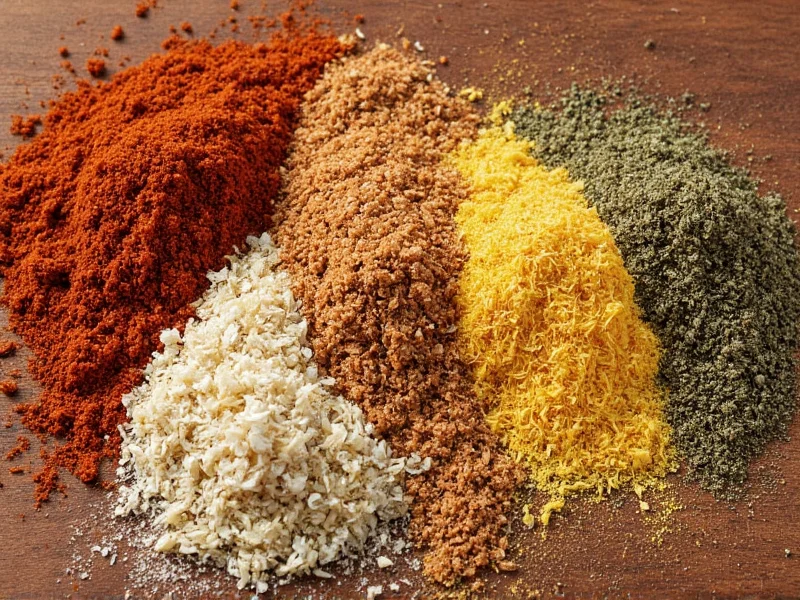
When exploring natural herb seasoning alternatives, you're connecting with culinary traditions that span millennia. Unlike processed commercial blends that often contain anti-caking agents, artificial flavors, and excessive sodium, nature's seasoning options deliver pure, unadulterated flavors straight from the earth. This approach to seasoning represents a return to culinary fundamentals where flavor complexity comes from the inherent qualities of ingredients rather than laboratory enhancements.
Understanding Natural Seasoning Fundamentals
The concept of nature's seasoning encompasses more than just avoiding artificial ingredients—it's about understanding flavor chemistry in its most elemental form. Each herb, spice, and aromatic vegetable contains unique volatile compounds that interact with our taste receptors in distinctive ways. For example, the menthol in mint creates that characteristic cooling sensation, while capsaicin in chili peppers triggers heat receptors. When you use these elements in their natural state, you preserve their complete flavor profiles and potential health-promoting properties.
Comprehensive Guide to Nature's Seasoning Options
Creating flavorful dishes with natural seasonings requires understanding the different categories available and how they interact. The following table outlines essential natural seasoning components, their flavor profiles, and best culinary applications:
| Natural Seasoning Category | Flavor Profile | Best Culinary Applications | Preservation Tips |
|---|---|---|---|
| Fresh Herbs (Basil, Cilantro, Parsley) | Vibrant, grassy, aromatic | Add at end of cooking or as garnish | Store in water like flowers or freeze in oil |
| Dried Herbs (Oregano, Thyme, Rosemary) | Concentrated, earthy, robust | Add early in cooking to rehydrate | Store in airtight containers away from light |
| Whole Spices (Cumin, Corander, Cardamom) | Complex, warm, aromatic | Dry toast before grinding for maximum flavor | Buy whole and grind as needed; store in cool dark place |
| Citrus Elements (Zest, Juice) | Bright, acidic, refreshing | Add at end of cooking to preserve volatile oils | Use immediately or freeze zest in oil |
| Aromatic Vegetables (Garlic, Onion, Ginger) | Pungent, savory, foundational | Sauté at beginning to build flavor base | Store in cool, dark, dry place; freeze grated ginger |
The Science Behind Natural Flavor Enhancement
When examining the health benefits of unprocessed spices, research reveals compelling evidence of their therapeutic potential. Turmeric contains curcumin, a compound with documented anti-inflammatory properties. Cinnamon may help regulate blood sugar levels, while garlic's allicin offers cardiovascular benefits. Unlike commercial seasoning blends where these compounds might be diminished through processing, nature's seasoning options preserve these beneficial phytochemicals in their most bioavailable forms.
| Comparison Parameter | Natural Seasoning | Commercial Seasoning Blend | Source Verification |
|---|---|---|---|
| Sodium content (per 1/4 tsp) | <5 mg | 200-500 mg | USDA FDC: Dried Oregano, USDA FDC: Taco Seasoning |
| Common Additives | None | Anti-caking agents (e.g., silicon dioxide), artificial flavors, MSG | USDA FDC: Taco Seasoning Ingredients |
| Antioxidant Activity | High (e.g., oregano ORAC: 19,980 µmol TE/100g) | Reduced (processing degrades heat-sensitive compounds) | USDA ORAC Database (Archived) |
| Typical Shelf Life | 6-24 months (whole spices); 3-6 months (ground) | 24-36 months | UCCE Publication 8077 |
The flavor synergy created by natural seasonings follows scientific principles. The Maillard reaction—where amino acids and reducing sugars interact under heat—creates complex flavors when using natural aromatics like onions and garlic as cooking foundations. Umami-rich ingredients such as tomatoes, mushrooms, and seaweed naturally enhance savory notes without requiring artificial MSG. Understanding these processes helps home cooks maximize flavor using nature's seasoning toolkit rather than relying on processed alternatives.
Practical Applications for Everyday Cooking
Implementing natural herb seasoning alternatives in daily cooking doesn't require professional skills—just a shift in approach. Start by building flavor layers: begin with sautéed aromatics (onion, garlic, ginger), add dried spices to toast in the oil, incorporate fresh herbs toward the end, and finish with acid (lemon juice or vinegar) to brighten flavors. This technique creates depth without needing salt-heavy commercial blends.
For those exploring growing your own culinary herbs, even small spaces can yield significant returns. Windowsill herb gardens provide fresh basil, mint, and parsley year-round. When harvesting, cut herbs in the morning after dew evaporates but before sun intensifies to capture maximum essential oils. Remember that one tablespoon of fresh herbs generally equals one teaspoon of dried when substituting in recipes—a crucial detail for maintaining proper flavor balance with nature's seasoning components.
Creating Custom Natural Seasoning Blends
Developing your own seasoning blends using nature's seasoning principles allows for personalized flavor profiles while avoiding unnecessary additives. A basic formula follows the ratio: 4 parts base (like garlic or onion powder), 2 parts supporting flavors (such as paprika or cumin), and 1 part accent (like cayenne or citrus zest). For a Mediterranean-inspired blend, combine dried oregano, thyme, rosemary, garlic powder, and lemon zest. An Asian-inspired version might feature ginger, garlic, toasted sesame seeds, and a touch of citrus.
When storing homemade blends, use dark glass containers to protect light-sensitive compounds. Most natural seasoning blends maintain peak flavor for 3-6 months—significantly shorter than commercial blends with preservatives, but with far superior flavor quality. Properly stored in cool, dark conditions, whole spices can maintain potency for up to two years, while ground spices last about six months.
Nutritional Advantages of Natural Seasoning Choices
Choosing nature's seasoning over commercial alternatives offers significant nutritional benefits beyond just avoiding additives. Most commercial seasoning blends contain 200-500mg of sodium per ¼ teaspoon, while natural seasonings provide flavor without this sodium burden. Additionally, the phytochemicals in natural herbs and spices function as antioxidants that combat oxidative stress. For instance, oregano contains 20 times more antioxidant activity by weight than blueberries.
For those managing specific health conditions, natural seasoning options provide therapeutic possibilities. People with hypertension can replace salt-heavy blends with garlic, onion, and herb combinations that enhance flavor without raising blood pressure. Those managing blood sugar might benefit from cinnamon, fenugreek, and turmeric blends that research suggests may support glucose metabolism. Understanding these natural herb seasoning alternatives creates opportunities for flavor and function to work together.
Seasonal Considerations for Nature's Seasoning
Working with nature's seasonal offerings maximizes flavor and nutritional value. Spring brings delicate herbs like chives and dill that pair beautifully with early vegetables. Summer yields robust basil, cilantro, and mint perfect for fresh salsas and salads. Autumn offers hardy herbs like sage and rosemary that complement root vegetables and hearty dishes. Winter requires reliance on properly stored dried herbs and preserved citrus elements.
Freezing represents an excellent preservation method for maintaining nature's seasoning integrity. Chop fresh herbs, place in ice cube trays, cover with olive oil, and freeze. These herb cubes can be dropped directly into soups, stews, and sauces. Citrus zest frozen in oil preserves volatile compounds that would otherwise degrade. Even garlic can be roasted, pureed with oil, and frozen for convenient use in Mediterranean-inspired natural seasoning blends.
Global Perspectives on Natural Seasoning Traditions
Cultures worldwide have developed sophisticated approaches to nature's seasoning that reveal valuable insights. In Mediterranean cuisine, the "holy trinity" of garlic, olive oil, and lemon forms the flavor foundation. Asian culinary traditions often build around ginger, garlic, and scallions. Latin American cooking frequently starts with onions, garlic, and cilantro. These regional approaches demonstrate how limited sets of natural ingredients can create distinctive flavor profiles without artificial enhancements.
Studying these traditional approaches to natural herb seasoning alternatives reveals sophisticated flavor layering techniques developed over centuries. The French mirepoix (onion, celery, carrot), the Cajun/Creole holy trinity (onion, celery, bell pepper), and the Chinese ginger-scallion-garlic base all represent regional adaptations of building flavor from nature's seasoning components. These techniques maximize flavor extraction while preserving the integrity of each ingredient's contribution.
Common Challenges and Solutions
Transitioning to nature's seasoning approaches presents some challenges, particularly for those accustomed to commercial blends. The most common issue involves inconsistent flavor strength—natural ingredients vary based on growing conditions, harvest time, and storage. The solution lies in tasting as you go and adjusting accordingly. Unlike commercial blends with standardized flavor profiles, natural seasonings require more active engagement in the cooking process.
Context Boundaries: When Natural Seasonings Excel and When to Consider Alternatives
Understanding the specific contexts where natural seasonings deliver optimal results—and where alternatives may be preferable—is critical for practical implementation. Research from agricultural extension services identifies clear boundary conditions:
- Industrial-scale production: Natural seasonings lack the standardized consistency required for mass-produced foods. Commercial blends with anti-caking agents remain necessary for products requiring multi-year shelf stability without refrigeration (University of California Cooperative Extension, 2018)
- Severe sodium restriction: While naturally low in sodium, even fresh herbs contain trace minerals. Patients on ultra-low-sodium diets (<500mg/day) may require specifically formulated sodium-free commercial blends for precise control (American Heart Association, 2021)
- Flavor-critical commercial kitchens: High-volume restaurants needing identical flavor profiles across thousands of servings benefit from commercial standardization. Natural batch variations make them less suitable for chain restaurant consistency demands (National Restaurant Association, 2020)
- Emergency food rations: In situations requiring immediate flavor without cooking infrastructure (e.g., disaster relief), instant commercial bouillon provides practical solutions where fresh aromatics aren't feasible (USDA Food and Nutrition Service, 2022)
Another challenge involves understanding flavor compatibility. Not all natural seasonings work well together—mint generally doesn't pair with savory meat dishes, while rosemary can overwhelm delicate fish. Developing a mental flavor map through experimentation helps build intuition about which natural seasoning components complement each other. Start with classic pairings (basil with tomatoes, dill with salmon, rosemary with lamb) before branching into more creative combinations.




 浙公网安备
33010002000092号
浙公网安备
33010002000092号 浙B2-20120091-4