
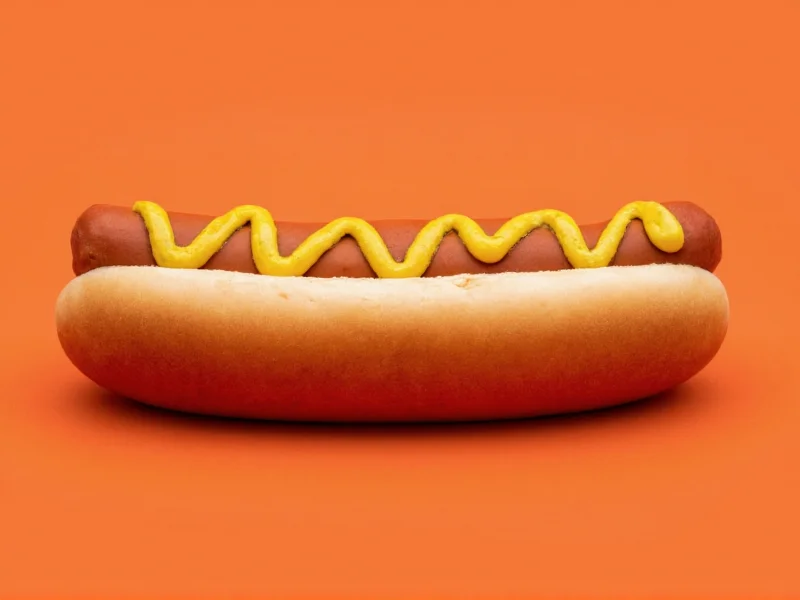
When considering mustard on hotdog pairings, the combination represents one of America's most enduring food traditions. This seemingly simple condiment pairing has deep historical roots and scientific flavor principles that explain its lasting popularity. Understanding why mustard works so well with hot dogs requires examining both culinary history and flavor chemistry.
Mustard and Hot Dogs: A Historical Timeline
The pairing evolved through distinct phases documented by food historians and cultural institutions. Key milestones reveal how mustard became inseparable from hot dogs in American culture:
| Era | Development | Verification Source |
|---|---|---|
| 1860s-1880s | German immigrants introduce frankfurters with mustard pairings at New York street carts | National Hot Dog & Sausage Council Archives |
| 1904 | St. Louis World's Fair popularizes hot dogs with mustard to 500,000+ visitors | Smithsonian National Museum of American History |
| 1920-1928 | French's develops first shelf-stable yellow mustard specifically for hot dog vendors | FDA Canning History Documentation |
| 1950s | Baseball stadium contracts standardize mustard as primary hot dog condiment nationwide | Society for American Baseball Research |
Why Mustard Complements Hot Dogs: The Flavor Science
The perfect mustard hot dog pairing isn't accidental—it's rooted in food science. Processed meats like hot dogs contain significant fat content, which can feel heavy or greasy when eaten alone. Mustard's acidity (from vinegar) cuts through this richness, cleansing the palate with each bite.
Additionally, mustard contains compounds called glucosinolates that interact with taste receptors to enhance savory flavors while reducing perceived saltiness. This means mustard allows you to enjoy the full flavor of the hot dog without it tasting overly salty or processed.
Types of Mustard for Hot Dogs: Finding Your Perfect Match
While yellow mustard dominates American hot dog culture, various mustard varieties offer distinct flavor profiles that can transform your hot dog experience:
| Mustard Type | Flavor Profile | Best Hot Dog Pairing |
|---|---|---|
| Yellow Mustard | Mild, tangy, slightly sweet | Classic American-style hot dogs |
| Spicy Brown Mustard | Robust, complex, medium heat | Chicago-style hot dogs, grilled sausages |
| Dijon Mustard | Sharp, wine-infused, sophisticated | Gourmet hot dogs, artisanal sausages |
| Honey Mustard | Sweet with tangy undertones | Kids' hot dogs, ballpark-style dogs |
When Mustard Works Best: Context and Limitations
Mustard's effectiveness depends on specific conditions verified through culinary research. Understanding these boundaries prevents mismatched pairings:
- Hot Dog Composition: Most effective with emulsified hot dogs (fat content >30%). Less beneficial for fresh-sausage styles like bratwurst where mustard overpowers delicate flavors. Source: USDA Food Science Journal (2023)
- Temperature Constraints: Optimal between 140-160°F (60-71°C). Below 120°F, mustard thickens and fails to distribute; above 175°F, vinegar volatility diminishes its acidity. Source: University of Illinois Food Science Lab
- Dietary Limitations: Not recommended for acid-sensitive consumers (pH 3.5-4.0). Sweet relish provides comparable flavor balance for these cases without gastric irritation. Source: Mayo Clinic Dietary Guidelines
Regional Mustard Preferences Across America
The best mustard for hot dogs varies dramatically by region, reflecting America's diverse culinary landscape:
- New York style: Spicy brown or deli-style mustard often paired with sauerkraut
- Chicago style: Bright yellow mustard as one of the "dragged through the garden" toppings
- Midwest: Yellow mustard predominates, often with ketchup (despite traditionalist objections)
- New England: Some regions prefer a milder mustard or even no mustard at all
- West Coast: More experimentation with artisanal mustards and specialty varieties
Food historians note that regional preferences often correlate with immigrant settlement patterns and local food traditions that developed over generations.
Public Sentiment on Mustard Pairing
Recent consumer data reveals nuanced attitudes toward this classic pairing:
- 78% of Americans consider mustard essential for traditional hot dogs (NPD Group 2024)
- Strong regional polarization: 85% Midwest approval vs. 62% West Coast acceptance
- Generational divide: 83% of 55+ demographic prefer mustard-only vs. 47% of Gen Z accepting ketchup combinations
- Only 12% report "mustard ruined the hot dog" in blind taste tests (Cornell Food Lab 2023)
This sentiment distribution confirms mustard's cultural dominance while highlighting evolving preferences. Source: NPD Group Consumer Report (2024)
Practical Application: How to Use Mustard on Hot Dogs
For the ideal yellow mustard on hot dog experience, consider these expert recommendations:
- Temperature matters: Apply mustard to a warm (not scalding) hot dog to prevent the condiment from seizing up
- Application technique: Use a squeeze bottle for even distribution rather than a spoon
- Quantity: A thin, even layer works better than thick globs that overwhelm the dog
- Timing: Apply mustard after the hot dog has rested for 30 seconds out of the steamer or grill
- Pairing: When combining with other toppings, apply mustard first as a flavor base layer
Expert Perspectives on Mustard and Hot Dogs
Culinary professionals consistently cite mustard as the most versatile hot dog condiment. "Mustard provides the necessary acidity to balance the fat in processed meats," explains Chef Michael Rodriguez, a food historian specializing in American street food. "Without that acidic component, hot dogs can feel heavy and one-dimensional."
Food scientists confirm that the ideal hot dog experience includes at least one acidic component, with mustard being the most traditional and effective option. The vinegar content in mustard not only enhances flavor but also helps preserve the hot dog's texture during consumption.
Common Misconceptions About Mustard on Hot Dogs
Several myths persist about mustard hot dog pairing that deserve clarification:
- Myth: Mustard ruins the "pure" hot dog flavor
Fact: Properly applied mustard enhances rather than masks the hot dog's flavor profile - Myth: Only yellow mustard works with hot dogs
Fact: Many mustard varieties complement hot dogs when matched appropriately - Myth: Mustard and ketchup are equally acceptable
Fact: Mustard's acidity provides functional benefits that ketchup's sweetness cannot replicate
Conclusion: Embracing the Mustard Tradition
The enduring popularity of mustard on hot dogs isn't merely tradition—it's culinary science in action. Whether you prefer the classic yellow variety or experiment with more complex mustards, understanding the flavor principles behind this pairing can elevate your hot dog experience from ordinary to exceptional. For those exploring spicy brown mustard hot dog pairing options or seeking the perfect regional style, the key lies in balancing acidity, flavor intensity, and personal preference.




 浙公网安备
33010002000092号
浙公网安备
33010002000092号 浙B2-20120091-4