
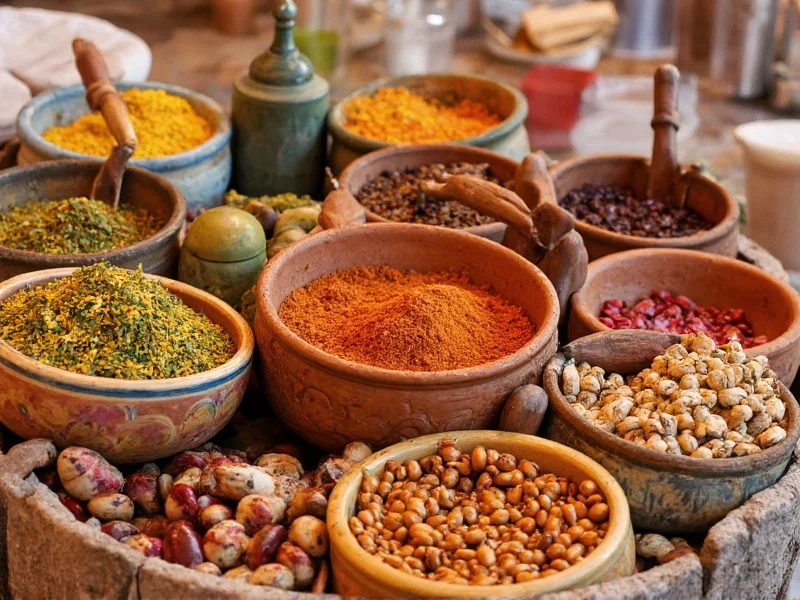
The Foundation of Authentic Moroccan Flavor Profiles
Moroccan cuisine stands as one of the world's most sophisticated flavor traditions, developed over centuries through trade routes connecting Africa, Europe, and the Middle East. Unlike many spice-heavy cuisines that prioritize heat, Moroccan flavors emphasize balance and complexity. The magic happens through careful layering of ingredients rather than overwhelming spice levels. Traditional Moroccan cooking follows a precise sequence: first toasting spices to release essential oils, then building flavor foundations with onions and garlic, followed by slow simmering that allows flavors to marry perfectly.
Historical Evolution of Flavor Development
The distinctive flavor architecture of Moroccan cuisine emerged through specific historical phases, each contributing critical elements to its current form. As documented by the Food and Agriculture Organization (FAO), key evolutionary milestones include:
- 8th-11th Century: Berber foundations established preservation techniques (lemon salting) and indigenous ingredients (dates, almonds) adapted to mountainous terrain
- 11th-15th Century: Arab influences introduced core spices (cumin, coriander) and the tagine cooking vessel enabling slow-cooking chemistry
- 15th Century: Andalusian refugees brought sweet-savory pairing principles using dried fruits and nuts
- 16th Century: New World ingredients (tomatoes, peppers) arrived via Mediterranean trade routes, catalyzing harissa development
- 19th-20th Century: Colonial influences refined baking techniques while traditional flavor profiles remained dominant in home cooking
Source: FAO (2001). Traditional Food Systems in the Near East: Morocco Case Study. http://www.fao.org/3/y4683e/y4683e08.htm#bm08.3
Essential Moroccan Spices and Their Roles
No exploration of Moroccan flavors would be complete without understanding the spice cabinet that makes this cuisine unique. While many associate Moroccan food with "spicy," the reality focuses more on aromatic complexity than heat. The following table outlines the fundamental spices that create authentic Moroccan flavor profiles:
| Spice | Flavor Profile | Traditional Uses | Substitution Options |
|---|---|---|---|
| Ras el Hanout | Complex blend (15-30 spices) | Tagines, rice dishes, marinades | Cumin + coriander + cinnamon mix |
| Preserved Lemons | Salty, floral, intense citrus | Chicken tagines, salads, sauces | Lemon zest + juice + salt |
| Harissa | Spicy, smoky chili paste | Stews, marinades, dips | Chili garlic paste + smoked paprika |
| Saffron | Floral, earthy, subtle | Seafood tagines, pastillas, rice | Turmeric + pinch of paprika |
| Cumin | Earthy, warm, slightly smoky | Meat dishes, vegetable tagines | Coriander + a touch of smoked salt |
Signature Flavor Combinations in Moroccan Cooking
The true artistry of Moroccan flavors lies in how ingredients interact. Traditional Moroccan cuisine follows specific flavor pairing principles that create distinctive taste experiences:
Sweet and Savory Balance - Perhaps the most recognizable characteristic, this pairing appears in dishes like lamb with prunes or chicken with preserved lemons and olives. The sweetness typically comes from dried fruits (apricots, dates, raisins) or honey, while savory elements include olives, preserved lemons, and slow-cooked meats.
Spice Layering Technique - Moroccan cooks don't just add spices; they build flavor foundations through sequential addition. First, ground spices toast in oil to release essential oils. Next, fresh aromatics like garlic and ginger join the mixture. Finally, acidic elements like lemon or tomato balance the richness. This method creates depth impossible to achieve by simply mixing everything at once.
Herb Integration - Fresh cilantro and parsley appear in nearly every Moroccan dish, often in equal proportions. These herbs provide brightness that cuts through rich stews and adds freshness to meat-heavy dishes. Unlike many cuisines that use herbs as garnish, Moroccan cooking treats them as essential flavor components.
Regional Variations and Contextual Boundaries
Moroccan flavor profiles transform dramatically across geographical zones due to environmental constraints and cultural adaptations. The following table details how specific conditions define regional applications and limitations:
| Region | Defining Conditions | Signature Applications | Practical Limitations |
|---|---|---|---|
| Coastal | Mediterranean/Atlantic climate, abundant seafood | Fish chermoula, saffron-infused seafood tagines | Preserved lemons ineffective with delicate fish; requires immediate seafood use |
| Atlas Mountains | High altitude, cold temperatures, Berber heritage | Lamb tagines with prunes, preserved lemon stews | Seafood impractical; slow cooking essential for tough mountain meats |
| Saharan Border | Desert climate, historical Timbuktu trade routes | Intense cumin-chili blends, date-almond pastries | Water scarcity limits fresh produce; preservation critical for survival |
These contextual boundaries explain why Moroccan cuisine varies so significantly by region. For instance, coastal seafood tagines fail in mountainous areas without access to fresh fish, while Saharan spice blends overwhelm delicate coastal dishes. Recognizing these constraints ensures authentic technique selection (Moroccan Ministry of Tourism, 2023).
Traditional Moroccan Cooking Techniques That Enhance Flavor
The distinctive flavors of Moroccan cuisine depend as much on cooking methods as on ingredients. Three techniques prove particularly important for developing authentic Moroccan flavor profiles:
Slow Simmering in Tagines - The conical clay tagine isn't just traditional cookware; it creates ideal conditions for flavor development. The tapered lid returns condensed moisture to the dish, allowing ingredients to braise gently in their own juices for hours. This method extracts maximum flavor while maintaining ingredient integrity—unlike boiling, which leaches flavors into water.
Dry Spice Toasting - Before incorporating spices into dishes, Moroccans typically toast them briefly in a dry pan. This simple step dramatically increases flavor intensity by activating essential oils. Properly toasted spices release aromatic compounds that raw spices cannot, creating more complex flavor foundations.
Preservation Methods - Traditional preservation techniques like salting lemons or making harissa paste transform basic ingredients into flavor powerhouses. Preserved lemons develop entirely new flavor dimensions—simultaneously salty, floral, and intensely citrus—while harissa's fermentation process creates depth impossible with fresh chilies alone.
Common Misconceptions About Moroccan Flavors
Several misunderstandings persist about authentic Moroccan flavor profiles:
Misconception: Moroccan food is always spicy hot - In reality, traditional Moroccan cuisine rarely emphasizes heat. While harissa provides some warmth, most dishes focus on aromatic complexity rather than capsaicin burn. The confusion often comes from Western adaptations that overemphasize chili elements.
Misconception: All Moroccan spice blends are the same - Ras el hanout varies dramatically between regions, families, and even individual cooks. Some versions contain 15+ spices, while others focus on just 5-6 key ingredients. The name literally means "top of the shop," indicating the vendor's best blend.
Misconception: Moroccan flavors are difficult to recreate - While authentic ingredients help, the fundamental principles of balancing sweet and savory, layering spices, and slow cooking can be applied with accessible ingredients. Understanding the flavor architecture matters more than having every traditional component.
Practical Applications for Home Cooks
Integrating authentic Moroccan flavors into your cooking doesn't require specialty ingredients or equipment. Focus on these accessible approaches:
Start with a basic spice blend: Combine 2 tablespoons ground cumin, 1 tablespoon coriander, 1 teaspoon cinnamon, and ½ teaspoon each of ginger and turmeric. Toast this mixture in olive oil before adding other ingredients to build authentic Moroccan flavor foundations.
Experiment with preserved lemon substitutes: When authentic preserved lemons aren't available, combine fresh lemon zest with a pinch of salt and let it sit for 30 minutes to develop similar flavor complexity. This technique works particularly well in chicken tagines and salads.
Master the sweet-savory balance: Add just 1-2 tablespoons of honey or a few chopped dried apricots to savory meat dishes. This subtle sweetness—characteristic of traditional Moroccan flavor profiles—complements rather than dominates when used judiciously.




 浙公网安备
33010002000092号
浙公网安备
33010002000092号 浙B2-20120091-4