
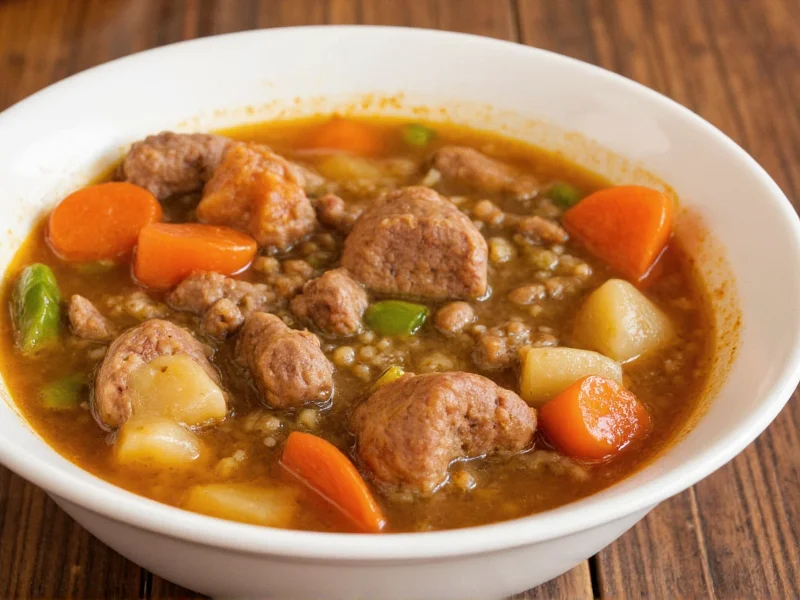
Here's a complete minced meat soup recipe you can make in 45 minutes: Brown 1 lb (450g) ground beef with 1 diced onion and 2 minced garlic cloves. Add 6 cups broth, 1 cup diced carrots, 1 cup diced potatoes, 1 diced tomato, 1 tsp thyme, and salt/pepper. Simmer 30 minutes until vegetables are tender. Stir in 1 cup cooked pasta or rice before serving. Garnish with fresh parsley.
The Ultimate Minced Meat Soup: Comfort in a Bowl
Minced meat soup stands as one of the most versatile comfort foods across global cuisines. This protein-rich dish transforms humble ingredients into a satisfying meal that works equally well for weeknight dinners or meal prep. What makes this particular minced meat soup recipe exceptional is its balance of flavor development and practical timing—ready in under an hour with ingredients most home cooks already have on hand.
Unlike many online recipes that compromise on depth of flavor for speed, this method incorporates proper browning techniques and layering of ingredients to create a rich, complex broth without requiring specialty items. The secret lies in the initial searing step, which develops fond (those delicious browned bits) that forms the flavor foundation of the entire soup.
Essential Ingredients for Perfect Minced Meat Soup
Quality ingredients make the difference between ordinary and extraordinary soup. While substitutions are possible, these core components create the ideal flavor profile:
| Ingredient | Quantity | Why It Matters |
|---|---|---|
| Ground beef (80/20) | 1 lb (450g) | Fat content ensures juicy meat that doesn't dry out during simmering |
| Yellow onion | 1 medium, diced | Provides essential sweetness and aromatic base |
| Garlic cloves | 2, minced | Adds depth without overpowering |
| Carrots | 1 cup, diced | Natural sweetness and texture contrast |
| Potatoes | 1 cup, diced | Thickens broth naturally while adding heartiness |
| Tomato paste | 2 tbsp | Deepens flavor and adds subtle acidity |
| Beef or vegetable broth | 6 cups | Quality liquid base makes or breaks the soup |
| Diced tomatoes | 1 (14oz) can | Adds brightness and texture |
| Dried thyme | 1 tsp | Complements meat without overpowering |
| Bay leaf | 1 | Subtle background note that enhances complexity |
Step-by-Step Preparation Guide
Follow these professional kitchen techniques to ensure your minced meat soup turns out perfectly every time:
- Prep all ingredients before starting (mise en place). Having everything ready prevents rushed cooking.
- Heat a large pot over medium-high heat. Add 1 tablespoon olive oil and allow it to heat until shimmering.
- Brown the meat in batches without overcrowding. This critical step develops flavor through the Maillard reaction. Don't stir immediately—let it sear for 2-3 minutes before breaking up.
- Remove browned meat and set aside. Drain excess fat if necessary, leaving about 1 tablespoon for cooking vegetables.
- Sauté onions and garlic until translucent (about 5 minutes), scraping up any browned bits from the bottom of the pot.
- Add tomato paste and cook for 2 minutes, stirring constantly to caramelize slightly.
- Return meat to pot along with carrots, potatoes, diced tomatoes, broth, thyme, bay leaf, salt, and pepper.
- Bring to a gentle boil, then reduce heat to low and simmer uncovered for 25-30 minutes until vegetables are tender.
- Stir in cooked pasta or rice (about 1 cup) just before serving to maintain texture.
- Adjust seasoning and remove bay leaf before serving. Garnish with fresh parsley.
Professional Tips for Exceptional Results
These chef-tested techniques elevate your minced meat soup from good to extraordinary:
- Don't skip the browning—properly seared meat creates complex flavors through the Maillard reaction. Rushing this step produces bland soup.
- Cut vegetables uniformly to ensure even cooking. Aim for 1/2-inch dice for consistent texture.
- Season in layers—add a pinch of salt when sautéing vegetables, then adjust at the end for balanced flavor.
- Simmer gently—vigorous boiling can make meat tough and vegetables mushy.
- Add acid at the end—a splash of red wine vinegar or lemon juice brightens flavors just before serving.
Avoid These Common Minced Meat Soup Mistakes
Even experienced cooks make these errors when preparing minced meat soup recipes:
- Overcrowding the pan when browning meat causes steaming instead of searing, resulting in gray, flavorless meat.
- Adding cold ingredients to hot pot lowers the temperature and interrupts cooking chemistry.
- Overcooking pasta/rice in the soup—always add these near the end or cook separately to maintain texture.
- Skipping the resting time—allow soup to sit off heat for 10 minutes before serving for flavors to meld.
- Using low-quality broth—this forms 80% of your soup's flavor; homemade or high-quality store-bought makes a dramatic difference.
Variations for Different Dietary Needs
Adapt this basic minced meat soup recipe to accommodate various preferences and restrictions:
- Gluten-free version: Use gluten-free pasta or omit entirely, adding extra vegetables like zucchini or green beans instead.
- Low-carb option: Replace potatoes with turnips or radishes, and skip the pasta/rice component.
- Vegetarian adaptation: Substitute meat with textured vegetable protein (TVP) or lentils, and use vegetable broth.
- Spicy Korean twist: Add 1 tablespoon gochujang and 1 teaspoon sesame oil, garnish with sliced green onions.
- Mediterranean style: Include olives, capers, and fresh oregano, using lamb instead of beef.
Storage and Reheating Guidelines
Minced meat soup actually improves in flavor after sitting, making it ideal for meal prep:
- Refrigeration: Store in airtight containers for up to 4 days. The soup thickens as it sits—add broth when reheating.
- Freezing: Portion into freezer-safe containers with 1-inch headspace. Keeps well for 3 months. Thaw overnight in refrigerator.
- Reheating: Warm gently over medium-low heat, stirring occasionally. Avoid boiling to prevent vegetables from becoming mushy.
- Revitalizing leftovers: Add a splash of broth and fresh herbs when reheating to refresh flavors.
Frequently Asked Questions
Can I use different types of ground meat in this soup recipe?
Yes, you can substitute ground turkey, chicken, pork, or lamb. Each provides distinct flavor profiles—turkey creates a lighter soup while lamb adds richness. For optimal texture, choose 80-85% lean varieties as some fat content enhances flavor development during the browning process.
How can I make my minced meat soup thicker without adding flour?
Several natural thickening methods work well: mash some of the cooked potatoes against the pot side, add a puree of cooked beans or lentils, or include 1/2 cup of cooked rice blended with broth. These options add nutrition while creating a heartier texture without altering flavor significantly.
What's the best way to prevent the meat from becoming tough in soup?
Brown the meat properly without over-stirring, then remove it from the pot while cooking vegetables. Return it to simmer gently rather than boiling vigorously. Avoid prolonged cooking times beyond what's needed for vegetables to soften—25-30 minutes is sufficient for pre-browned meat to remain tender.
Can I prepare minced meat soup in a slow cooker?
Absolutely. Brown the meat and sauté vegetables first, then transfer everything to your slow cooker. Cook on low for 6-7 hours or high for 3-4 hours. Add delicate ingredients like pasta during the last 30 minutes. The slow cooking process develops deep flavors while keeping meat exceptionally tender.
How do I know when my minced meat soup is properly seasoned?
Season in layers throughout cooking, but always do a final taste test after the soup has simmered. The broth should taste slightly saltier than you prefer because flavors mellow when served hot. Remember that acid (like a splash of vinegar) can enhance perceived saltiness without adding sodium. When in doubt, under-season slightly—you can always add more but can't remove excess salt.




 浙公网安备
33010002000092号
浙公网安备
33010002000092号 浙B2-20120091-4