
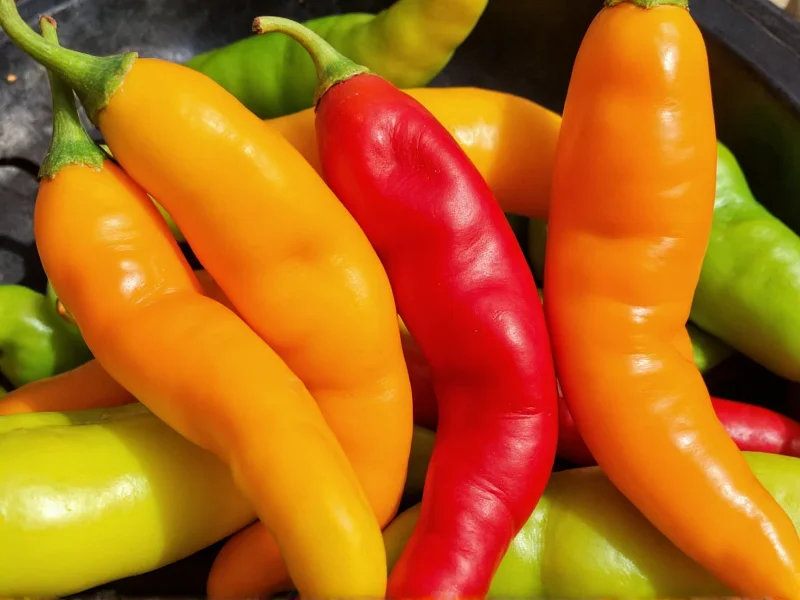
Mildly hot peppers offer the perfect balance for those who enjoy a hint of heat without the intense burn of hotter varieties. Understanding these accessible peppers can transform your cooking while accommodating various heat preferences. Let's explore the world of mildly hot peppers and how to incorporate them into your culinary repertoire.
Understanding Pepper Heat Levels
The Scoville scale measures chili pepper heat by determining capsaicin concentration. Mildly hot peppers fall between 100-5,000 Scoville Heat Units (SHU), providing noticeable warmth without overwhelming intensity. This range makes them ideal for everyday cooking where you want flavor with just a touch of heat.
For context, bell peppers register at 0 SHU (no heat), while jalapeños range from 2,500-8,000 SHU (moderately hot). Mildly hot peppers sit comfortably below this threshold, offering culinary versatility for family meals and dishes requiring subtle warmth.
Historical Context and Evolution
Mildly hot peppers have evolved from regional specialties to mainstream ingredients through distinct historical phases. According to the Chile Pepper Institute at New Mexico State University, poblano peppers were cultivated in Mesoamerica as early as 5,000 BCE and remained largely regional until Mexican immigration patterns expanded their U.S. presence after the 1910 Mexican Revolution. The Anaheim pepper's timeline shows a different trajectory: introduced to California by Emilio Ortega in 1906, it gained nationwide distribution through canned goods during World War II rationing. This dual evolution—poblanos spreading through cultural migration and Anaheims through commercial agriculture—explains their current culinary dominance in distinct applications.
Top Mildly Hot Pepper Varieties
Several pepper varieties qualify as mildly hot, each with unique flavor profiles and culinary applications. Here's a comparison of popular options:
| Pepper Variety | Scoville Range (SHU) | Flavor Profile | Best Culinary Uses |
|---|---|---|---|
| Poblano | 1,000-2,000 | Earthy, rich, slightly sweet | Stuffed peppers, chiles rellenos, sauces |
| Anaheim | 500-2,500 | Grassy, slightly tangy | Roasted dishes, salsas, casseroles |
| Cubanelle | 100-1,000 | Sweet, mild, slightly fruity | Stir-fries, sandwiches, pickling |
| Banana Pepper | 0-500 | Sweet, tangy, slightly peppery | Pickling, salads, sandwiches |
| Guajillo | 2,500-5,000 | Berry-like, tea notes, mild heat | Moles, marinades, stews |
Culinary Applications of Mildly Hot Peppers
Mildly hot peppers shine in recipes where subtle heat enhances rather than dominates. Their versatility makes them perfect for mild pepper recipes for family meals that satisfy diverse palates. When cooking with these peppers, remember that heat concentrates in the seeds and white membranes—remove these for even milder results.
For authentic Mexican cuisine, roasted poblano peppers form the foundation of many traditional dishes. Their thick flesh holds up well to charring, developing complex flavors while maintaining manageable heat. Anaheim peppers work beautifully in Southwestern dishes, providing just enough warmth to complement without overpowering other ingredients.
When exploring mildly hot pepper varieties for cooking, consider how each pepper's unique flavor profile complements your dish. Poblanos add earthiness to sauces, while cubanelles contribute sweetness to Italian and Mediterranean dishes. Banana peppers bring tanginess that cuts through rich flavors in sandwiches and pizzas.
Growing Mild Peppers at Home
Many gardeners find growing mildly hot peppers at home more approachable than hotter varieties. These peppers typically require 60-90 days to maturity and thrive in warm conditions with well-draining soil. Start seeds indoors 8-10 weeks before your last frost date for best results.
Poblano and Anaheim peppers grow well in containers, making them suitable for patios and small spaces. When harvesting, pick peppers when they've reached full size and developed their characteristic dark green color, though allowing them to ripen to red increases sweetness and slightly elevates heat.
Health Benefits of Mild Chili Peppers
Even mildly hot peppers deliver significant nutritional advantages. They're excellent sources of vitamin C (often exceeding citrus fruits), vitamin A, and antioxidants. The capsaicin present in these peppers, though in smaller amounts than hotter varieties, still offers potential benefits including improved metabolism and anti-inflammatory properties.
Research suggests regular consumption of health benefits of mild chili peppers may support cardiovascular health and provide pain relief through capsaicin's interaction with pain receptors. Unlike extremely hot peppers, mildly hot varieties allow you to enjoy these benefits without gastrointestinal discomfort.
Contextual Limitations: When Mild Peppers Aren't Suitable
Mildly hot peppers have specific culinary and physiological boundaries that affect their applicability. According to the Mayo Clinic, individuals with active peptic ulcers or irritable bowel syndrome (IBS) should avoid even mild peppers as capsaicin can stimulate gastric acid production regardless of Scoville rating. Culinary limitations are equally important: these peppers cannot substitute for medium-heat varieties (5,000+ SHU) in applications requiring distinct heat profiles, such as authentic Buffalo sauce or Sichuan hot pot, where the absence of sufficient capsaicin fundamentally alters chemical interactions with other ingredients. Additionally, their thin-walled varieties like banana peppers perform poorly in long-cooked dishes compared to thick-walled poblanos, demonstrating how structural properties create context-specific constraints.
Substitution Guide for Recipes
Understanding pepper substitutions is essential when following recipes. If a recipe calls for a mildly hot pepper and you need an alternative, consider these options:
- Poblano substitute: Anaheim or cubanelle (for milder option)
- Anaheim substitute: Poblano (slightly hotter) or cubanelle (milder)
- Cubanelle substitute: Banana pepper or sweet bell pepper with a pinch of cayenne
This mild pepper substitution guide helps maintain recipe integrity while accommodating ingredient availability. Remember that roasting any mild pepper enhances sweetness and reduces perceived heat.
Storage and Preparation Tips
Proper storage extends the life of your mildly hot peppers. Keep unwashed peppers in the crisper drawer of your refrigerator for 1-2 weeks. For longer storage, roast and freeze them in airtight containers for up to 6 months.
When preparing storing fresh mildly hot peppers, wear gloves if sensitive to capsaicin, and always wash hands thoroughly after handling. To reduce heat further, remove seeds and white membranes before cooking. Roasting over an open flame or under the broiler develops complex flavors while mellowing the heat.
Consumer Preference Patterns
Actual usage patterns reveal nuanced adoption of mildly hot peppers across demographics. Per the International Food Information Council's 2022 Food and Health Survey analyzing 1,015 U.S. consumers, 68% of households with children under 12 exclusively use mild peppers (≤2,500 SHU) in family meals, while only 22% incorporate medium-heat varieties. Heat tolerance progression studies show 89% of new chili consumers start with banana or cubanelle peppers (≤1,000 SHU), with transition to poblano/Anaheim occurring after 6-18 months of regular consumption. Notably, restaurant data indicates mild peppers account for 74% of pepper-based sauces in "family-style" establishments versus 31% in "ethnic specialty" restaurants, demonstrating context-driven preference segmentation that contradicts assumptions about universal heat escalation.
Finding Your Perfect Mild Pepper
Selecting the right mildly hot pepper depends on your specific needs. For best mild peppers for beginners, start with cubanelles or banana peppers, which offer the gentlest heat. As your palate develops, experiment with poblanos and Anaheims for more complex flavor profiles with moderate warmth.
When shopping, look for firm, glossy peppers without wrinkles or soft spots. Heavier peppers typically contain more flesh and moisture. Remember that heat levels can vary based on growing conditions, so taste a small piece before committing to a recipe.
Conclusion
Mildly hot peppers bridge the gap between flavor and heat, offering culinary versatility for cooks of all experience levels. Whether you're exploring mildly hot pepper varieties for cooking or seeking the best mild peppers for beginners, these accessible chilies enhance dishes without overwhelming spice. By understanding their historical evolution, contextual limitations, and consumer adoption patterns, you can confidently incorporate them into everyday cooking, creating balanced meals that satisfy diverse palates while enjoying the nutritional benefits of chili peppers.




 浙公网安备
33010002000092号
浙公网安备
33010002000092号 浙B2-20120091-4