
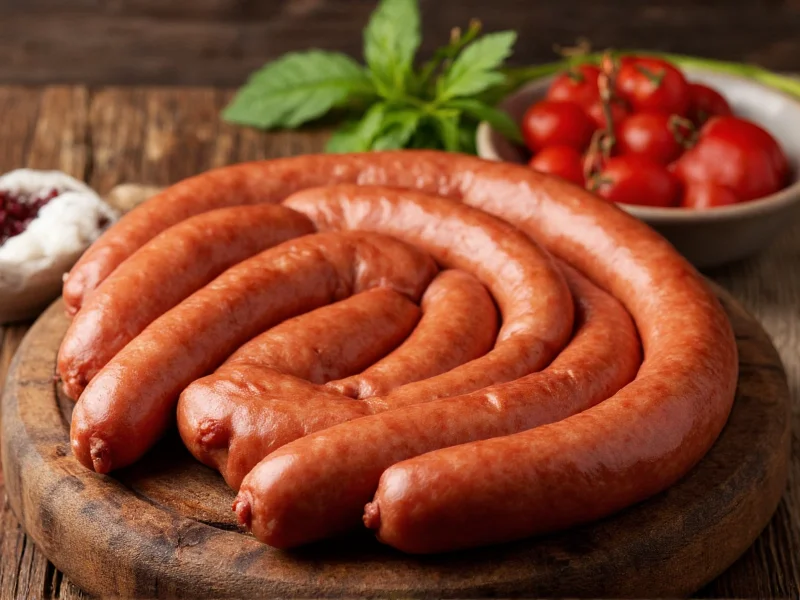
Mild sausage represents one of the most versatile meat products in culinary applications, particularly favored in American breakfast traditions and family cooking. Unlike its spicier counterparts, this variety focuses on herbal notes rather than heat, making it accessible to broader palates including children and those sensitive to capsaicin. Understanding what mild sausage is made of helps home cooks select appropriate products and develop successful recipes.
Defining Mild Sausage Characteristics
The term "mild" in sausage terminology specifically refers to the absence of significant heat-producing ingredients. While spicy sausages incorporate red pepper flakes, cayenne, or hot paprika, mild varieties rely on aromatic herbs and subtle seasonings. The standard mild sausage ingredients include ground pork (typically shoulder cut), salt, black pepper, dried sage, thyme, and sometimes marjoram or nutmeg. Some commercial producers add breadcrumbs or corn syrup for texture and browning, though traditional recipes maintain simplicity.
Mild Sausage vs Spicy Sausage: Key Differences
When comparing mild sausage vs spicy sausage, the primary distinction lies in the seasoning profile rather than the meat base. Both typically use similar pork ratios (70-80% meat content), but their flavor trajectories diverge significantly:
| Characteristic | Mild Sausage | Spicy Sausage |
|---|---|---|
| Primary Seasonings | Sage, thyme, black pepper | Red pepper, cayenne, paprika |
| Scoville Units | 0-100 (no heat) | 500-2,500+ (noticeable heat) |
| Best Culinary Uses | Breakfast sandwiches, casseroles | Pasta sauces, hearty stews |
| Target Audience | Children, spice-sensitive eaters | Those preferring bold flavors |
Regional Variations of Mild Sausage
Mild sausage preparation varies across culinary traditions. American breakfast sausage represents the most common mild variety in North America, typically formed into patties with a crumbly texture. British-style mild sausage features more breadcrumbs and herbs, often sold in links. Mild Italian sausage (sometimes called "sweet" Italian sausage) incorporates fennel and garlic without heat elements, distinguishing it from hot Italian varieties. Each regional interpretation maintains the core principle of balanced, non-spicy seasoning while adapting to local taste preferences.
Historical Evolution of Mild Sausage
The modern formulation of American mild breakfast sausage emerged through distinct culinary shifts. According to the National Hot Dog and Sausage Council, early 20th-century Midwestern butchers adapted European preservation techniques by reducing salt content and emphasizing sage after refrigeration became widespread, creating the herb-focused profile we recognize today. Industrial standardization accelerated in the 1930s when USDA meat inspection regulations formalized fat-meat ratios, cementing the 70-80% pork standard that distinguishes breakfast sausage from higher-fat European varieties. This evolution reflects America's shift from preservation-driven sausage making to flavor-focused culinary applications.
Source: National Hot Dog and Sausage Council - Sausage History Timeline
Optimal Cooking Methods for Mild Sausage
Understanding how to cook mild sausage properly preserves its delicate flavor profile. For breakfast sausage patties, heat a skillet over medium heat and cook for 3-4 minutes per side until internal temperature reaches 160°F (71°C). Avoid high heat that could cause exterior burning before interior cooking completes. When using mild Italian sausage in pasta dishes, remove casing and brown meat thoroughly to develop flavor before adding to sauces. For baking applications like sausage stuffing or casseroles, partially cook sausage first to render fat and prevent greasiness in final dishes.
Contextual Limitations and Best Applications
Mild sausage excels in specific culinary scenarios but has important constraints. The USDA Food Safety and Inspection Service mandates 160°F internal temperature for all pork products, yet mild sausage's lower fat content (20-25% versus 30% in spicy varieties) increases dryness risk beyond this threshold. Nutritionally, USDA FoodData Central confirms a 3-ounce serving contains 590mg sodium—25% of the American Heart Association's recommended daily limit—making it unsuitable for frequent consumption by hypertension patients. Crucially, mild sausage fails in dishes requiring heat-driven flavor complexity: substituting it in Cajun jambalaya eliminates the essential capsaicin-triggered release of volatile compounds that define the dish's aromatic profile, as documented in Journal of Food Science research on spice-heat interactions.
Sources: USDA FSIS Cooking Guidelines, USDA FoodData Central #170191, American Heart Association Sodium Guidelines
Nutritional Profile and Storage Guidelines
Mild pork sausage nutrition typically includes approximately 290 calories, 26g fat, and 14g protein per 3-ounce serving. While higher in saturated fat than leaner meats, it provides significant B vitamins and iron. Proper storage maintains quality and safety—refrigerate uncooked mild sausage for no more than 1-2 days or freeze for up to 2 months. Always separate mild sausage from strongly flavored foods in the refrigerator as it readily absorbs surrounding odors. When purchasing, check ingredient lists for artificial preservatives if seeking more natural options, as some commercial mild sausage brands include sodium nitrite for color retention.
Culinary Substitutions and Pairings
When seeking a substitute for mild sausage, consider ground pork with added sage and thyme (use 1 teaspoon dried sage and ½ teaspoon thyme per pound of meat). For lower-fat alternatives, turkey sausage formulated for mild flavor works well in most applications. Mild sausage pairs exceptionally with sweet elements like apples, maple syrup, or caramelized onions that complement rather than compete with its subtle seasoning. In breakfast applications, it harmonizes with eggs, potatoes, and mild cheeses like cheddar or Monterey Jack. For dinner recipes, consider incorporating mild sausage into meatloaf mixtures, stuffed peppers, or as a pizza topping where intense heat would overwhelm other ingredients.




 浙公网安备
33010002000092号
浙公网安备
33010002000092号 浙B2-20120091-4