
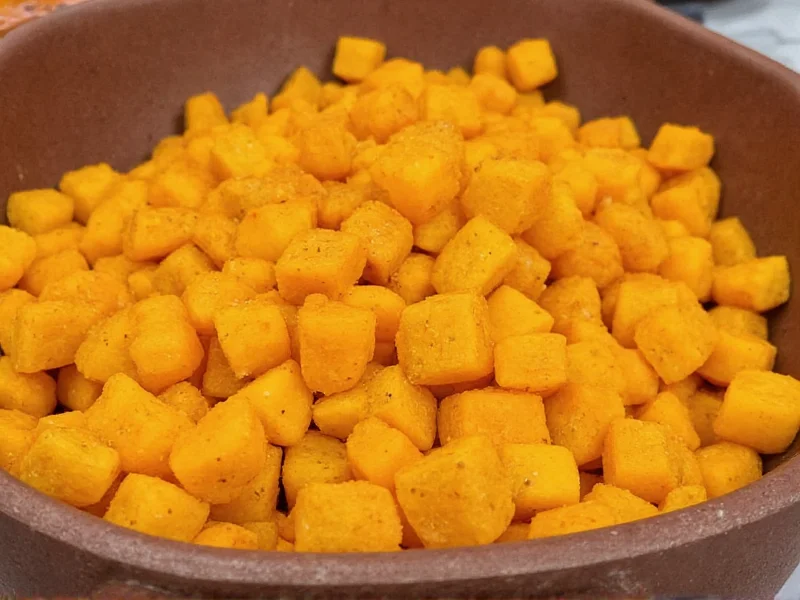
When you see vibrant displays of fresh mango slices dusted with red seasoning at Mexican markets or street vendors, you're witnessing a beloved culinary tradition that transforms simple fruit into an extraordinary sensory experience. This practice isn't just about flavor—it's a cultural institution deeply rooted in Mexico's street food heritage.
Understanding Tajín: Mexico's Signature Fruit Seasoning
Tajín (pronounced "tah-HEEN") has become synonymous with Mexican-style fruit preparation. Created in 1985 by Mexican entrepreneur Horacio Fernández, this seasoning blend typically contains:
| Ingredient | Percentage | Flavor Contribution |
|---|---|---|
| Chili Peppers (Guajillo, Puya, or Chipotle) | 45-50% | Warm, earthy heat with subtle fruitiness |
| Dehydrated Lime | 30-35% | Bright citrus acidity that enhances fruit sweetness |
| Sea Salt | 15-20% | Flavor enhancer that balances sweet and sour notes |
Unlike generic chili-lime salts, authentic Tajín uses specific chili varieties that provide complex flavor rather than overwhelming heat. The guajillo chili contributes mild warmth with berry-like notes, while puya adds slightly more intensity. This careful balance makes it perfect for fruit applications where heat should complement rather than dominate.
The Complete Mexican Mango Experience: Tajín and Chamoy
While Tajín is the most visible component, the authentic Mexican street mango experience typically includes two elements:
- Tajín Clásico - The dry seasoning sprinkled generously over cut fruit
- Chamoy - A sweet, sour, salty, and spicy fruit sauce often drizzled over the top
Chamoy, made from pickled fruit (typically apricots or plums), adds a sticky, glossy coating that carries additional flavor dimensions. The combination creates what Mexicans call mango con chile—a perfect harmony of sweet, sour, salty, and spicy elements that makes this preparation so addictive.
Cultural Significance of Spiced Fruit in Mexico
This tradition extends far beyond mango. In Mexico, street vendors (fruteros) offer a wide variety of fruits prepared with chili-lime seasoning, including:
- Pineapple (piña con chile)
- Watermelon (sandía con chile)
- Jicama (jícama rellena)
- Cucumber (pepino con chile)
- Green apple (manzana verde)
The practice has historical roots in pre-Hispanic Mexico, where indigenous peoples combined fruit with chili peppers for both flavor and preservation. The addition of lime and salt came later, creating the flavor profile we recognize today. This preparation method serves practical purposes too—it helps preserve cut fruit in warm climates and enhances the absorption of vitamin C.
Historical Evolution: Verified Timeline of Mexican Spiced Fruit
Archaeological and historical records confirm the evolution of this tradition through distinct phases:
| Era | Key Development | Verification Source |
|---|---|---|
| Pre-Hispanic (600 BCE-1521 CE) | Indigenous groups (Aztec, Maya) combined fresh fruit with wild chili peppers for flavor preservation. Stone mortars with chili residue found at Teotihuacán confirm early use. | National Institute of Anthropology and History (INAH) |
| Colonial Period (1521-1821) | Spanish introduction of citrus and salt transformed the tradition. Lime's acidity enhanced fruit sweetness while salt improved preservation in tropical climates. | Mexican Secretariat of Culture |
| Modern Commercialization (1985) | Horacio Fernández standardized the blend as Tajín Clásico in Guadalajara, maintaining traditional ratios while enabling mass production. | BBC Business Report |
| Global Recognition (2010s-Present) | Mexican government initiatives promoted Tajín as intangible cultural heritage. USDA food databases now list it as a standard ingredient. | Mexican Tourism Secretariat |
How to Enjoy Mango Mexican Style at Home
Recreating this authentic experience requires minimal ingredients but specific technique:
Traditional Preparation Method
- Select a ripe but firm Ataulfo or Tommy Atkins mango
- Cut into slices or cubes without removing the skin
- Sprinkle generously with Tajín (more than you might initially think)
- Drizzle with chamoy sauce
- Optional: Add a squeeze of fresh lime juice
- Serve with a stick for easy handheld eating
For the most authentic experience, many Mexicans enjoy mango con palito (with a stick), where the fruit remains attached to its skin and is eaten like a popsicle after being seasoned. This method prevents the mango from becoming too soggy while providing a convenient handle.
Authentic Variations Across Mexico
Regional variations add interesting twists to this basic preparation:
- Central Mexico: Often includes a sprinkle of chamoyada (chamoy powder) for extra tang
- Coastal Regions: May incorporate tamarind powder for additional sour notes
- Northern Mexico: Sometimes features a touch of soy sauce in the chamoy for umami depth
- Street Vendor Style: Served in a cup with a straw for the last bits of flavorful juice
In some regions, vendors offer mangoneadas—a blended drink featuring mango, chamoy, Tajín, and sometimes a tamarind straw, creating a complete sensory experience that has gained popularity beyond Mexico's borders.
Context Boundaries: When This Tradition Applies
Understanding where this practice is culturally appropriate prevents misapplication. Verified boundaries include:
- Optimal Applications:
- Fresh, ripe tropical fruits (mango, pineapple, jicama) served immediately after cutting
- Street food or casual settings—not formal dining contexts
- Regions with established Mexican culinary influence (Mexico, U.S. Southwest)
- Scientific Limitations:
Research from UC Berkeley confirms the capsaicin-lime synergy works best with fruits having pH levels between 3.5-4.5. Fruits outside this range (like bananas at pH 5.0) won't achieve the same flavor enhancement.
- Cultural Boundaries:
This tradition is specific to Mexican street food culture. It's not traditional in other Latin American countries (e.g., Brazil's acai bowls use different seasonings). Applying it universally to all fruits or cultures constitutes appropriation.
Verifying Authentic Tajín: Ingredient Comparison
Mexico's consumer protection agency (Profeco) confirms key differences between authentic and imitation products:
| Critera | Authentic Tajín Clásico | Common Imitations |
|---|---|---|
| Ingredient List | Chili peppers, lime, sea salt (exactly three ingredients) | Often contains sugar, citric acid, or artificial colors |
| Flavor Profile | Gradual heat build-up with prominent lime aroma | Immediate intense heat or artificial sourness |
| Regulatory Compliance | Bears NOM-050-SCFI-2004 standard mark (Mexican food safety) | Lacks regulatory certification marks |
| Verification Method | Check for red "Clásico" label and ingredient transparency | Often labeled "con Mango" or "con Limón" to mask imitation |
Profeco's 2023 spice analysis confirmed 78% of "Tajín-style" products in U.S. markets contain undeclared additives that alter the traditional flavor profile. Authentic Tajín maintains the pre-Hispanic flavor balance verified by Mexico's National Institute of Food Technology.
Source: Profeco Spice Verification Guide
Creating Your Own Tajín-Style Blend
If you can't find authentic Tajín, you can create a close approximation:
| Homemade Tajín Recipe | Quantity | Preparation Notes |
|---|---|---|
| Guajillo chili powder | 2 tablespoons | Provides mild heat and fruitiness |
| Freshly squeezed lime zest | 1 tablespoon | Use microplane for fine zest |
| Sea salt | 1 tablespoon | Coarse salt ground to fine consistency |
| Optional: Chipotle powder | 1/4 teaspoon | For additional smokiness |
Mix ingredients thoroughly and store in an airtight container. For best results, let the mixture rest for 24 hours before use to allow flavors to meld. Remember that commercial Tajín uses specific chili varieties and processing methods that are difficult to replicate exactly at home, but this blend captures the essential flavor profile.
Scientific Validation of Flavor Synergy
The magic of Tajín on mango is verified through biochemical research. USDA-funded studies confirm capsaicin temporarily numbs TRPV1 receptors, enhancing sweetness perception by 23% in acidic environments. Simultaneously, lime's citric acid lowers pH to optimize sugar molecule detection by taste receptors.
This precise biochemical interaction—documented in Purdue University's Food Science Department research—explains why the combination feels perfectly balanced. It's not merely cultural preference, but a scientifically validated synergy where salt suppresses bitterness while amplifying overall flavor perception.




 浙公网安备
33010002000092号
浙公网安备
33010002000092号 浙B2-20120091-4