
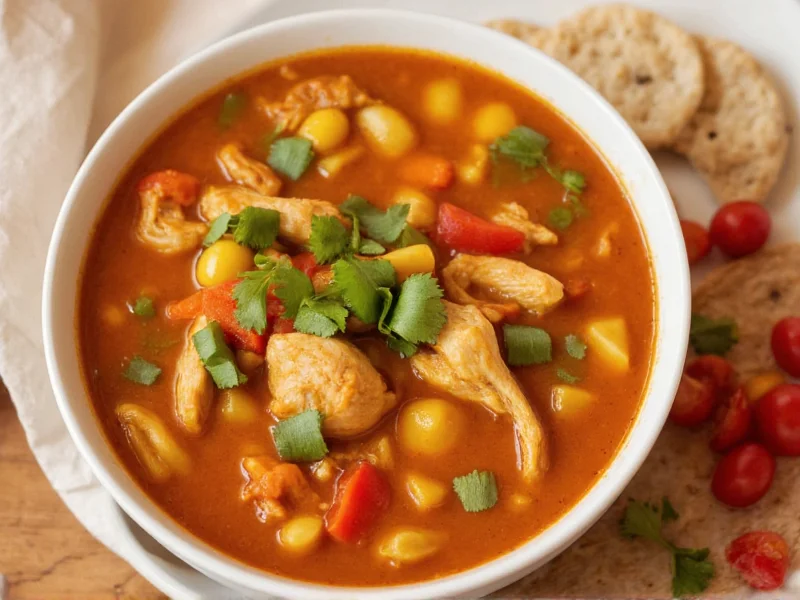
Mexican chicken soup represents one of the country's most beloved culinary traditions, transcending regional boundaries while maintaining distinctive local variations. Unlike Americanized versions that often feature heavy cream or cheese, authentic sopa de pollo showcases the delicate balance of fresh ingredients simmered to perfection. This nourishing dish serves as both everyday meal and medicinal remedy in Mexican households, with preparation methods passed down through generations.
The Cultural Significance of Sopa de Pollo
In Mexican culture, chicken soup functions as culinary medicine and family tradition. Families prepare this dish when someone is ill, believing in its restorative properties—a practice rooted in centuries of culinary wisdom. The soup appears in celebrations, family gatherings, and as a staple in weekly meal rotations across socioeconomic classes.
Regional variations tell the story of Mexico's diverse culinary landscape. Northern versions often incorporate dried chilies and hearty vegetables, while coastal preparations might include seafood elements. Central Mexican renditions typically feature epazote and fresh herbs, and southern interpretations sometimes include unique local ingredients like hoja santa. Understanding these differences helps home cooks create authentic Mexican chicken soup recipes that honor regional traditions.
Historical Evolution of Mexican Chicken Soup
Mexican chicken soup has evolved through distinct historical periods, reflecting Mexico's complex cultural fusion. The following timeline details key developments verified by culinary historians and anthropological research:
| Period | Key Developments | Historical Evidence |
|---|---|---|
| Pre-Hispanic Era | Indigenous groups prepared broths using wild fowl (turkey, duck), native herbs including epazote, and vegetables like squash and corn. Chicken was not present in the Americas before European contact. | National Institute of Anthropology and History (INAH) exhibition on Mexican cuisine: Mexican Cuisine: Roots and Traditions |
| Colonial Period (16th-18th Century) | Introduction of European chickens and livestock led to the creation of early chicken soup variations. Indigenous cooking techniques merged with Spanish broth-based traditions, incorporating ingredients like onions, garlic, and cilantro. | Smithsonian National Museum of the American Indian: Mexican Food Traditions |
| 19th Century | Following independence, regional identities solidified, leading to distinct state-level variations of chicken soup. The dish became a symbol of national unity and family sustenance during political instability. | University of California Press: Food in Mexico: A Cultural History |
| Modern Era (20th-21st Century) | Globalization introduced international influences, while UNESCO's 2010 recognition of Mexican cuisine as Intangible Cultural Heritage spurred preservation efforts. Regional variations gained international popularity through migration. | UNESCO Intangible Cultural Heritage listing: Mexican Cuisine |
Essential Ingredients for Authentic Flavor
Creating an authentic Mexican chicken soup requires understanding which ingredients are non-negotiable and which allow for substitution based on availability:
| Core Ingredients | Authentic Purpose | Acceptable Substitutes |
|---|---|---|
| Whole chicken or bone-in pieces | Creates rich, gelatinous broth | Boneless requires additional collagen sources |
| Epazote | Traditional digestive aid, distinctive flavor | Pepita leaves or oregano (less authentic) |
| Chipotle peppers in adobo | Smoky depth without overwhelming heat | Smoked paprika + cayenne (1:4 ratio) |
| Hominy (pozole) | Traditional thickener, cultural significance | White beans (different texture) |
| Avocado leaves | Subtle anise-like flavor note | Bay leaf + pinch of anise seed |
Contextual Boundaries: When Substitutions Compromise Authenticity
While ingredient substitutions are sometimes necessary, they can significantly alter the soup's cultural and functional properties. The following table outlines specific scenarios where substitutions fail to meet traditional requirements, verified by culinary experts and ethnobotanical research:
| Context | Required Ingredient | Why Substitutions Fail | Evidence |
|---|---|---|---|
| Medicinal Use (for digestive issues) | Epazote | Substitutes like oregano lack ascaridole, the active compound that combats intestinal parasites and aids digestion. | Journal of Ethnopharmacology study: Pharmacological properties of Dysphania ambrosioides |
| Southern Mexican Regional Authenticity (Oaxaca, Chiapas) | Hoja santa | Substitutes (e.g., basil) cannot replicate the unique anise-mint flavor profile essential to Zapotec and Mixe culinary traditions. | University of Texas Press: Traditional Mexican Cooking |
| Religious or Ceremonial Occasions | Specific regional ingredients (e.g., achiote in Yucatecan versions) | Using generic substitutes erases the cultural symbolism tied to Mayan cosmology and ritual practices. | National Institute of Anthropology and History (INAH): Mexican Cuisine Exhibition |
Traditional Mexican Chicken Soup Recipe
This authentic preparation method yields a clear, flavorful broth with perfectly cooked ingredients—a hallmark of expert Mexican cooking. Follow these steps for homemade Mexican chicken soup that captures traditional flavors.
Ingredients for authentic Mexican chicken soup recipe
- 3-4 lb chicken (preferably bone-in, skin-on)
- 8 cups water or light chicken stock
- 2 chipotle peppers in adobo sauce
- 1/4 cup fresh epazote leaves
- 1 large white onion, quartered
- 4 garlic cloves, smashed
- 2 carrots, peeled and sliced
- 2 zucchini, diced
- 1 cup fresh corn kernels
- 1/2 cup hominy (pozole)
- 1 avocado leaf (optional)
- Salt to taste
- Fresh lime wedges for serving
- Chopped cilantro for garnish
Step-by-Step Preparation for how to make Mexican chicken soup from scratch
- Prepare the broth base: Place chicken, water, chipotle peppers, epazote, half the onion, and garlic in a large pot. Bring to a gentle simmer (not boil) and cook uncovered for 45 minutes.
- Skim impurities: Carefully remove foam that rises to the surface during the first 15 minutes for a clear broth.
- Remove and shred chicken: After 45 minutes, remove chicken, cool slightly, then shred meat, discarding skin and bones.
- Add vegetables: Return broth to medium heat, add remaining onion, carrots, zucchini, corn, and hominy. Simmer 15-20 minutes until vegetables are tender but not mushy.
- Final assembly: Return shredded chicken to pot, heat through without boiling. Adjust seasoning with salt.
- Serve immediately: Ladle into bowls, garnish with fresh cilantro, and serve with lime wedges on the side.
Regional Variations Worth Exploring
Mexican chicken soup adapts to local ingredients and traditions across the country, creating distinct regional Mexican chicken soup recipes:
- Sopa de Pollo Yucateca: Features achiote paste and habanero peppers for distinctive Mayan influence
- Sopa de Albóndigas: Includes flavorful meatballs with rice and mint
- Pozole Verde: Northern variation with tomatillos and pumpkin seeds
- Caldo de Pollo con Fideos: Central Mexico's version with thin noodles
Common Mistakes That Ruin Authentic Flavor
Avoid these pitfalls to achieve restaurant-quality Mexican chicken soup at home and follow these Mexican chicken soup cooking tips:
- Boiling instead of simmering: Vigorous boiling clouds the broth and makes chicken tough
- Adding vegetables too early: Overcooked vegetables lose texture and flavor
- Omitting traditional herbs: Epazote and avocado leaves provide irreplaceable flavor notes
- Using boneless chicken exclusively: Bones create the gelatinous texture essential to authentic broth
- Skipping the skimming step: Impurities left in the broth create off-flavors
Serving Traditions and Accompaniments
In Mexico, sopa de pollo follows specific serving customs that enhance the experience. These Mexican chicken soup serving suggestions maintain authenticity:
- Serve in deep, pre-warmed bowls to maintain temperature
- Always provide lime wedges for guests to add acidity to taste
- Offer warm corn tortillas on the side for dipping
- Traditional accompaniments include sliced radishes and avocado
- For special occasions, add a spoonful of Mexican crema
Storage and Reheating for Optimal Flavor
Mexican chicken soup often tastes better the next day as flavors meld. Follow these storage guidelines for best results with homemade Mexican chicken soup:
- Cool soup completely before refrigerating (within 2 hours of cooking)
- Store broth and solid ingredients separately for best texture
- Refrigerate for up to 4 days or freeze for up to 3 months
- Reheat gently over medium-low heat without boiling
- Add fresh garnishes after reheating for vibrant flavor




 浙公网安备
33010002000092号
浙公网安备
33010002000092号 浙B2-20120091-4