
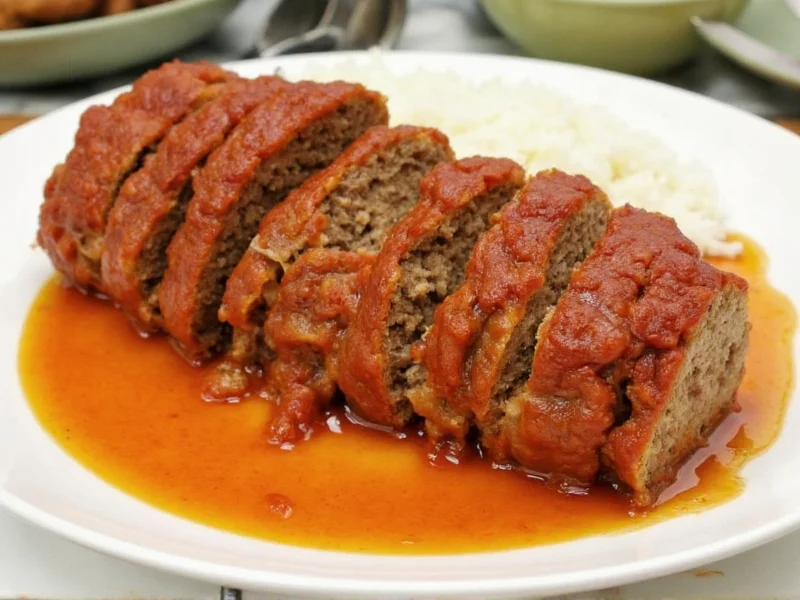
Creating the perfect meatloaf depends heavily on your spice selection and proportions. Many home cooks underestimate how crucial the right spice blend is for transforming simple ground meat into a flavorful centerpiece. This guide reveals professional insights on meatloaf seasoning that go beyond basic recipes you'll find elsewhere.
The Science Behind Meatloaf Spices
Spices don't just add flavor—they interact chemically with meat proteins and fats. Understanding these interactions helps you create meatloaf with balanced, complex flavors rather than a one-dimensional taste. The fat content in ground meat acts as a carrier for fat-soluble flavor compounds in spices, which is why proper mixing technique matters as much as the ingredients themselves.
Essential Meatloaf Spice Components
A well-crafted meatloaf spice blend contains four key elements working in harmony:
| Component Type | Function | Common Examples |
|---|---|---|
| Base Aromatics | Foundation flavors | Onion powder, garlic powder |
| Herbal Notes | Fresh, earthy complexity | Thyme, oregano, parsley |
| Warm Spices | Depth and warmth | Paprika, black pepper, allspice |
| Acidic Elements | Brightness and balance | Worcestershire, tomato paste, mustard |
Precision Spice Ratios for Perfect Meatloaf
Getting the proportions right separates good meatloaf from great meatloaf. For a standard 2-pound meatloaf:
- Garlic powder: 1 teaspoon (not garlic salt, which adds unnecessary sodium)
- Onion powder: 1 teaspoon (provides consistent flavor versus raw onion chunks)
- Dried thyme: 1 teaspoon (fresh thyme requires triple the amount)
- Paprika: 1\/2 teaspoon (sweet, not smoked, for color and mild sweetness)
- Black pepper: 1\/2 teaspoon (freshly ground provides superior flavor)
- Mustard powder: 1\/4 teaspoon (secret ingredient for depth)
These proportions create a balanced flavor profile where no single spice dominates. Exceeding these amounts, especially with potent spices like cayenne or cloves, can easily overwhelm the meat.
Regional Meatloaf Spice Variations
Traditional American meatloaf has evolved regionally with distinct spice profiles:
Classic Midwestern Style
The most common version features the standard blend with a ketchup-based glaze. Some Midwestern cooks add 1\/4 teaspoon of celery salt for additional complexity without making the flavor distinctly celery-forward.
Italian-Inspired Meatloaf
Replace thyme with 1 teaspoon each of dried basil and oregano. Add 1\/2 teaspoon red pepper flakes for heat and 2 tablespoons of grated Parmesan to the mixture. This variation works particularly well with a tomato-balsamic glaze.
Southern-Style Spice Blend
Add 1\/4 teaspoon cayenne pepper and 1\/2 teaspoon of smoked paprika to the base blend. Some Southern cooks include a pinch of ground allspice (about 1\/8 teaspoon) for warmth that complements the meat without making it taste "spiced."
Avoiding Common Meatloaf Spice Mistakes
Even experienced cooks make these critical errors when seasoning meatloaf:
- Over-seasoning: More isn't better—excessive spices create competing flavors rather than harmony
- Using fresh instead of dried herbs: Fresh herbs require triple the quantity and can create uneven flavor pockets
- Adding spices too late: Mix spices thoroughly with meat at the beginning, not just on the surface
- Ignoring acid balance: Without acidic elements like Worcestershire or tomato paste, spices taste flat
- Using old spices: Ground spices lose potency after 6 months—always check freshness dates
Expert Meatloaf Seasoning Techniques
Professional chefs employ these advanced techniques for superior flavor development:
- The blooming method: Briefly sauté dried spices in 1 tablespoon of the fat from your meat mixture (about 30 seconds) before incorporating them. This releases essential oils and intensifies flavor.
- Layered seasoning: Add half your spices to the meat mixture and the other half to your glaze for dimensional flavor.
- Resting period: Let the seasoned meat mixture rest refrigerated for 1-2 hours before shaping. This allows flavors to penetrate the meat proteins.
- Temperature matters: Never add spices to hot meat—always mix with cold ingredients to prevent premature flavor release.
Dietary Adaptations for Meatloaf Spices
When accommodating dietary restrictions, maintain flavor integrity with these substitutions:
- Gluten-free: Most dried spices are naturally gluten-free, but verify no anti-caking agents contain gluten
- Salt-restricted diets: Double onion and garlic powder while eliminating added salt; use celery seed for savory depth
- Low-FODMAP: Replace onion and garlic powder with chives and a pinch of asafoetida (hing)
- Spice sensitivity: Reduce all proportions by 25% and add spices gradually while mixing
Creating Your Signature Meatloaf Spice Blend
Once you've mastered the fundamentals, experiment with these professional enhancements:
- Add 1\/4 teaspoon of ground coriander for citrusy notes that complement beef
- Include 1\/8 teaspoon of ground cloves for holiday-inspired meatloaf
- Mix in 1 teaspoon of dried porcini mushroom powder for umami depth
- Try 1\/2 teaspoon of Chinese five-spice powder for an unexpected complexity
Remember that any additional spices should replace, not supplement, elements of the base blend to maintain balance. Start with small quantities and adjust based on taste tests of a small cooked portion before baking the entire loaf.
Storing and Preserving Your Meatloaf Spice Mix
Create a versatile dry spice mix that keeps for months:
- Mix 2 tablespoons garlic powder, 2 tablespoons onion powder, 2 tablespoons dried thyme, 1 tablespoon paprika, 1 tablespoon black pepper, and 1\/2 tablespoon mustard powder
- Store in an airtight container away from light and heat
- Use 1 tablespoon of this mix per pound of ground meat
- Add fresh herbs separately when preparing meatloaf, as they don't preserve well in dry mixes
This homemade meatloaf seasoning mix provides consistent results and eliminates measuring individual spices each time you cook. For best flavor, refresh your mix every 3 months as spices gradually lose potency.
Get support
Trade Assurance
Source on Alibaba.com
Sell on Alibaba.com
Get to know us




 浙公网安备
33010002000092号
浙公网安备
33010002000092号 浙B2-20120091-4