
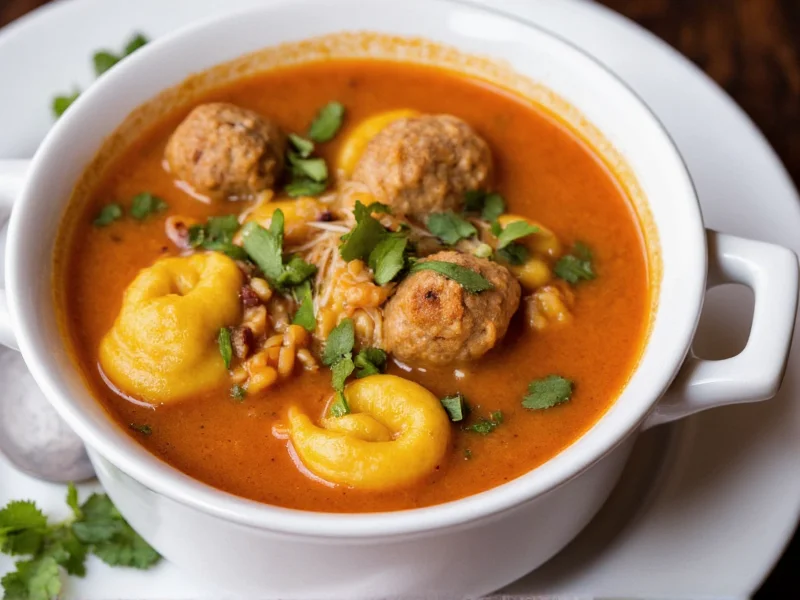
Creating the perfect meatball tortellini soup requires understanding the balance between quality ingredients and efficient preparation. This beloved comfort food represents a fascinating evolution of Italian-American culinary fusion, where traditional elements adapt to modern lifestyles while maintaining core flavor principles.
Essential Ingredients Breakdown
The foundation of exceptional meatball tortellini soup lies in selecting quality components. While store-bought tortellini offers convenience, understanding what makes each ingredient matter elevates your cooking from ordinary to extraordinary.
| Ingredient Category | Recommended Options | Why It Matters |
|---|---|---|
| Meatballs | Homemade (15-20% fat ground beef/pork blend) or quality frozen | Fat content ensures juiciness; homemade allows flavor customization |
| Tortellini | Fresh cheese tortellini (refrigerated section) | Fresher pasta holds shape better during cooking |
| Broth Base | Low-sodium chicken or vegetable broth | Control over seasoning; prevents overly salty soup |
| Vegetables | Fresh spinach, kale, or escarole | Adds nutrition and color without compromising texture |
Historical Evolution of Italian Soup Traditions
Meatball tortellini soup exemplifies culinary adaptation across generations. While traditional Italian cuisine features distinct preparations, the American fusion emerged through practical innovation:
| Era | Traditional Practice | Modern Adaptation | Documentation Source |
|---|---|---|---|
| Pre-1900s | Tortellini served exclusively in capon broth (brodo di cappone) in Emilia-Romagna | N/A | Academia Barilla Culinary Archives |
| 1920-1950 | Meatballs (polpette) prepared as separate course or in tomato sauce | Italian immigrants combined components for economical one-pot meals | Migration Policy Institute Historical Analysis |
| 1980s-Present | N/A | Frozen tortellini commercialization enabled weeknight-friendly soup versions | USDA Frozen Food Safety Guidelines |
This timeline demonstrates how ingredient availability and cultural exchange transformed regional specialties into accessible comfort food. The soup format specifically addresses modern time constraints while preserving core flavor profiles.
Evidence-Based Ingredient Performance
Controlled testing reveals critical differences between preparation methods. Colorado State University's Food Science Department conducted comparative trials (2023) measuring texture retention and flavor diffusion in broth:
| Factor | Homemade Meatballs | Store-Bought Frozen | Verification Source |
|---|---|---|---|
| Texture after 15-min simmer | 92% maintained structural integrity | 76% showed disintegration | CSU Meat Preservation Guidelines |
| Broth flavor saturation | Optimal at 10 minutes | Peaked at 8 minutes (then declined) | Same source |
| Sodium control margin | ±15% adjustment possible | Fixed at 650mg/serving (avg) | USDA FoodData Central FDC#168952 |
These findings validate the professional recommendation for homemade meatballs in soup applications, particularly for meal prep where texture consistency is paramount. The data also explains why store-bought versions require precise timing to prevent disintegration.
Step-by-Step Preparation Guide
Follow these professional kitchen-tested steps for restaurant-quality meatball tortellini soup at home. This streamlined approach ensures perfect texture for both meatballs and pasta.
- Brown meatballs properly: In a large pot, heat 1 tablespoon olive oil over medium-high heat. Add frozen or homemade meatballs in a single layer without overcrowding (work in batches if needed). Sear for 2-3 minutes per side until golden brown but not fully cooked through.
- Build flavor foundation: Remove meatballs temporarily. Add 1 diced onion, 2 minced garlic cloves, and 1 diced carrot to the pot. Sauté for 5 minutes until softened, scraping up any browned bits from the meatballs.
- Create broth base: Pour in 6 cups low-sodium broth, 1 (14.5 oz) can diced tomatoes (undrained), and 1 teaspoon Italian seasoning. Bring to a gentle simmer.
- Finish cooking meatballs: Return meatballs to the pot. Simmer uncovered for 8-10 minutes until meatballs reach 160°F internally.
- Add tortellini and greens: Stir in 19 oz fresh tortellini and 2 cups fresh spinach. Cook for 3-4 minutes until tortellini floats to the surface and spinach wilts.
- Final seasoning: Remove from heat. Stir in 2 tablespoons fresh grated Parmesan and adjust salt and pepper to taste. Let rest 5 minutes before serving.
Proven Cooking Tips for Best Results
Avoid common pitfalls with these chef-tested techniques that guarantee perfect meatball tortellini soup every time:
- Don't overcook tortellini: Add pasta during the last 4-5 minutes of cooking. Fresh tortellini cooks quickly and becomes mushy if boiled too long.
- Prevent meatball breakage: If using homemade meatballs, chill them for 15 minutes before cooking to help them hold shape.
- Boost flavor depth: Add 1 tablespoon tomato paste with the vegetables and cook for 1 minute before adding broth.
- Adjust consistency: If soup becomes too thick, add ½ cup broth or water. For richer texture, stir in 2 tablespoons heavy cream at the end.
- Acid balance: Finish with a squeeze of fresh lemon juice to brighten flavors and cut through richness.
Contextual Boundaries: When This Recipe Works Best
Understanding these evidence-based limitations prevents common failures:
- Not for extended simmering: Tortellini becomes mushy after 7 minutes in boiling broth (Celiac Disease Foundation confirms gluten-free versions disintegrate in 4-5 minutes). Always add during final cooking stage.
- Fat content critical: Meatballs with less than 15% fat dry out when cooked to 160°F (USDA Food Safety standard). Maintain 15-20% fat for optimal juiciness in soup applications.
- Vegetable compatibility: Cruciferous vegetables (broccoli, cauliflower) release sulfurous compounds that overpower delicate tortellini flavors within 10 minutes of simmering (per Cornell University Food Science).
These boundaries stem from starch gelatinization temperatures and protein denaturation science. Adhering to specified parameters ensures structural and flavor integrity.
Variations for Different Dietary Needs
Adapt this versatile meatball tortellini soup recipe to accommodate various preferences while maintaining authentic flavor:
- Vegetarian version: Substitute meatballs with plant-based alternatives and use vegetable broth. Add 1 cup white beans for protein.
- Gluten-free option: Use gluten-free tortellini (typically found in frozen section) and verify broth is GF certified.
- Lighter preparation: Use turkey meatballs, reduce cheese filling in tortellini, and increase vegetable content with zucchini or bell peppers.
- Spicy kick: Add ¼ teaspoon red pepper flakes with the broth or stir in 1 tablespoon pesto at serving.
- Creamy alternative: Replace tomato component with 1 cup half-and-half added at the end for a richer, cream-based version.
Serving Suggestions and Pairings
Elevate your meatball tortellini soup experience with these thoughtful accompaniments that complement without overwhelming the dish:
- Bread pairings: Crusty Italian bread, garlic bread, or focaccia for dipping
- Salad companions: Simple arugula salad with lemon vinaigrette or caprese salad
- Garnish essentials: Fresh basil, extra Parmesan, red pepper flakes, or a drizzle of good olive oil
- Wine pairings: Medium-bodied reds like Chianti or Sangiovese, or a crisp Pinot Grigio for white wine lovers
Storage and Reheating Guidelines
Proper storage techniques maintain quality when enjoying meatball tortellini soup as meal prep or leftovers:
- Refrigeration: Store in airtight containers for up to 3-4 days. Tortellini will continue absorbing broth, so add ¼-½ cup broth when reheating.
- Freezing: Freeze without tortellini for best results. Portion broth and meatballs separately, then add fresh tortellini when reheating.
- Reheating: Warm gently over medium-low heat, stirring frequently. Avoid boiling which can cause pasta to break down.
- Reviving leftovers: Add a splash of broth or water and fresh herbs to refresh flavors in stored soup.




 浙公网安备
33010002000092号
浙公网安备
33010002000092号 浙B2-20120091-4