
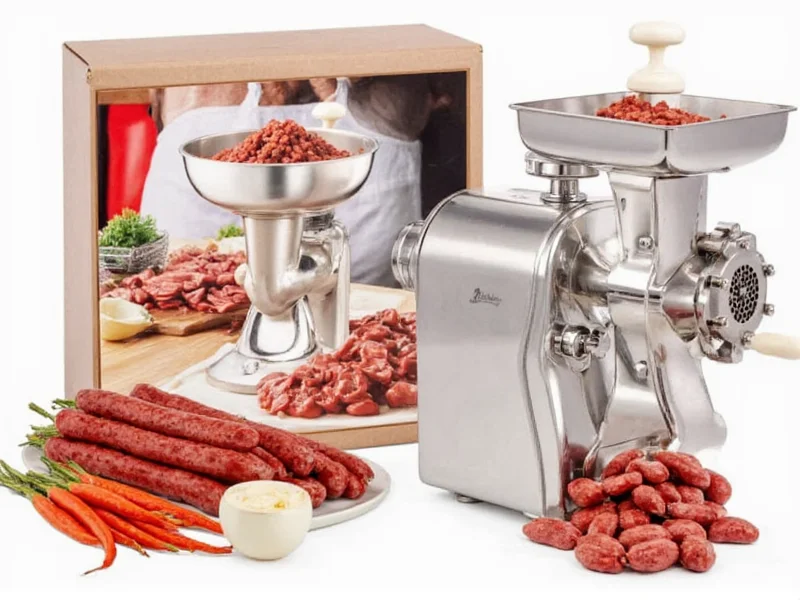
Creating quality homemade sausages requires the right equipment combination. Understanding how meat grinders and sausage stuffers work together saves time, reduces mess, and produces better results than makeshift solutions. This guide explains the technical relationship between these tools, helping you make informed decisions for your sausage-making needs.
Understanding the Meat Grinder-Sausage Stuffer Relationship
While many people search for a "meat grinder sausage stuffer" as a single product, the reality involves two distinct but compatible components. A standard meat grinder performs the initial meat processing, while the sausage stuffer attachment handles the casing-filling stage. This modular design offers flexibility for home cooks and professional butchers alike.
Most quality meat grinders—whether electric countertop models or manual clamp-on varieties—support sausage stuffing functionality through interchangeable parts. The key is identifying compatible attachments for your specific grinder model. Major manufacturers like KitchenAid, LEM, and Sunmile typically offer sausage stuffing kits that integrate seamlessly with their grinding systems.
Types of Meat Grinder Sausage Attachment Systems
Sausage stuffing capabilities fall into three main categories based on your meat grinder type:
| Grinder Type | Stuffer Configuration | Best For |
|---|---|---|
| Electric Countertop Grinders | Integrated stuffing tube replacing grinding plate | Regular sausage makers needing efficiency |
| Manual Hand-Crank Grinders | Separate stuffing tube with adapter ring | Occasional users and outdoor cooking |
| Stand Mixer Attachments | Dedicated sausage stuffer accessory | KitchenAid and similar mixer owners |
Historical Evolution of Integrated Sausage-Making Equipment
The development of combined meat grinder-sausage stuffer systems reflects over a century of innovation in home food processing. Early household meat grinders, such as the cast-iron hand-crank models from the 1870s, required separate stuffing funnels for sausage production—a cumbersome two-step process. According to the Smithsonian National Museum of American History's collection, these standalone grinders dominated kitchens until the early 20th century. A pivotal shift occurred in 1907 when Charles L. Sidle received US Patent 854,425 for an electric meat grinder, laying groundwork for motorized integration. By 1940, US Patent 2,217,740 formalized the modern attachment concept, enabling a single unit to alternate between grinding and stuffing functions. Post-1950s mass production made these systems accessible to home users, with material advancements (like food-grade stainless steel) addressing earlier corrosion and sanitation issues.
Key Features to Consider When Choosing
Selecting the right meat grinder sausage stuffer combination requires evaluating several technical factors:
Motor Power and Capacity
Electric models need sufficient wattage (minimum 300W) to handle continuous grinding and stuffing. Higher-powered units (500W+) manage tougher meats and longer sausage runs without overheating. Consider your typical batch size—occasional users might need only 1-2 pounds capacity, while serious sausage makers should look for 3-5 pound capacities.
Material Construction
Stainless steel components resist corrosion from meat acids and simplify cleaning. Avoid models with excessive plastic parts in the grinding and stuffing path, as these can harbor bacteria and wear prematurely. Look for food-grade stainless steel grinding plates, cutting blades, and stuffing tubes.
Attachment Compatibility
Verify that the sausage stuffer attachment matches your grinder's specifications. Some universal attachments work across brands, but manufacturer-specific parts typically provide better seals and performance. Check whether your grinder requires special adapters to connect the stuffing tube securely.
Practical Constraints and Safety Boundaries
While versatile, meat grinder-sausage stuffer combinations have critical operational limits that impact food safety and product quality. The FDA Food Code 2022 (Section 3-501.16) mandates strict temperature control during meat processing—raw ingredients must remain below 40°F (4°C) to prevent pathogen proliferation. Exceeding this threshold during extended grinding/stuffing sessions significantly increases contamination risks, particularly for poultry and pork. Additionally, these systems struggle with meats lacking sufficient fat content (e.g., venison with <20% fat); as noted by the University of Wisconsin-Madison Food Preservation Program, lean meats produce crumbly sausages that fail to bind without added fat or binders. Emulsified sausages (like bratwurst) also require specialized fine-grind plates and rapid chilling—features absent in most home units—which explains why commercial producers use dedicated equipment.
Proper Usage Techniques for Optimal Results
Even the best meat grinder sausage stuffer combination performs poorly without correct technique. Follow these professional practices:
- Chill all components—Keep meat below 40°F (4°C), and pre-chill grinder parts to prevent smearing
- Use proper casing preparation—Rinse natural casings thoroughly and flush synthetic casings with water
- Maintain consistent pressure—Avoid air pockets by keeping steady force on the grinder handle or feed pusher
- Work in manageable batches—Process no more than 2-3 pounds of meat at a time for best texture
When transitioning from grinding to stuffing, clean the grinding plate area thoroughly to prevent cross-contamination between functions. Many experienced sausage makers keep dedicated plates for each purpose to streamline the process.
Maintenance Requirements for Longevity
Proper care extends the life of your meat grinder sausage stuffer system significantly. After each use:
- Disassemble all components immediately
- Wash in warm, soapy water (avoid dishwashers for precision parts)
- Dry completely before storage
- Apply food-grade mineral oil to metal parts monthly
- Store attachments in labeled containers to prevent damage
Inspect cutting blades and plates regularly for wear. Dull blades create heat that damages meat texture, while worn stuffing tubes cause inconsistent filling. Most manufacturers recommend replacing cutting components every 1-2 years with regular use.
Troubleshooting Common Issues
Even well-maintained meat grinder sausage stuffer systems encounter problems. Address these frequent challenges:
- Meat extruding around casings: Likely caused by improper casing attachment or insufficient tension. Ensure casings are securely fastened to the stuffing tube and maintain gentle tension as you fill.
- Inconsistent sausage thickness: Often results from variable grinding pressure or partially clogged plates. Maintain steady pressure and check for obstructions between batches.
- Motor overheating: Indicates overloaded capacity or insufficient meat temperature. Reduce batch sizes and ensure meat stays cold throughout processing.




 浙公网安备
33010002000092号
浙公网安备
33010002000092号 浙B2-20120091-4