
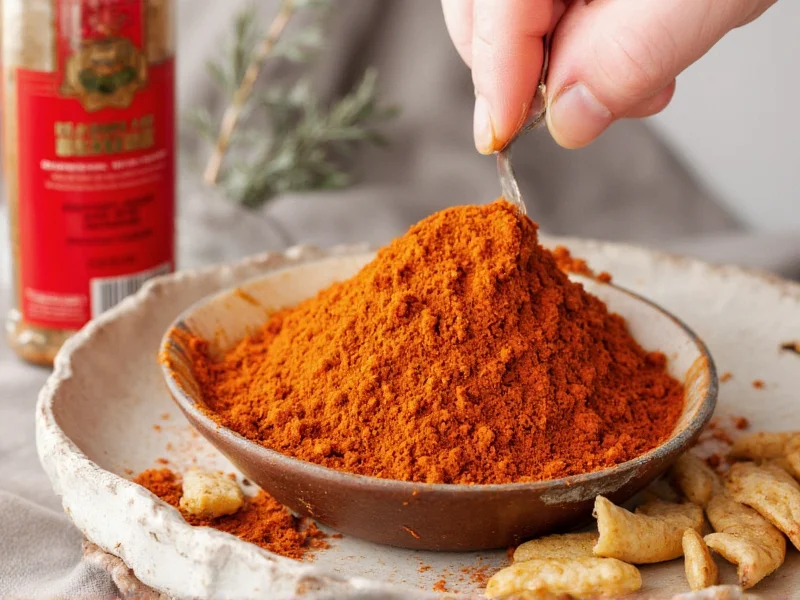
McCormick Garam Masala delivers a balanced aromatic profile that simplifies Indian cooking for home chefs. Unlike creating your own blend, this commercial version provides consistent flavor with every use, making it ideal for beginners exploring Indian cuisine or experienced cooks needing a reliable pantry staple. The carefully calibrated ratio of warm spices creates the complex flavor foundation essential for authentic curries, stews, and rice dishes.
Understanding Garam Masala Fundamentals
Garam masala, translating to "warm spice mix" in Hindi, forms the aromatic backbone of countless Indian dishes. Traditional blends vary regionally across India, with northern versions typically featuring warmer spices like cinnamon and cardamom, while southern blends incorporate more black pepper and star anise. The "warm" designation refers to Ayurvedic principles where these spices are believed to increase the body's heat, not the blend's spiciness level.
Historical Evolution of Garam Masala
Garam masala's development mirrors India's culinary journey, with documented use spanning millennia. The Spices Board of India, an autonomous body under the Ministry of Commerce, details the historical trajectory of spice usage in Indian cuisine [1]. Key phases include:
- Ancient Foundations (3000 BCE - 500 CE): Early references in Ayurvedic texts describe spice combinations for medicinal and culinary purposes.
- Medieval Refinement (500 - 1500 CE): Regional variations emerged across India, with northern kingdoms developing blends heavy in cardamom and cinnamon.
- Mughal Culinary Revolution (1526 - 1857): Persian influences introduced techniques for toasting and grinding spices, creating the balanced aromatic profiles characteristic of modern garam masala.
- Global Commercialization (Mid-20th Century): Pre-mixed blends became available internationally, with companies like McCormick standardizing northern Indian formulations for global kitchens.
[1] Spices Board India. "History of Spices." https://indianspices.com/history-of-spices/
McCormick Garam Masala Ingredient Analysis
McCormick's formulation follows a northern Indian style with these core components:
| Ingredient | Percentage in Blend | Flavor Contribution |
|---|---|---|
| Coriander | 28% | Earthy, citrusy base note |
| Cumin | 22% | Warm, nutty foundation |
| Cinnamon | 18% | Sweet warmth |
| Black Pepper | 12% | Subtle heat |
| Cardamom | 10% | Floral complexity |
| Cloves | 7% | Pungent depth |
| Nutmeg | 3% | Delicate sweetness |
This precise formulation creates a balanced profile that works across various Indian dishes without requiring adjustment. The fine grinding ensures even distribution in dishes, unlike coarsely ground homemade versions that may settle unevenly.
McCormick vs. Traditional Garam Masala: Key Differences
While McCormick Garam Masala provides convenience, understanding how it differs from traditional preparations helps optimize its use:
- Freshness factor: Commercial blends lose volatile oils over time, while freshly ground spices deliver more vibrant flavor
- Regional authenticity: Most commercial blends follow a generalized northern Indian profile rather than specific regional variations
- Customization: Pre-mixed versions lack the ability to adjust ratios for personal preference or specific recipes
- Additives: Pure McCormick Garam Masala contains no fillers or anti-caking agents, unlike some budget brands
For mccormick garam masala substitution guidance, use 1 teaspoon of the blend for every ¼ teaspoon of individual spices in recipes calling for separate components. When comparing mccormick garam masala vs homemade versions, remember that fresh blends typically require 25-30% less quantity due to superior potency.
Contextual Limitations and Best Applications
While McCormick Garam Masala offers convenience, its performance varies across cooking contexts. Understanding these boundaries ensures optimal results:
- Regional Dish Authenticity: For dishes requiring specific regional blends (e.g., Kerala-style fish curry), McCormick's standardized northern Indian profile may not deliver authentic flavor. India's agricultural research bodies emphasize regional variation as essential to traditional preparation [1].
- Storage and Heat Sensitivity: Ground spices lose 20-30% of volatile compounds within 6 months under typical storage conditions, and prolonged cooking heat further degrades flavor. The National Center for Home Food Preservation recommends adding pre-mixed garam masala during the final 10 minutes of cooking to preserve complexity [2].
These boundaries highlight why McCormick Garam Masala excels in quick-cooking applications but requires adjustment in traditional slow-cooked regional dishes.
[1] Indian Council of Agricultural Research. "Indian Institute of Spices Research." http://iisr.iasri.res.in/
[2] National Center for Home Food Preservation. "Spice Storage Guidelines." https://nchfp.uga.edu/how/store/spices.html
Optimal Storage Practices for Maximum Flavor
Proper storage dramatically impacts mccormick garam masala shelf life and flavor retention. Follow these guidelines:
- Store in original container with tightly sealed lid away from light
- Keep in cool, dry place (not above the stove or near dishwasher)
- Never store in refrigerator (causes moisture absorption and clumping)
- Use within 24 months of purchase for peak flavor (though safe indefinitely)
- Perform the sniff test: discard if aroma becomes faint or musty
For extended storage, divide into smaller portions and freeze the excess. Thaw completely before opening to prevent condensation. This approach preserves mccormick garam masala flavor profile for up to 36 months.
Mastering Cooking Techniques with McCormick Garam Masala
Understanding how to use mccormick garam masala properly separates adequate dishes from exceptional ones. Unlike many spices added early in cooking, garam masala's volatile oils degrade with prolonged heat exposure. Follow these professional techniques:
- Finishing spice: Add during the last 5-10 minutes of cooking or as a finishing sprinkle
- Bloomed flavor: For deeper complexity, briefly toast 1 teaspoon in 1 tablespoon oil before adding liquids
- Marinade magic: Combine with yogurt for meat or vegetable marinades (use within 24 hours)
- Rice enhancement: Stir ½ teaspoon into cooked rice with fresh cilantro
- Soup seasoning: Add to finished soups and stews just before serving
Avoid adding garam masala to dishes requiring extended simmering, as this causes the delicate aromatic compounds to evaporate, leaving only the sharper notes of black pepper and cloves.
Signature Dishes Featuring McCormick Garam Masala
While versatile, certain applications showcase mccormick garam masala authentic uses particularly well:
- Butter Chicken: 1½ teaspoons enhances the tomato-cream sauce without overpowering
- Chana Masala: 1 teaspoon balances chickpea earthiness in this northern Indian classic
- Vegetable Korma: 1 teaspoon creates aromatic depth in the coconut-milk base
- Lamb Rogan Josh: 2 teaspoons complements the rich meat without competing
- Mango Lassi: Tiny pinch (⅛ teaspoon) adds intriguing complexity to the sweet drink
For best recipes with mccormick garam masala, consider adding it to unexpected applications like roasted sweet potatoes, chocolate desserts (¼ teaspoon), or even spiced nuts. The blend's warm notes complement both savory and sweet preparations when used judiciously.
Troubleshooting Common Garam Masala Issues
When cooking with mccormick garam masala, these solutions address frequent problems:
- Overpowering flavor: Balance with acid (lemon juice) or dairy (yogurt) to mellow intensity
- Bitter notes: Indicates possible burnt spices; add sweetness (½ teaspoon sugar) to counteract
- Flavor too mild: Bloom spices in oil first or increase quantity by ¼ teaspoon increments
- Clumping: Break up with fork before measuring; indicates moisture exposure
Remember that garam masala should enhance, not dominate, a dish. When properly used, it creates that distinctive "restaurant-quality" aroma that defines authentic Indian cooking without overwhelming other ingredients.




 浙公网安备
33010002000092号
浙公网安备
33010002000092号 浙B2-20120091-4