
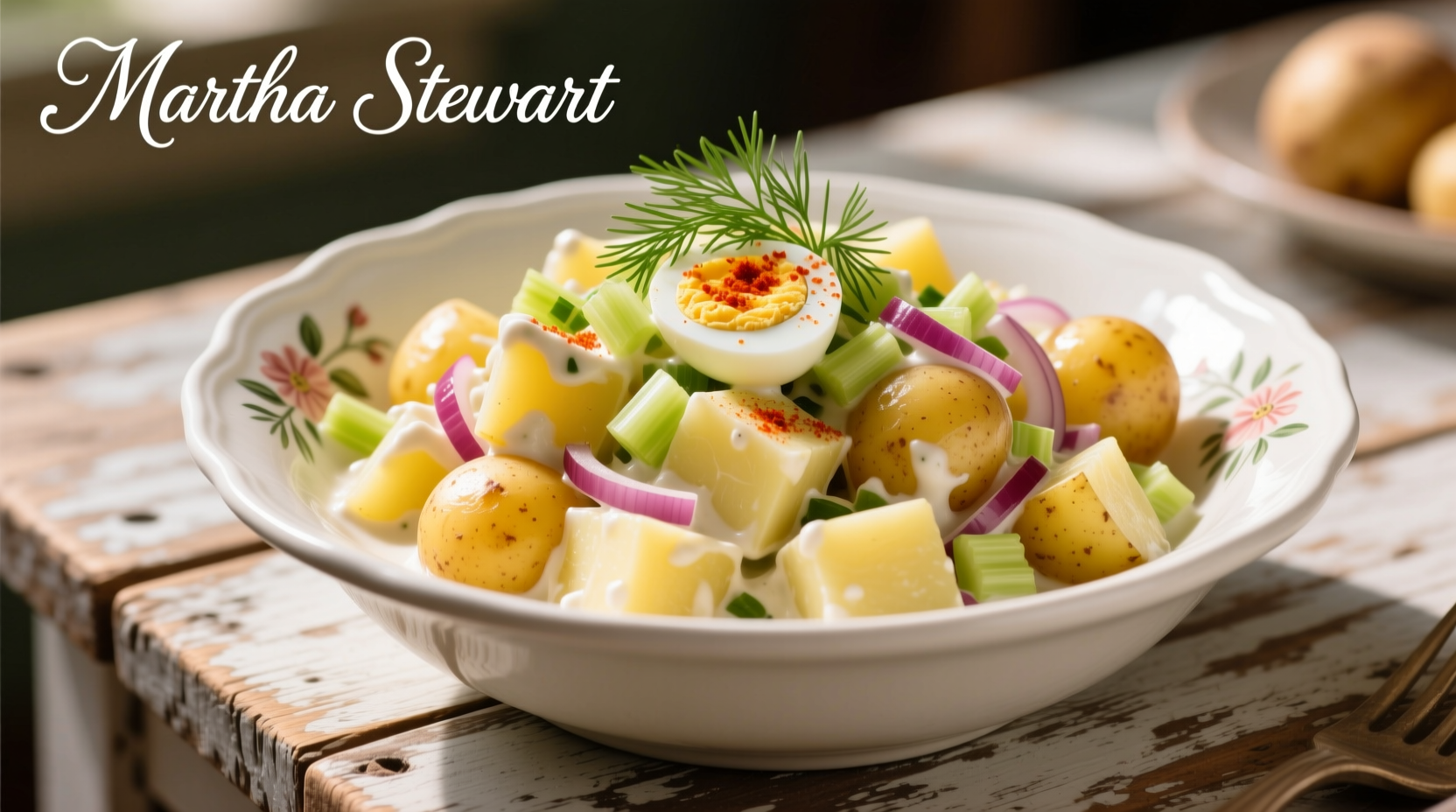
Master the perfect summer side dish with Martha Stewart's renowned potato salad recipe that has delighted home cooks for decades. This authentic version delivers creamy, flavorful results every time when you use the right potato varieties and follow Stewart's precise dressing technique. Unlike bland versions, her recipe balances tangy mustard, fresh dill, and just enough mayonnaise for a dressing that coats without overwhelming the potatoes.
Why This Recipe Stands Out From Ordinary Potato Salad
Martha Stewart's potato salad achieves culinary perfection through careful ingredient selection and technique. The magic happens when you use Yukon Gold potatoes instead of waxy varieties that turn mushy. Their naturally buttery flavor and creamy texture absorb the dressing beautifully while maintaining structural integrity. Stewart's dressing ratio—equal parts mayonnaise and sour cream with Dijon mustard—creates a tangy profile that cuts through richness without vinegar's sharpness.
Essential Ingredients and Their Purpose
Understanding why each component matters transforms good potato salad into exceptional:
- 2 pounds Yukon Gold potatoes (not Russets)—their thin skins and creamy flesh provide ideal texture
- 3/4 cup mayonnaise—full-fat for proper emulsion and richness
- 1/4 cup sour cream—adds tang without acidity of vinegar
- 2 tablespoons Dijon mustard—provides depth, not just heat
- 1/4 cup fresh dill (not dried)—essential for authentic flavor profile
- 3 hard-boiled eggs—chopped medium, not fine, for texture contrast
| Ingredient | Common Mistake | Stewart's Technique |
|---|---|---|
| Potatoes | Overcooking until mushy | Simmer until fork-tender (15-18 min), cool in ice bath |
| Dressing | Adding while potatoes hot | Combine with room-temp potatoes to prevent oil separation |
| Onions | Raw red onion chunks | Soak in cold water 10 minutes to mellow sharpness |
The Potato Selection Timeline: From European Import to American Classic
Potato salad's evolution reflects changing American tastes. According to the USDA's Agricultural History archives, potatoes arrived in North America in the 1719 when Irish immigrants brought them to New Hampshire. The classic American potato salad emerged in the late 19th century as refrigeration became common. Martha Stewart's version represents the modern evolution that balances traditional European techniques with American ingredient preferences.
Step-by-Step Preparation Process
Perfect Potato Cooking Technique
Place unpeeled Yukon Golds in large pot, cover with cold water by 1 inch, add 2 tablespoons salt. Bring to gentle simmer (not rolling boil) and cook 15-18 minutes until fork-tender. Immediately drain and transfer to ice bath for 5 minutes—this stops cooking while keeping skins intact. Cut into 3/4-inch cubes while slightly warm.
Dressing Mastery: The Professional Secret
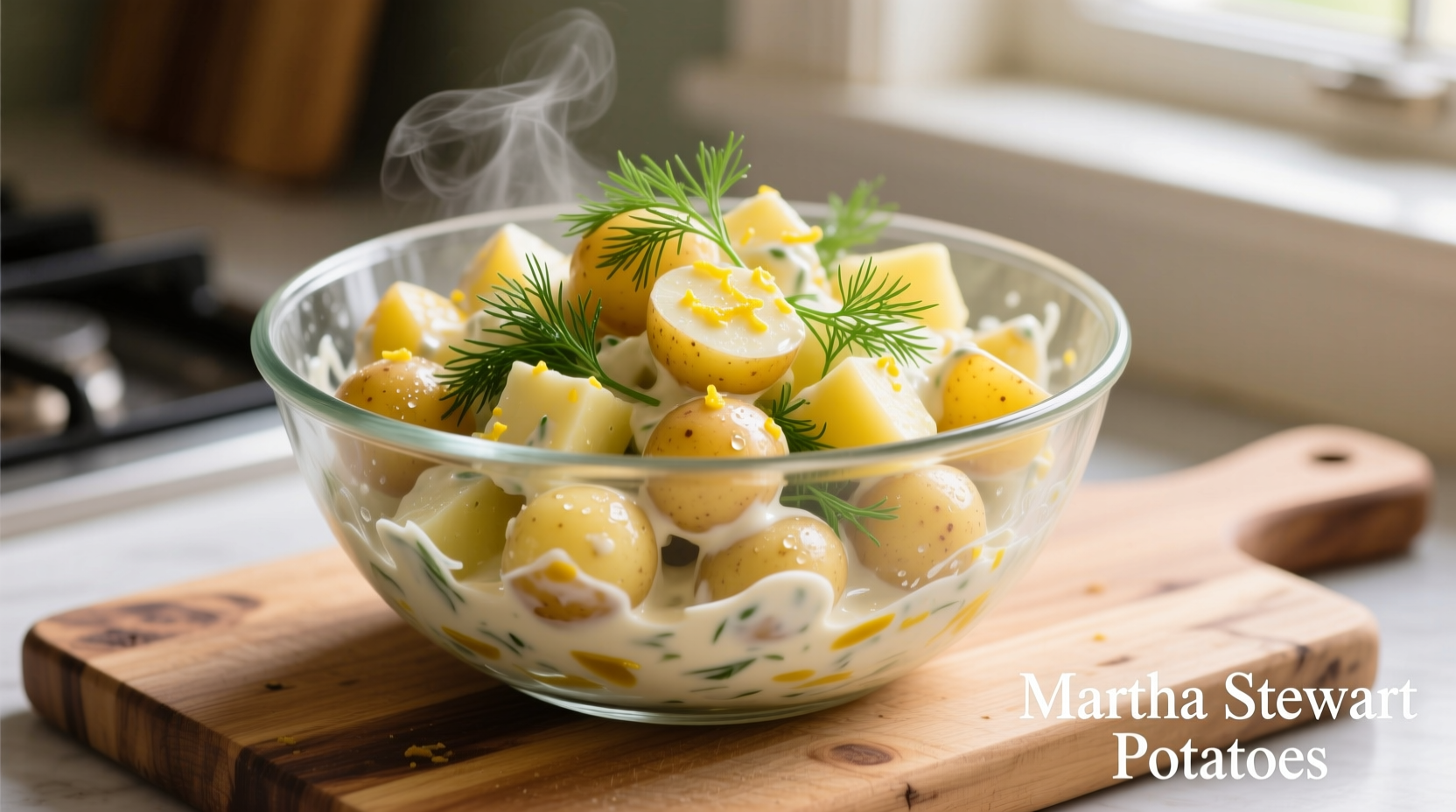
While potatoes cool, prepare dressing: Whisk 3/4 cup mayonnaise, 1/4 cup sour cream, 2 tablespoons Dijon mustard, 1 teaspoon celery seed, 1/4 cup chopped fresh dill, 1/2 teaspoon salt, and 1/4 teaspoon black pepper. The critical step Stewart emphasizes: mix dressing with potatoes at room temperature, not hot. Hot potatoes cause mayonnaise to break, creating a greasy texture.
Assembly and Chilling Protocol
Gently fold dressing into cooled potatoes with 1/2 cup diced celery, 1/4 cup soaked red onion, and 3 chopped hard-boiled eggs. Avoid vigorous stirring which breaks potato cubes. Cover surface directly with plastic wrap to prevent drying, then refrigerate minimum 4 hours (ideally overnight). This chilling period allows flavors to meld while maintaining distinct textures.
Food Safety Guidelines for Summer Serving
According to FDA food safety guidelines, potato salad should not remain at room temperature longer than 2 hours (1 hour if above 90°F). The FDA's Food Code specifies that egg-based salads require strict temperature control. When serving outdoors, nest the bowl in a larger container filled with ice to maintain safe temperatures.
| Storage Condition | Maximum Safe Time | Quality Indicator |
|---|---|---|
| Refrigerated (40°F or below) | 3-5 days | Dressing remains emulsified |
| Room temperature (70°F) | 2 hours | Surface begins drying out |
| Outdoor serving (90°F+) | 1 hour | Dressing separates visibly |
Variations and Serving Suggestions
Stewart's classic version shines at traditional gatherings, but these professional adaptations work for special occasions:
- Herb variation: Substitute tarragon for dill with addition of 1 tablespoon chopped chives
- Mustard upgrade: Replace half the Dijon with whole-grain mustard for texture contrast
- Lighter version: Substitute 1/4 cup Greek yogurt for equal sour cream portion
For elegant presentation, serve in lettuce cups at summer brunches or alongside grilled salmon for a complete meal. The dressing's balanced acidity makes it particularly compatible with rich proteins like barbecue ribs or fried chicken.
Common Mistakes to Avoid
Even experienced cooks make these critical errors with potato salad:
- Peeling potatoes before cooking—causes waterlogging and texture loss
- Using vinegar-based dressing—overpowers delicate potato flavor
- Adding dressing while potatoes hot—breaks emulsion, creates greasy texture
- Overmixing after chilling—crushes potato cubes, creating mushy consistency
Make-Ahead Strategy for Stress-Free Entertaining
Prepare components separately for optimal results when making ahead. Cook and cube potatoes up to 24 hours in advance, storing in water in refrigerator. Make dressing up to 48 hours ahead—its flavor actually improves with time. Combine all elements 4 hours before serving to allow proper flavor integration without compromising texture. This approach prevents the common problem of watery potato salad that develops when ingredients sit too long before serving.




 浙公网安备
33010002000092号
浙公网安备
33010002000092号 浙B2-20120091-4