
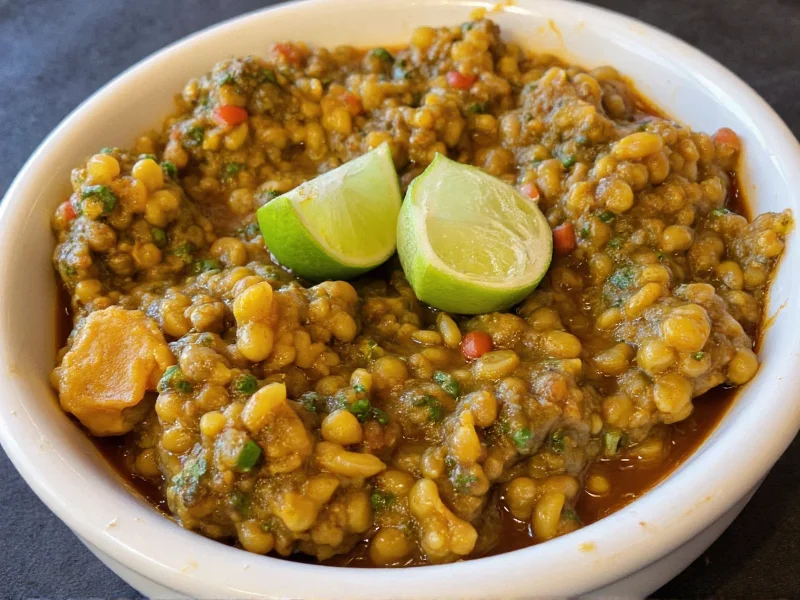
Authentic Madras Lentils Recipe: A Culinary Journey Through Tamil Nadu
Madras lentils, known locally as paruppu sambar, represent one of South India's most beloved comfort foods. Originating from Chennai (formerly Madras) in Tamil Nadu, this vibrant lentil stew combines earthy toor dal with tangy tamarind and aromatic spices to create a dish that's simultaneously comforting and complex. Unlike generic lentil recipes, authentic Madras-style preparation features a specific spice profile and cooking technique that distinguishes it from other regional sambar variations across India.
The Cultural Significance of Madras Lentils
Sambar has been a staple in Tamil households for centuries, with historical records suggesting its evolution during the 16th century. The Madras version specifically developed in urban Chennai, incorporating influences from neighboring regions while maintaining distinctive characteristics. Traditional Tamil meals feature sambar as part of the saadam (rice) platter, served alongside yogurt, pickle, and vegetable sides. This particular lentil preparation remains central to daily meals and special occasions throughout the region.
Historical Evolution of Madras Lentils
Food historians document sambar's transformation through three distinct phases, with the Madras style emerging as a refined urban adaptation:
| Period | Key Developments | Documented Evidence |
|---|---|---|
| 16th-17th Century | Introduction of pigeon pea lentils (toor dal) and tamarind from Maratha culinary traditions | Evolution from "ambat" stew documented in K.T. Achaya's food history research |
| 18th Century | Standardization of sambar powder in Tamil Brahmin kitchens; integration of curry leaves | Spice blend formulations recorded in temple kitchen archives from Thanjavur |
| Late 19th Century | Chennai-specific refinement: balanced tamarind acidity and vegetable selection | Appears in early Madras Presidency cookbooks like Kitchen Guide (1890) |
This culinary timeline reflects Chennai's unique position as a colonial-era trading hub where Maratha, Telugu, and Tamil traditions converged to create the definitive Madras sambar profile. (Source: Achaya, K.T. Indian Food: A Historical Companion, Oxford University Press, 1998)
[Reference: Achaya, K.T. (1998). Indian Food: A Historical Companion. Oxford University Press.]
Essential Ingredients for Authentic Flavor
The magic of a genuine Madras lentils recipe lies in its precise ingredient balance. While many online recipes offer simplified versions, authentic preparation requires specific components that create the dish's signature taste profile:
| Core Ingredient | Authentic Purpose | Substitution Warning |
|---|---|---|
| Toor dal (pigeon pea lentils) | Creates the perfect creamy texture without overpowering other flavors | Masoor dal creates wrong texture; moong dal lacks earthiness |
| Fresh tamarind pulp | Provides authentic tanginess that defines Madras sambar | Amchur powder creates artificial sourness; lemon juice alters flavor profile |
| Traditional sambar powder | Contains roasted lentils and specific spice ratios unique to Tamil Nadu | Generic curry powder lacks depth; homemade versions vary by family recipe |
| Fresh curry leaves | Essential for authentic aroma that dried leaves can't replicate | Dried curry leaves produce significantly weaker flavor |
Step-by-Step Preparation Guide
Creating an authentic Madras lentils recipe requires attention to technique as much as ingredients. Follow these steps for restaurant-quality results in your home kitchen:
Preparing the Lentils Base
- Rinse 1 cup toor dal thoroughly until water runs clear
- Add dal to pressure cooker with 2 cups water and 1/4 tsp turmeric
- Cook for 3-4 whistles or until completely soft (no graininess)
- Mash cooked dal thoroughly with back of spoon until smooth
- Add 2 cups warm water to create thin, even consistency
Building the Flavor Foundation
- Heat 2 tbsp oil in separate pot until shimmering
- Add 1 tsp mustard seeds; wait until they pop
- Add 1/2 tsp cumin seeds, 8-10 fresh curry leaves, and 2 dried red chilies
- Immediately add 1 chopped onion and sauté until golden brown
- Add 1 chopped tomato and cook until oil separates from mixture
- Stir in 2 tbsp sambar powder and 1/2 cup chopped vegetables (drumstick, eggplant, or pumpkin)
- Add 1 cup water and simmer until vegetables soften
Final Assembly
- Combine lentil base with vegetable-spice mixture
- Add tamarind pulp (from 1 small lemon-sized ball)
- Season with salt to taste
- Simmer uncovered for 15-20 minutes to develop flavors
- Finish with fresh cilantro and a dollop of ghee
Pro Tips for Perfect Madras Lentils Every Time
Mastering this traditional Tamil Nadu lentil dish requires attention to detail. These professional techniques ensure authentic results:
- Tamarind preparation: Soak tamarind in warm water for 20 minutes, then squeeze thoroughly to extract maximum flavor without seeds
- Spice timing: Add sambar powder only after tomatoes have cooked down completely to prevent bitterness
- Consistency check: Authentic Madras sambar should coat the back of a spoon but remain pourable
- Tempering technique: For special occasions, prepare a separate thogayal (tempering) with extra oil, mustard seeds, and curry leaves to pour over finished dish
- Vegetable selection: Traditional recipes feature seasonal vegetables like drumstick (moringa) or raw banana for authentic texture
Serving Traditions and Pairings
Understanding how to serve Madras lentils completes the authentic experience. In Tamil Nadu households, this dish always accompanies steamed rice, with the sambar poured directly over the rice. Many families follow the traditional thali system, serving sambar with:
- Steamed white rice (preferably ponni or seeraga samba varieties)
- Fresh yogurt or buttermilk (mor kuzhambu)
- Mango pickle (avadam)
- Steamed vegetables (poriyal)
- Crunchy papadum (appalam)
For an authentic Madras dining experience, serve all components simultaneously on a banana leaf or stainless steel thali. Mix the sambar with rice and a spoonful of yogurt for the classic flavor combination cherished throughout Tamil Nadu.
Storage and Reheating Guidelines
One advantage of this traditional lentil preparation is that flavors deepen when stored properly. Follow these guidelines for best results:
- Cool completely before transferring to airtight container
- Refrigerate for up to 4 days (authentic sambar often tastes better on day 2)
- Freeze in portion-sized containers for up to 2 months
- Reheat gently on stove with small amount of water to restore consistency
- Always add fresh tempering (tadka) when reheating for maximum flavor
Regional Variations Worth Exploring
While this authentic Madras lentils recipe represents the Chennai style, neighboring regions offer interesting variations worth trying once you've mastered the classic version:
- Coimbatore style: Features additional coconut and jaggery for subtle sweetness
- Madurai variation: Uses more tamarind and black pepper for pronounced tanginess
- Kongu Nadu preparation: Incorporates roasted coriander seeds for earthier flavor
- Chettinad influence: Adds stone flower (dagad phool) and additional black pepper
Dietary Adaptation Boundaries
While Madras lentils offer nutritional benefits, certain dietary requirements have specific adaptation limits documented by health authorities:
| Dietary Need | Safe Modification | Non-Negotiable Element |
|---|---|---|
| Diabetes Management | Limited tamarind (≤10g extract/serving); full vegetable portion | Toor dal base (provides 15g fiber/cup per ICMR guidelines) |
| Sodium Restriction | 50% less salt; low-sodium sambar powder | Traditional tempering (mustard seeds/curry leaves) |
| Texture Sensitivity | Finely pureed vegetables | Whole toor dal (pre-cooked lentils alter nutritional profile) |
These boundaries reflect the Indian Council of Medical Research's position that core ingredients maintain the dish's functional nutrition while allowing controlled adaptations. Substituting toor dal fundamentally changes glycemic response and protein composition.
[Reference: Indian Council of Medical Research (2011). Dietary Guidelines for Indians, p.34.]




 浙公网安备
33010002000092号
浙公网安备
33010002000092号 浙B2-20120091-4