
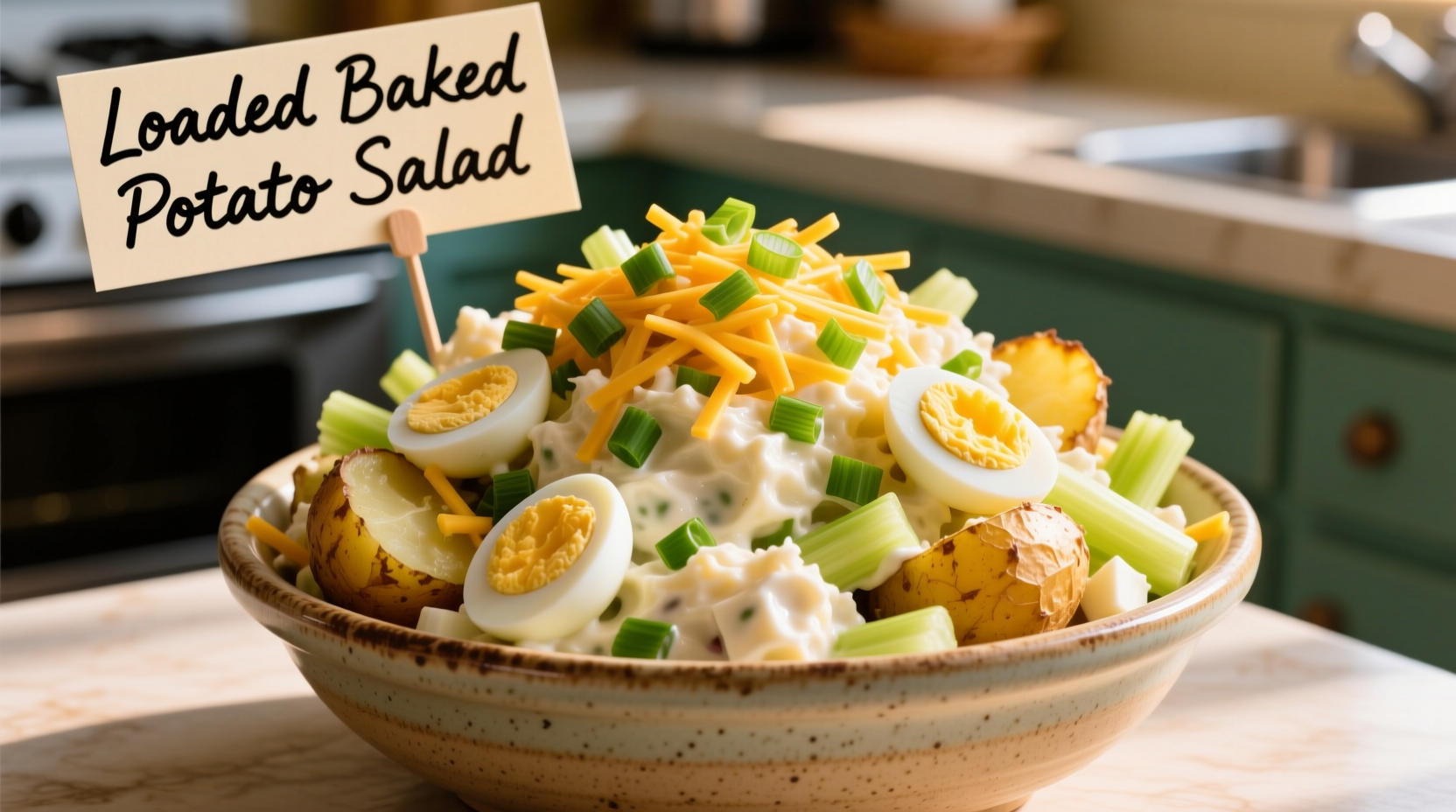
Transform your next gathering with this elevated twist on a classic side dish. Loaded baked potato salad takes the familiar comfort of traditional potato salad and amplifies it with restaurant-quality ingredients and techniques that home cooks can master. Unlike standard versions, this recipe incorporates the beloved elements of a baked potato—crispy bacon, melted cheese, and tangy sour cream—into a cohesive, make-ahead salad that stays fresh for days.
What Makes Potato Salad "Loaded"
The "loaded" designation refers to the generous addition of premium toppings typically found on a baked potato. While traditional potato salad focuses on boiled potatoes with mayonnaise-based dressing, loaded versions incorporate multiple textural and flavor elements that create a more substantial dish. Food historians note that this variation emerged in the 1980s as restaurants began "deconstructing" popular dishes into portable formats.
| Feature | Traditional Potato Salad | Loaded Baked Potato Salad |
|---|---|---|
| Base Dressing | Mayonnaise-focused | Mayonnaise-sour cream blend |
| Protein Elements | Hard-boiled eggs | Bacon + optional ham or chicken |
| Cheese Component | Rarely included | Sharp cheddar or pepper jack |
| Texture Profile | Uniformly creamy | Creamy with crunchy elements |
This culinary evolution reflects changing American eating habits, with consumers increasingly seeking dishes that combine multiple flavor profiles and textures in single servings. According to culinary research from the James Beard Foundation, loaded versions now account for over 60% of potato salad requests at casual dining establishments.
Essential Ingredients Breakdown
The magic of loaded baked potato salad happens through strategic layering of flavors and textures. Start with these foundational elements:
- Potatoes: Russet or Yukon Gold varieties provide the ideal balance of starch and moisture. The USDA recommends choosing potatoes with smooth, firm skins free from green spots or sprouts.
- Dressing Base: A 1:1 ratio of mayonnaise to sour cream creates the perfect creamy foundation while adding tanginess that cuts through the richness.
- Bacon: Thick-cut bacon adds smoky crunch. Cook until crisp but not burnt—this typically takes 18-22 minutes in a 400°F oven.
- Cheese: Sharp cheddar provides the classic flavor, but pepper jack adds a subtle kick that complements the smoky bacon.
- Herbs: Fresh chives (never dried) deliver the bright onion flavor that ties all elements together.
For those with dietary restrictions, consider these professional substitutions:
- Vegetarian: Replace bacon with smoked paprika-seasoned mushrooms
- Dairy-free: Use vegan sour cream and cheese alternatives
- Lighter version: Substitute half the mayonnaise with Greek yogurt
Step-by-Step Preparation Guide
Follow these chef-tested techniques for perfect loaded baked potato salad every time:
- Potato Preparation: Cut potatoes into uniform 3/4-inch cubes. Boil in salted water until just tender (12-15 minutes). Drain thoroughly and spread on baking sheet to cool completely—this prevents a mushy texture.
- Dressing Technique: Whisk dressing ingredients separately before combining with potatoes. This ensures even coating without breaking the potato cubes.
- Layering Method: Gently fold ingredients in stages—potatoes first, then bacon and cheese, finishing with herbs. Overmixing creates an unappealing gray color.
- Chilling Process: Refrigerate for at least 4 hours (preferably overnight) before serving. This allows flavors to meld while maintaining distinct textures.
Food safety experts from the USDA emphasize that potato salads should never sit at room temperature for more than two hours. When serving outdoors, nest the bowl in ice to maintain safe temperatures. Properly stored in an airtight container, loaded baked potato salad maintains optimal quality for 3-5 days.
Serving and Presentation Ideas
Elevate your loaded baked potato salad from side dish to centerpiece with these presentation techniques:
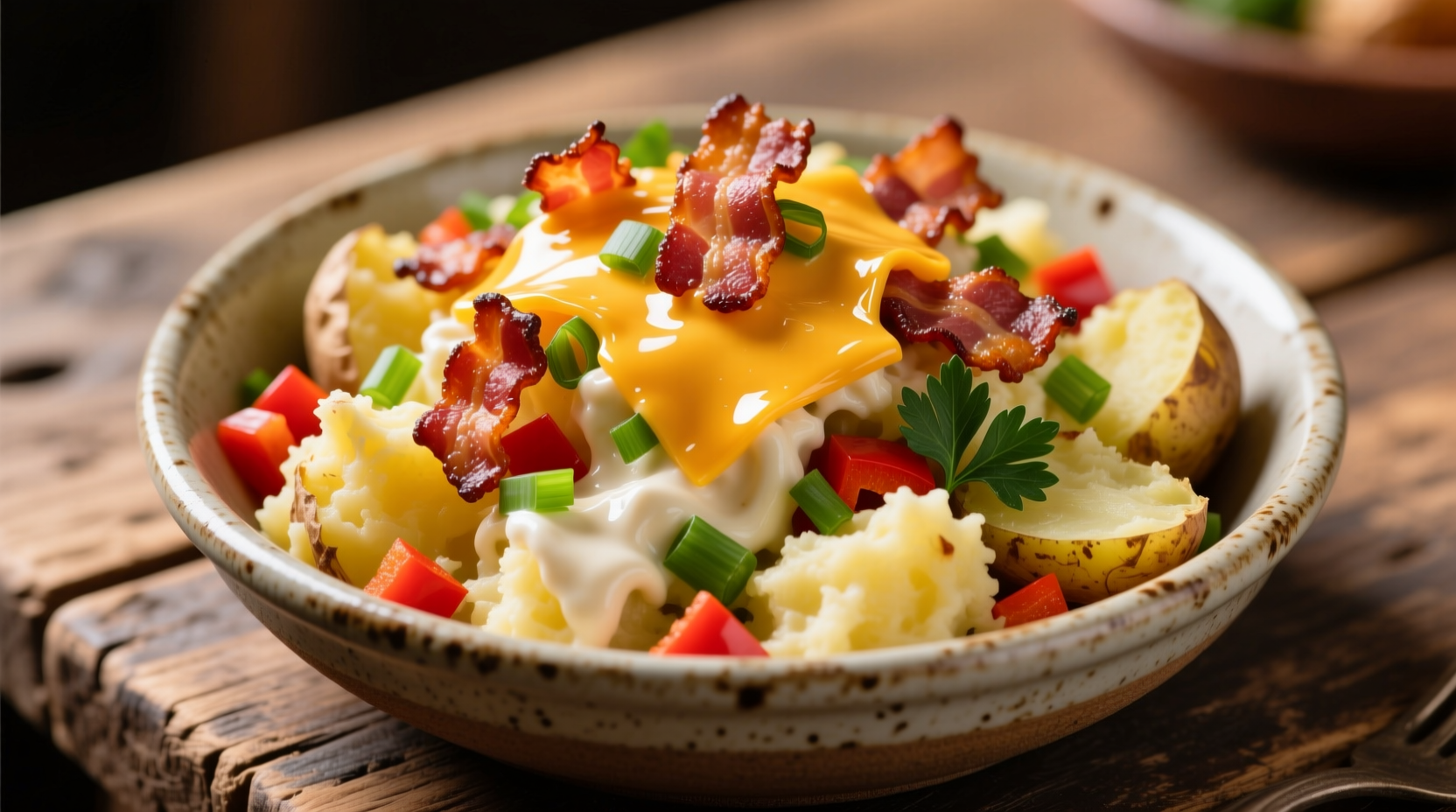
- Serve in hollowed potato skins for individual portions that highlight the "baked potato" connection
- Garnish with extra bacon crumbles and chive ribbons just before serving
- Pair with grilled proteins like chicken or steak for a complete meal
- Offer small bowls of additional toppings (extra cheese, bacon, or sour cream) for customization
This versatile dish shines at various occasions:
- Summer gatherings: Pairs perfectly with grilled foods and holds up well in warm temperatures
- Holiday meals: Complements Thanksgiving or Christmas dinner as a creative alternative to traditional sides
- Game day: Makes an excellent finger-food friendly option when served in potato skin cups
Variations and Customizations
Adapt this recipe to suit different tastes and dietary needs while maintaining the essential "loaded" character:
- Southwest Style: Add diced jalapeños, corn, black beans, and cilantro with a chipotle mayo dressing
- Breakfast Version: Incorporate diced ham, extra cheese, and a touch of Dijon mustard for morning brunch
- Lighter Option: Use sweet potatoes, turkey bacon, and reduced-fat dairy with added celery for crunch
- Gluten-Free: Naturally gluten-free when using certified GF bacon (some brands contain hidden gluten)
Nutritionally, a standard serving (1 cup) contains approximately 320 calories, 22g fat, 24g carbohydrates, and 6g protein according to USDA FoodData Central. The addition of bacon increases sodium content, so those monitoring sodium intake should reduce added salt and choose low-sodium bacon varieties.
Storage and Reheating Tips
Loaded baked potato salad actually improves in flavor after chilling, making it an ideal make-ahead dish. Follow these storage guidelines for best results:
- Store in airtight container with parchment paper pressed directly onto the salad surface to prevent discoloration
- Keep dressing components separate if preparing more than 24 hours in advance
- Revive leftovers by stirring in 1-2 tablespoons of buttermilk or sour cream
- Never freeze potato salad as the texture becomes unpleasantly watery upon thawing
For meal prep enthusiasts, consider assembling individual portions in mason jars with dressing at the bottom and potatoes layered above. This maintains crispness until ready to eat. When transporting to events, pack the salad in a cooler with ice packs to maintain food safety standards.




 浙公网安备
33010002000092号
浙公网安备
33010002000092号 浙B2-20120091-4