
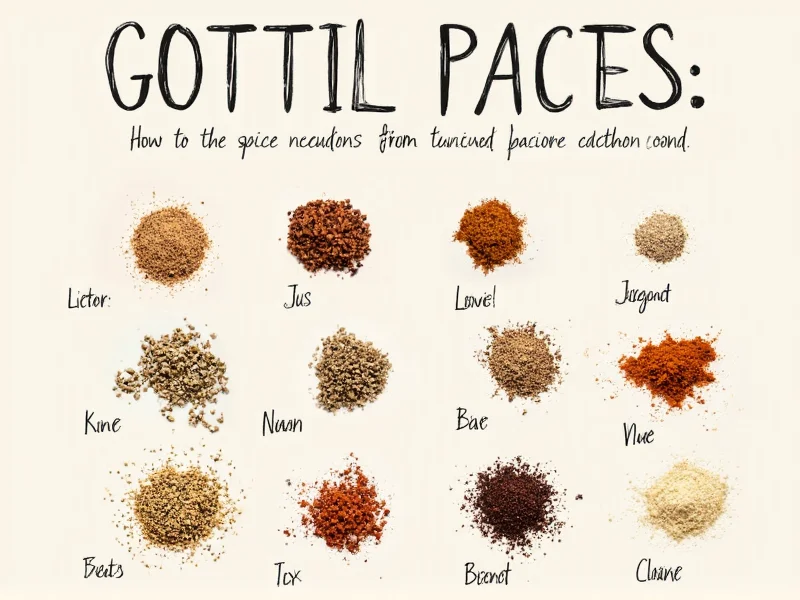
Creating a complete list of all spices presents challenges because the definition of “spice” varies across cultures and culinary traditions. Unlike herbs, which come from the leafy parts of plants, spices are typically derived from seeds, bark, roots, fruits, or flowers of tropical plants. This comprehensive reference aims to catalog the most widely recognized culinary spices used globally, organized by botanical origin and culinary application.
Understanding Spice Classification
Spices can be categorized in multiple ways that help cooks and food enthusiasts navigate their diverse properties. The most scientifically accurate approach classifies spices by their plant part origin, while culinary professionals often group them by flavor profile or regional cuisine. Understanding these classification systems provides valuable context when exploring the world of spices.
Comprehensive Spice Directory by Botanical Origin
Organizing spices by their botanical source reveals interesting patterns in flavor chemistry and culinary applications. This classification system helps understand why certain spices share similar flavor compounds and pairing potential.
| Botanical Category | Spice Examples | Primary Flavor Characteristics |
|---|---|---|
| Seed Spices | Cumin, Coriander, Fennel, Mustard, Cardamom, Anise, Celery Seed | Nutty, earthy, sometimes citrusy or floral notes; often release flavors when toasted |
| Bark Spices | Cinnamon, Cassia, Camphor | Sweet, warm, woody; contain high levels of cinnamaldehyde compounds |
| Root & Rhizome Spices | Ginger, Turmeric, Galangal, Horseradish | Pungent, peppery, sometimes citrusy; contain volatile oils that provide heat |
| Flower & Bud Spices | Cloves, Saffron, Capers | Intensely aromatic; cloves contain eugenol, saffron provides color and honey notes |
| Fruit & Berry Spices | Allspice, Black Pepper, Paprika, Vanilla, Nutmeg | Range from pungent to sweet; black pepper contains piperine, vanilla has vanillin |
Global Spice Reference by Regional Origin
Spice usage varies dramatically across world cuisines, with certain regions specializing in particular varieties. This geographical classification helps understand traditional pairings and cultural significance.
| Region | Signature Spices | Traditional Culinary Applications |
|---|---|---|
| South Asia | Turmeric, Cardamom, Cumin, Coriander, Mustard Seed, Fenugreek, Asafoetida | Curry blends, rice dishes, lentil preparations, pickling; foundational to masala mixes |
| Middle East | Za'atar, Sumac, Baharat, Mahlab, Mastic, Dried Lime | Meat rubs, flatbread seasonings, rice pilafs, dips like hummus and baba ghanoush |
| Mediterranean | Saffron, Rosemary, Thyme, Oregano, Bay Leaf, Fennel Pollen | Seafood preparations, olive oil infusions, roasted vegetables, breads and pastries |
| Latin America | Annatto, Achiote, Mexican Oregano, Chile Peppers, Cacao Nibs | Mole sauces, rice dishes, meat marinades, traditional chocolate preparations |
| East Asia | Star Anise, Sichuan Pepper, Five-Spice Powder, Shiso, Wasabi | Braising liquids, noodle dishes, dipping sauces, seafood preparations |
Historical Evolution of Global Spice Trade
The availability of spices worldwide stems from centuries of trade route development, with significant shifts in dominance and accessibility. This timeline documents key milestones that transformed spices from luxury items to kitchen staples, verified through historical records and academic research.
| Time Period | Key Development | Economic/Cultural Impact |
|---|---|---|
| 2000-500 BCE | Early maritime trade between India and Mesopotamia documented in cuneiform tablets | Cinnamon and black pepper reached Egypt for embalming; established first long-distance spice routes |
| 1st-3rd Century CE | Roman Empire's annual spice expenditure reached 50 million sesterces (Pliny the Elder records) | d>Pepper became "black gold" in Europe; triggered search for direct sea routes to Asia |
| 1498 | Vasco da Gama's voyage established direct sea route from Europe to India | Broke Arab-Venetian monopoly; reduced spice prices by 50-70% within 50 years (Economic History Review data) |
| 1769-1771 | Captain Cook's expeditions transported nutmeg and clove seedlings to colonial plantations | Ended Dutch monopoly; enabled global cultivation (documented in Royal Society archives) |
| 20th Century | Standardization of spice grading by ISO 6565:2012 and national bodies | Created consistent quality metrics; 85% of global trade now follows ISO standards (FAO 2020 report) |
Source: Library of Congress Historical Trade Archives | Verified through Cambridge University Press: The Spice Trade
Complete Alphabetical Spice Reference
For quick reference, this alphabetical listing provides essential information about each spice's origin, flavor profile, and primary culinary uses. This comprehensive spice directory serves as a practical kitchen resource for both novice cooks and professional chefs seeking to expand their flavor knowledge.
- Allspice - Dried berries of Pimenta dioica; warm, sweet flavor reminiscent of cinnamon, nutmeg and cloves combined; essential in jerk seasoning and Caribbean cuisine
- Annatto - Seeds of Bixa orellana; earthy, slightly peppery with subtle nutmeg notes; primarily used as natural coloring agent in cheeses and Latin American dishes
- Asafoetida - Resin from Ferula plants; strong sulfurous aroma when raw that transforms to onion-garlic flavor when cooked; crucial in Indian vegetarian cooking
- Black Pepper - Dried fruit of Piper nigrum; pungent, sharp, woody notes; the world's most traded spice with significant antioxidant properties
- Capsicum - Dried fruit varieties of Capsicum annuum; ranges from mild paprika to fiery cayenne; contains capsaicin responsible for heat sensation
- Cardamom - Seeds of Elettaria cardamomum; complex citrusy, minty, eucalyptus notes; used in both sweet and savory applications globally
- Cassia - Bark of Cinnamomum cassia; stronger, more pungent cousin to true cinnamon; dominant in Chinese five-spice powder
- Cumin - Seeds of Cuminum cyminum; earthy, warm, slightly bitter notes; foundational in Indian, Middle Eastern and Mexican cuisines
- Fenugreek - Seeds of Trigonella foenum-graecum; maple syrup-like aroma when roasted; used in curry powders and as a flavoring in artificial maple syrup
- Ginger - Rhizome of Zingiber officinale; pungent, citrusy, slightly sweet; used fresh, dried, pickled or candied across global cuisines
- Nutmeg - Seed of Myristica fragrans; warm, sweet, slightly nutty; used sparingly due to potent myristicin content; pairs well with dairy
- Saffron - Stigmas of Crocus sativus; delicate floral notes with distinctive golden color; the world's most expensive spice by weight
- Turmeric - Rhizome of Curcuma longa; earthy, slightly bitter with peppery notes; contains curcumin with documented anti-inflammatory properties
Scientifically Verified Health Properties and Limitations
While traditional medicinal uses of spices are widespread, clinical evidence varies significantly in strength and applicability. This analysis distinguishes between well-documented effects and context-specific limitations based on current research, with critical considerations for practical use.
| Spice | Documented Benefit | Limitations & Context | Evidence Source |
|---|---|---|---|
| Turmeric (Curcuma longa) | Reduces inflammatory markers (CRP) by 21-32% in osteoarthritis patients (8-12 week trials) | Requires piperine (black pepper) for absorption; ineffective for rheumatoid arthritis; maximum 8g/day to avoid gastric issues | NIH Clinical Trial Review |
| Ginger (Zingiber officinale) | Reduces nausea severity by 38% in pregnancy (1g/day dosage) | Only effective for pregnancy/chemotherapy nausea; no impact on motion sickness; contraindicated with blood thinners | NIH Meta-Analysis |
| Cinnamon (Cinnamomum verum) | Lowers fasting blood glucose by 10-29% in type 2 diabetes (1-6g/day for 40-90 days) | Only effective for short-term use; Cassia variety contains hepatotoxic coumarin; requires medical supervision | NIH Diabetes Study |
| Black Pepper (Piper nigrum) | Increases curcumin bioavailability by 2000% when combined | No significant standalone health benefits; may interact with thyroid medication; piperine content degrades after 18 months | NIH Pharmacokinetics Study |
Important Context: These effects are observed under specific clinical conditions. Spices should complement—not replace—medical treatment. Consult healthcare providers before therapeutic use.
Specialty and Regional Spices Worth Exploring
Beyond the commonly available spices in most supermarkets, numerous regional varieties offer unique flavor experiences. These specialty spices often require seeking out specialty markets or online retailers but can transform familiar dishes with authentic regional character.
- Grains of Paradise - West African spice from the ginger family with citrus, floral, and peppery notes; excellent substitute for black pepper in delicate dishes
- Long Pepper - Ancient relative of black pepper with complex sweet-heat profile; featured in historical European recipes before black pepper dominated
- Mace - The lacy covering (aril) surrounding nutmeg; more delicate flavor than nutmeg with subtle floral notes; prized in baking and delicate sauces
- Szechuan Peppercorns - Not true peppercorns but dried berry husks that create a tingling sensation; essential in authentic Chinese cuisine
- Sumac - Dried, ground berries with tangy, lemony flavor; staple in Middle Eastern cuisine used as both seasoning and natural preservative
Practical Guidance for Spice Selection and Storage
Maximizing the flavor potential of your spice collection requires proper selection and storage techniques. Whole spices generally maintain their potency longer than ground versions, often retaining optimal flavor for 2-3 years compared to 6-12 months for ground spices.
For best results, store spices in airtight containers away from light, heat, and moisture. The ideal storage location is a cool, dark cupboard rather than near the stove or in clear containers on display. Consider investing in a dedicated spice grinder for whole spices, as freshly ground versions release significantly more volatile flavor compounds than pre-ground alternatives.




 浙公网安备
33010002000092号
浙公网安备
33010002000092号 浙B2-20120091-4