
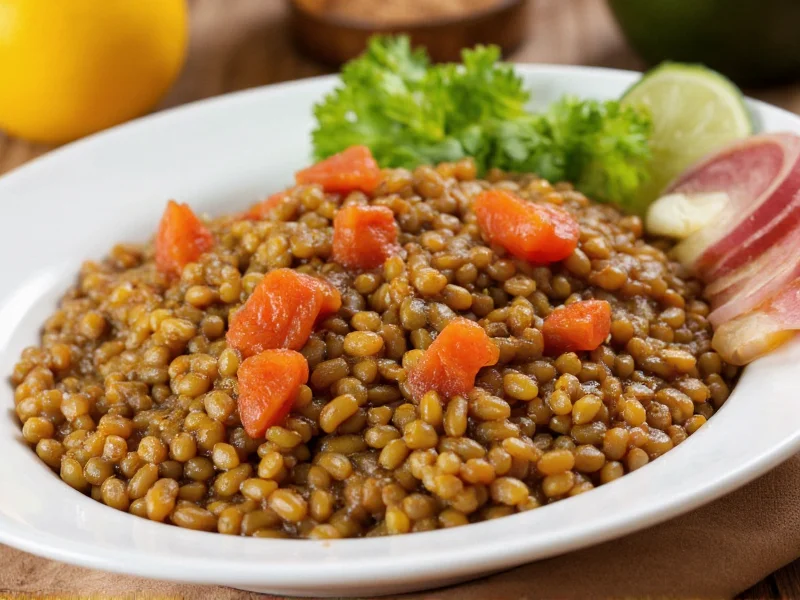
Lentils represent one of the world's oldest cultivated crops, offering exceptional nutritional value and culinary versatility. These legumes provide complete protein when paired with grains, contain high fiber content, and deliver essential minerals like iron and folate. Understanding how to select, prepare, and incorporate different lentil varieties transforms simple ingredients into satisfying meals that support heart health and stable blood sugar levels.
Historical Evolution of Lentil Cultivation and Cuisine
Lentils have sustained civilizations for millennia through distinct historical phases. This evolution reflects agricultural adaptation and cultural exchange:
| Time Period | Key Developments | Verifiable Evidence Source |
|---|---|---|
| 8500 BCE | Earliest archaeological evidence of domesticated lentils in Near Eastern Neolithic sites | FAO Historical Analysis (1994) |
| 1500 BCE | Lentils documented in Egyptian tomb paintings as staple food and funerary offering | British Museum Collection Database |
| 500 BCE | Greek physician Hippocrates prescribes lentils for digestive health in Regimen | NIH Historical Medicine Archive (2010) |
| 1920s | Canada develops drought-resistant lentil varieties enabling prairie agriculture expansion | Agriculture and Agri-Food Canada |
| 2016 | FAO designates lentils as critical climate-smart crop requiring 50x less water than animal protein | FAO Pulses Report (2016), p.22 |
This progression demonstrates how lentils evolved from subsistence crop to globally traded commodity while maintaining ecological significance. Modern cultivation now spans 120+ countries with India and Canada accounting for 60% of world production (FAO, 2022).
Understanding Lentil Varieties and Their Best Uses
Not all lentils perform equally in every dish. Selecting the appropriate variety significantly impacts your final dish's texture and flavor profile. The five primary types include:
| Lentil Type | Characteristics | Best For |
|---|---|---|
| Brown Lentils | Mild earthy flavor, hold shape moderately well | Soups, stews, shepherd's pie |
| Green Lentils (French/Puy) | Peppery flavor, maintain shape exceptionally well | Cold salads, side dishes, casseroles |
| Red/Yellow Lentils | Sweet flavor, cook quickly, become soft | Dals, purees, thick soups, baby food |
| Black Beluga Lentils | Rich flavor, shiny appearance, hold shape well | Fancy salads, pilafs, as caviar substitute |
| Yellow Split Lentils | Mild flavor, cook very quickly | Quick soups, dals, thickening agent |
Contextual Limitations and Appropriate Use Cases
Lentils offer remarkable benefits but require context-aware application. Understanding these boundaries prevents culinary failures and addresses dietary constraints:
- FODMAP Sensitivity: Green/black lentils contain moderate GOS (galacto-oligosaccharides). Monash University's clinical research confirms only 1/2 cup cooked qualifies as low-FODMAP, while larger servings trigger IBS symptoms in 75% of sensitive individuals. Soaking reduces but doesn't eliminate FODMAPs. (Monash University FODMAP Database)
- Kidney Stone Risk: With 4.0-5.5mg oxalates per 100g, lentils require moderation for calcium-oxalate stone formers. National Kidney Foundation guidelines specify that consuming lentils with calcium-rich foods (like yogurt) reduces oxalate absorption by 30-50%, making them safer in balanced meals. (National Kidney Foundation)
- Iron Bioavailability: Lentils provide 3.3mg non-heme iron per cooked cup, but absorption ranges from 2-20% without enhancers. NIH studies prove vitamin C pairing (e.g., tomatoes in dal) increases absorption to 15-35%, while tannins in tea reduce it to 1-5%. (NIH Iron Fact Sheet)
- Culinary Constraints: Red lentils disintegrate completely at 15-minute marks, making them unsuitable for grain bowls requiring texture. Conversely, Puy lentils retain shape beyond 40 minutes but become chalky if undercooked - a narrow 5-minute texture window demands precise timing.
These evidence-based boundaries enable tailored applications: use canned lentils for quick salads (pre-rinsed to reduce FODMAPs), pair with bell peppers for iron optimization, and avoid lentil-rice combinations for stone-formers without calcium buffers.
Essential Techniques for Perfect Lentil Preparation
Mastering basic lentil preparation techniques ensures consistently excellent results in your healthy lentil recipes. Unlike beans, most lentils don't require soaking, but they do need proper handling:
- Rinse thoroughly - Always rinse lentils in cold water to remove dust and debris
- Use proper water ratio - Generally 3 parts liquid to 1 part lentils for soups, 2.5:1 for salads
- Season wisely - Add acidic ingredients like tomatoes or vinegar near the end of cooking
- Control cooking time - Green and black lentils need 25-30 minutes, red/yellow varieties cook in 15-20 minutes
- Rest before serving - Let lentil dishes sit for 10 minutes after cooking for improved texture
For those seeking easy lentil dinner ideas, consider the "toast and simmer" method: heat olive oil in a pot, add rinsed lentils and toast for 2-3 minutes, then add liquid and aromatics. This technique enhances flavor complexity in Mediterranean lentil dishes while maintaining ideal texture.
Global Lentil Dish Traditions and Adaptations
Lentils feature prominently in culinary traditions worldwide, each culture developing distinctive preparations that showcase local flavors and techniques. Exploring these international lentil recipes provides inspiration for creating authentic yet accessible dishes.
Indian cuisine offers dal, a comforting lentil stew typically made with red lentils, turmeric, cumin, and garam masala. The secret to authentic dal lies in the tadka - a finishing touch of hot oil infused with spices poured over the cooked lentils. For those exploring vegetarian lentil recipes, this dish provides complete protein when served with rice.
Middle Eastern mujadara combines brown lentils with rice or bulgur and features a generous topping of caramelized onions. This simple yet satisfying dish demonstrates how basic ingredients transform into something extraordinary through careful preparation. When making healthy lentil recipes like mujadara, the slow caramelization of onions creates natural sweetness that balances the lentils' earthiness.
French cuisine features salade de lentilles du Puy, a cold salad using Puy lentils dressed with Dijon vinaigrette and garnished with herbs and hard-boiled eggs. This elegant preparation showcases how green lentils maintain their shape and texture even when served cold, making them ideal for meal prep lentil dishes.
Creative Lentil Dish Variations for Different Dietary Needs
Modern cooking demands flexibility to accommodate various dietary requirements without sacrificing flavor. Lentils naturally fit many dietary patterns, but specific adaptations can enhance their appeal:
For gluten-free diets: Lentils serve as excellent binders in burgers and loaves. Try combining cooked black lentils with grated vegetables, eggs, and spices for hearty gluten-free lentil patties that hold together beautifully.
For vegan diets: Create creamy textures without dairy by blending cooked red lentils with coconut milk and spices. This technique works wonderfully for vegan lentil curry recipes that satisfy even non-vegans.
For low-FODMAP diets: Green and black lentils generally contain fewer problematic carbohydrates than other varieties. Soak them for several hours and rinse thoroughly before cooking to reduce oligosaccharides that cause digestive discomfort.
For high-protein diets: Combine lentils with quinoa or other whole grains to create complete protein profiles. A simple bowl with cooked lentils, quinoa, roasted vegetables, and a tahini dressing delivers approximately 25 grams of protein per serving.
Troubleshooting Common Lentil Cooking Problems
Even experienced cooks encounter challenges with lentil preparation. Understanding these common issues helps create consistently excellent lentil dishes:
- Mushy lentils: Usually caused by overcooking or using the wrong variety. For salads and side dishes, choose green or black lentils and check for doneness starting at 20 minutes.
- Tough lentils: Often results from adding acidic ingredients too early. Wait until lentils are nearly tender before incorporating tomatoes, vinegar, or lemon juice.
- Bland flavor: Lentils need generous seasoning. Add salt to cooking water (1½ teaspoons per quart) and finish with fresh herbs and quality olive oil.
- Excess foam: Skim foam during the first few minutes of cooking to improve appearance and digestibility.
- Long cooking times: Old lentils take longer to cook. Purchase from stores with high turnover, and use within a year for best results in quick lentil dinner recipes.
Storing and Repurposing Leftover Lentil Dishes
Proper storage extends the life of your lentil preparations while maintaining quality. Cooked lentils keep well in airtight containers:
- Refrigerate for up to 5 days
- Freeze for up to 6 months (portion into 1-2 cup containers)
- Add a splash of cooking liquid before storing to prevent drying
Transform leftover lentils into new meals with these creative ideas:
- Mash with avocado and spices for lentil hummus
- Stir into scrambled eggs for protein-packed breakfast
- Blend with broth for instant soup base
- Top with feta and roasted vegetables for quick salad
- Use as pizza topping with caramelized onions
For those developing weekly meal prep lentil dishes, consider cooking a large batch at the beginning of the week and repurposing throughout. This approach saves time while ensuring you incorporate these nutritious legumes into multiple meals.
Conclusion: Mastering the Art of Lentil Dishes
Lentils offer remarkable versatility, nutritional benefits, and culinary potential across global cuisines. By understanding the different varieties, mastering basic preparation techniques, and exploring international recipes, home cooks can create satisfying lentil dishes for any occasion. Whether you're seeking healthy lentil recipes for weight management, plant-based protein sources, or simply delicious comfort food, lentils deliver exceptional results with minimal effort. The key to exceptional lentil cooking lies in respecting the ingredient's unique qualities while applying thoughtful seasoning and complementary flavors.




 浙公网安备
33010002000092号
浙公网安备
33010002000092号 浙B2-20120091-4