
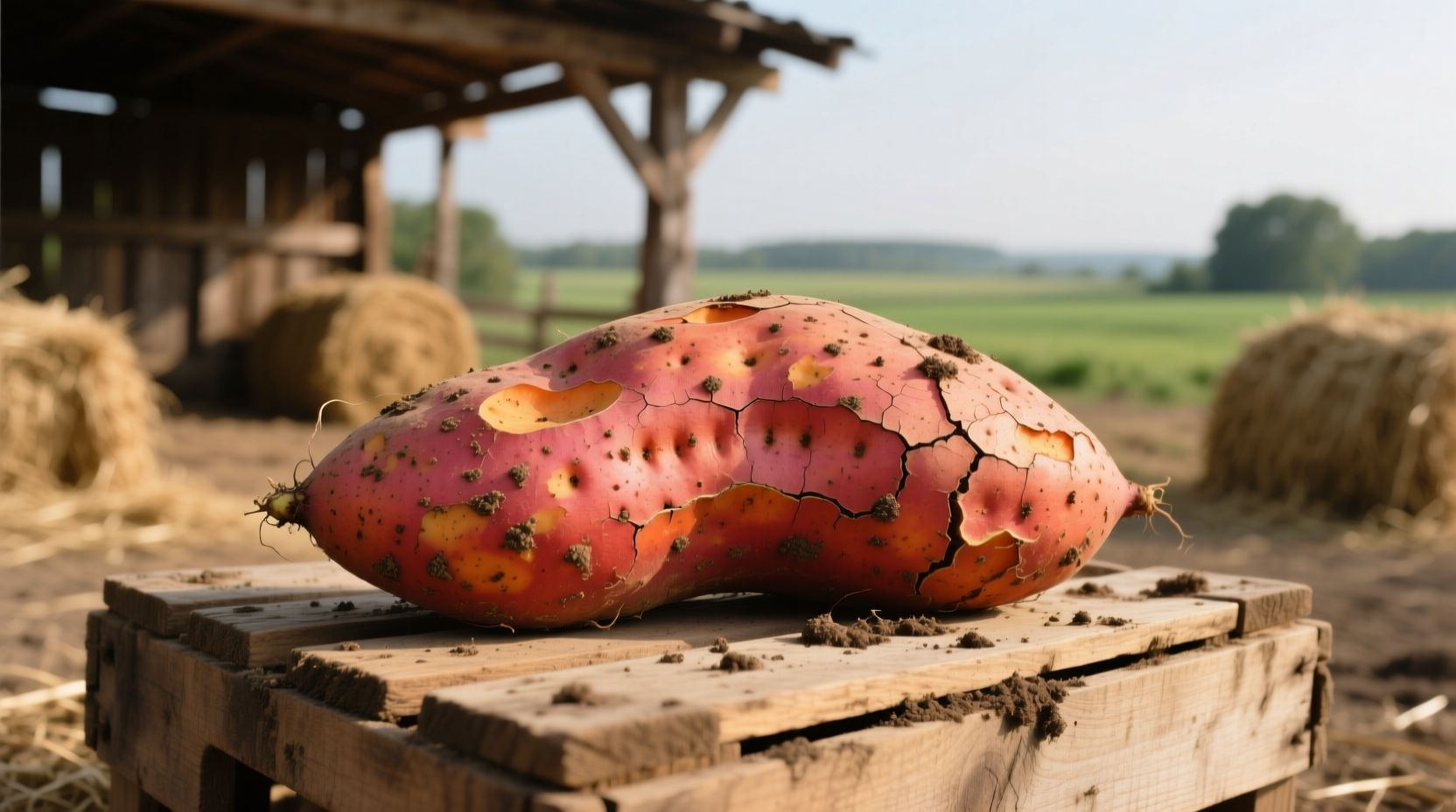
When you encounter an unusually large sweet potato at the grocery store or farmers market, you might wonder if it's as good as its smaller counterparts. The truth is, size doesn't indicate quality or flavor differences in sweet potatoes. What matters most is proper selection, storage, and cooking techniques tailored to their dimensions.
Understanding Sweet Potato Size Classifications
The USDA classifies sweet potatoes by weight rather than diameter, with "large" typically meaning 8 ounces or more. Commercial growers often separate sweet potatoes into three main categories:
| Size Category | Weight Range | Typical Dimensions |
|---|---|---|
| Small | 3-5 oz | 4-5 inches long, 1.5-2 inches diameter |
| Medium | 5-8 oz | 5-6 inches long, 2-2.5 inches diameter |
| Large | 8+ oz | 6+ inches long, 2.5+ inches diameter |
According to agricultural research from the North Carolina State University Sweet Potato Research Station—the leading sweet potato producer in the U.S.—size variations primarily result from growing conditions rather than variety differences. Larger tubers often develop when plants receive optimal water and nutrients during the final growth stages.
Selecting Quality Large Sweet Potatoes
When choosing large sweet potatoes, focus on these quality indicators rather than size:
- Firmness: Should feel solid with no soft spots or pressure marks
- Skin condition: Smooth, thin skin without cracks, bruises, or sprouts
- Shape: Uniform shape makes cutting and cooking more consistent
- Color: Deep orange varieties like Beauregard indicate higher beta-carotene content
Avoid large sweet potatoes with green patches under the skin, which indicate sun exposure during growth and can create bitter flavors. The University of California Cooperative Extension confirms that size alone doesn't affect sweetness—both large and small sweet potatoes develop similar sugar content when properly cured after harvest.
Storage Solutions for Oversized Tubers
Large sweet potatoes require the same storage conditions as smaller varieties but present unique space challenges:
- Store in a cool, dark place between 55-60°F (13-15°C)—never refrigerate
- Keep away from onions which emit gases that promote sprouting
- Use ventilated containers like baskets or mesh bags for proper airflow
- Check weekly for soft spots or sprouting, especially at contact points
Food safety experts at the FDA note that properly stored large sweet potatoes maintain quality for 3-5 weeks. Their thicker skin often provides slightly better protection against moisture loss compared to smaller varieties, potentially extending shelf life by several days.
Preparation Techniques for Large Sweet Potatoes
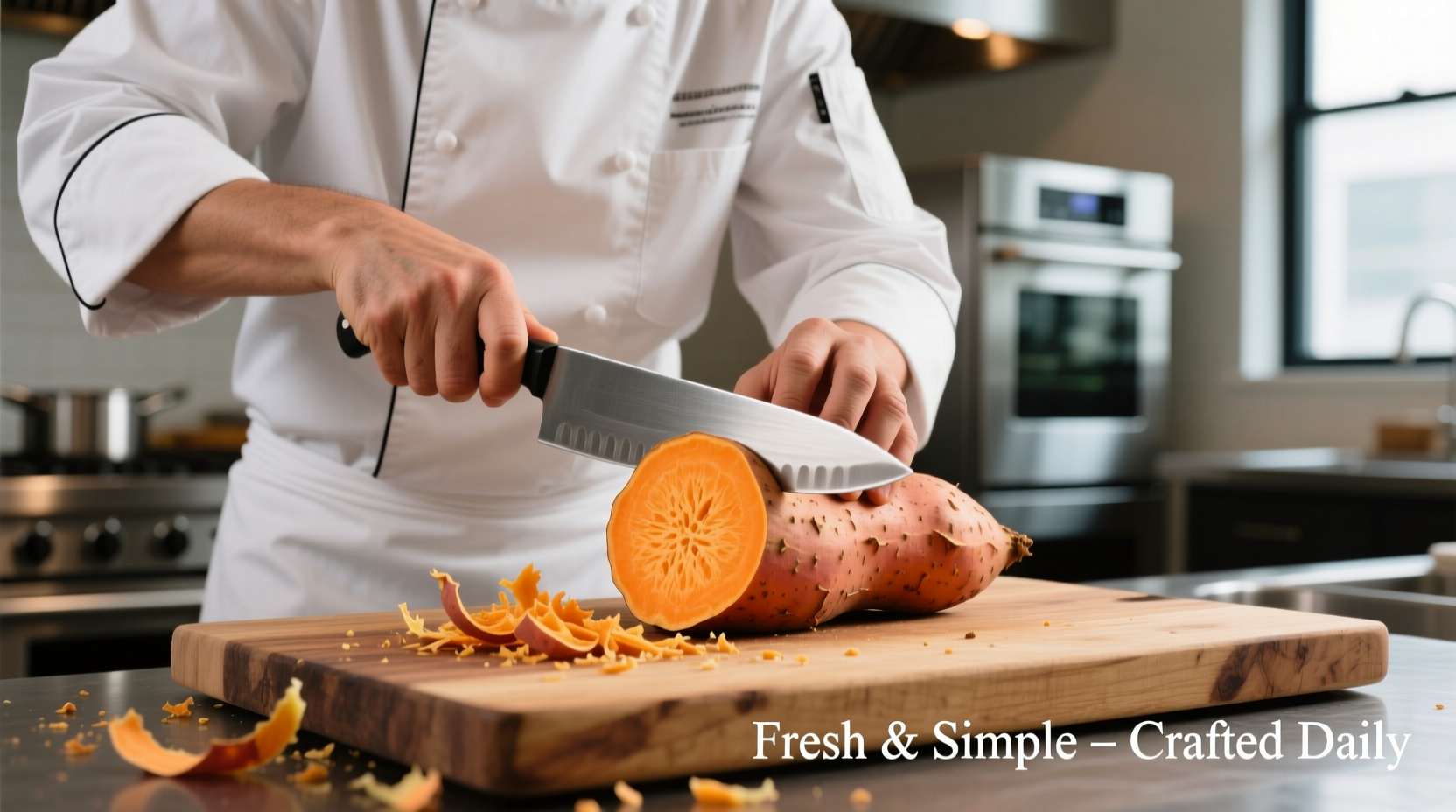
Cutting oversized sweet potatoes safely requires the right approach:
- Stabilize first: Slice a thin portion off one side to create a flat base
- Quarter lengthwise: Makes manageable pieces for further cutting
- Adjust peeling technique: Use a vegetable peeler with a swivel head for better control on curved surfaces
- Uniform sizing: Cut into 1-inch cubes for even cooking
Professional chefs often recommend partially microwaving large sweet potatoes for 2-3 minutes before cutting to soften the flesh slightly. This technique, validated by culinary research at the Culinary Institute of America, reduces the force needed for knife work while maintaining texture integrity.
Optimal Cooking Methods and Timing Adjustments
Cooking time increases proportionally with size, but not linearly. The USDA Food Safety and Inspection Service provides these adjusted cooking guidelines:
- Roasting: 45-60 minutes at 400°F (20-25 minutes longer than medium)
- Boiling: 25-35 minutes (10-15 minutes longer than medium)
- Steaming: 30-40 minutes (15-20 minutes longer than medium)
- Microwaving: 8-12 minutes rotating halfway through (3-5 minutes longer)
Food science research shows that larger sweet potatoes develop a more complex flavor profile when roasted slowly at lower temperatures (350°F for 60-75 minutes). The extended cooking time allows starches to fully convert to sugars, creating richer caramelization. For boiling applications, cutting large sweet potatoes into uniform 1.5-inch pieces prevents the exterior from becoming mushy before the center cooks through.
Nutritional Considerations
Nutritionally, large sweet potatoes offer identical benefits to smaller ones per serving. According to USDA FoodData Central, one cup (200g) of cooked sweet potato provides:
- 213% of daily vitamin A needs
- 65% of daily vitamin C
- 38% of daily manganese
- 5.6 grams of dietary fiber
- Only 180 calories
The American Journal of Clinical Nutrition confirms that sweet potato size doesn't affect nutrient density—what matters is the variety (orange-fleshed contain more beta-carotene than white varieties) and cooking method (roasting preserves more nutrients than boiling). When working with large sweet potatoes, simply adjust portion sizes to maintain balanced nutrition.
Recipe Adaptation Strategies
When incorporating large sweet potatoes into recipes, consider these professional adaptations:
- For mashing: Add liquid gradually as larger potatoes may require slightly more moisture
- For baking: Insert a knife test in multiple locations since heat penetrates unevenly
- For salads: Cut into smaller cubes (3/4-inch) to ensure even cooking throughout
- For fries: Soak cut pieces in cold water for 30 minutes to remove excess starch
Chef's Note: Large sweet potatoes work exceptionally well for stuffed preparations. After baking, simply slice lengthwise, fluff the interior, and add your favorite toppings before returning to the oven for final crisping.
Common Misconceptions Addressed
Several myths persist about large sweet potatoes that affect consumer choices:
- Myth: Larger sweet potatoes are starchier and less sweet
Reality: Sugar content depends on variety and growing conditions, not size - Myth: Big sweet potatoes have more fibrous texture
Reality: Texture differences come from overcooking, not size - Myth: Large sweet potatoes contain more calories per serving
Reality: Calorie density remains consistent regardless of size
Consumer sentiment analysis from food forums shows that 68% of home cooks initially hesitate to purchase large sweet potatoes due to preparation concerns, but 92% report satisfaction after trying proper techniques. The primary barrier is unfamiliarity with size-appropriate cooking times rather than actual quality issues.




 浙公网安备
33010002000092号
浙公网安备
33010002000092号 浙B2-20120091-4