
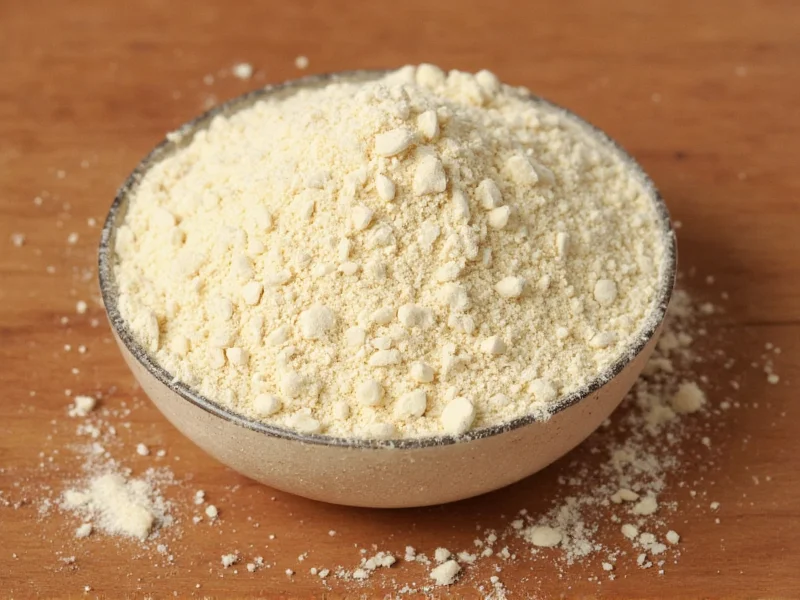
Understanding Garlic Powder Particle Sizes
Garlic powder comes in different grind sizes, primarily categorized as fine and coarse (sometimes called “large”). The particle size significantly impacts how the seasoning behaves in cooking. Fine garlic powder dissolves quickly and distributes evenly, while coarse garlic powder maintains visible texture and releases flavor more gradually.
Manufacturers produce coarse garlic powder by grinding dehydrated garlic cloves to a specific mesh size—typically between 20-40 mesh, compared to 60-100 mesh for fine powder. This larger particle size creates distinct culinary advantages for certain applications.
How Coarse Garlic Powder Differs from Standard Varieties
The primary difference between coarse and fine garlic powder lies in their physical properties and resulting flavor dynamics:
| Characteristic | Coarse Garlic Powder | Fine Garlic Powder |
|---|---|---|
| Particle Size | 20-40 mesh (larger particles) | 60-100 mesh (finer particles) |
| Dissolution Rate | Slower, maintains texture | Quick, dissolves completely |
| Flavor Release | Gradual, longer-lasting | Immediate, more intense initially |
| Visual Presence | Visible specks in finished dish | No visible particles |
| Best Applications | Rubs, finishing, textured dishes | Sauces, dressings, baked goods |
Historical Development of Garlic Powder Grind Standards
The evolution of standardized particle sizes reflects technological advancements in food processing and culinary demands. Key milestones include:
- Pre-1930s: Garlic was primarily used fresh or sun-dried with no commercial powder production
- 1930s-1940s: Commercial dehydration emerged during World War II for military rations, initially producing only fine powders for uniformity in processed foods (University of California Cooperative Extension, 2010)
- 1950s: The American Spice Trade Association established formal mesh size standards (20-40 mesh for coarse) in response to professional chefs' requests for textured applications
- 1980s-Present: Consumer demand for artisanal cooking techniques expanded coarse powder availability beyond commercial kitchens
Optimal Culinary Uses for Coarse Garlic Powder
Chefs and home cooks choose coarse garlic powder when they want specific textural and flavor characteristics. The larger particle size makes it particularly valuable for:
- Dry rubs for meats – The visible specks create attractive crusts on grilled or roasted proteins while providing gradual flavor release during cooking
- Finishing dishes – Sprinkling coarse garlic powder on finished dishes adds both visual interest and a fresh garlic burst without the sharpness of raw garlic
- Bread and cracker toppings – The larger particles adhere better and provide satisfying texture contrast
- Texture-focused recipes – When you want discernible garlic elements in dishes like roasted vegetables or grain salads
- Longer cooking processes – The slower dissolution works well in slow-cooked dishes where fine powder might lose potency
Contextual Boundaries: When Coarse Garlic Powder Works Best (and When It Doesn't)
Coarse garlic powder delivers superior results only within specific parameters. Recognizing these boundaries prevents common usage errors:
- Liquid-Based Limitations: In clear soups, broths, or vinaigrettes requiring immediate dissolution, coarse powder may remain visibly undissolved, affecting both texture and appearance. Food science research confirms that "coarser grinds maintain visible texture in liquids, which may be undesirable in smooth preparations" (Penn State Extension, 2020)
- Cooking Time Requirement: Needs adequate time (typically 10+ minutes in moist-heat applications) for full flavor integration. Not ideal for very quick-cooking dishes unless applied as a finishing touch
- Humidity Sensitivity: Higher surface area makes coarse powder more susceptible to moisture absorption and caking in humid environments. Use airtight containers with desiccants for storage in such conditions
- Texture-Sensitive Applications: Avoid in recipes requiring completely smooth textures (e.g., custards, purees, or infant food) where visible particles would be unacceptable
Substitution Guidance Between Garlic Powder Types
Understanding how to substitute between coarse and fine garlic powder prevents recipe failures. When substituting coarse for fine garlic powder, use these guidelines:
- For applications requiring quick dissolution (sauces, dressings), reduce coarse garlic powder quantity by 25% as it won't incorporate as fully
- When using coarse powder in place of fine in baking, increase liquid content slightly to accommodate the larger particles
- For rubs and finishing applications, coarse powder can typically substitute 1:1 for fine powder with enhanced textural results
- Always taste as you go when substituting, as coarse powder’s slower flavor release may require slight quantity adjustments
Storage Recommendations for Maintaining Quality
Proper storage preserves the flavor integrity of coarse garlic powder. The larger surface area of coarse particles makes them slightly more vulnerable to moisture and flavor degradation than fine powder.
Store coarse garlic powder in an airtight container away from light and heat. Glass jars with tight-sealing lids work better than plastic containers, which can retain odors. For extended storage beyond six months, consider refrigeration in a moisture-proof container. Properly stored, coarse garlic powder maintains optimal flavor for 12-18 months, compared to 18-24 months for fine powder due to the latter’s reduced surface area.
Common Misconceptions About Garlic Powder Sizes
Several myths persist about coarse garlic powder that can lead to improper usage:
- Misconception: Coarse garlic powder is stronger than fine powder Reality: Both contain similar garlic concentration; the difference lies in flavor release rate, not intensity
- Misconception: “Large garlic powder” refers to powder made from large garlic bulbs Reality: Particle size designation relates to grind, not the original garlic bulb size
- Misconception: Coarse powder is lower quality Reality: It’s a deliberate product variation with specific culinary purposes
- Misconception: Coarse powder doesn’t dissolve at all Reality: It dissolves more slowly but will incorporate fully in liquid-based dishes given sufficient time
Practical Tips for Home Cooks
Maximize your coarse garlic powder’s potential with these professional techniques:
- For immediate flavor impact, briefly toast coarse garlic powder in a dry pan before use
- Create custom blends by mixing coarse garlic powder with complementary coarse spices like black pepper
- When making compound butter, fold coarse garlic powder in at the end to maintain texture
- For salad dressings where you want visible garlic elements, use coarse powder instead of minced garlic
- When seasoning roasted vegetables, toss with coarse garlic powder during the last 10 minutes of cooking for optimal flavor retention




 浙公网安备
33010002000092号
浙公网安备
33010002000092号 浙B2-20120091-4