

Why Large Potatoes Need Special Attention
When baking oversized potatoes, standard cooking times won't cut it. Large russet potatoes (typically 10-16 ounces) have denser centers that require precise temperature control and extended cooking to achieve that signature fluffy interior. According to the USDA's Food Safety and Inspection Service, potatoes must reach an internal temperature of 210°F (99°C) for complete starch gelatinization - the scientific process that transforms dense raw potato into light, airy goodness.
Step 1: Selecting & Preparing Your Potato
Choose uniform, firm russets without green spots or sprouts. Larger potatoes often have thicker skins that benefit from proper preparation:
- Clean thoroughly with a vegetable brush to remove dirt
- Dry completely - moisture prevents crisp skin formation
- Pierce 6-8 times with a fork (deeper than standard potatoes)
- Rub with oil (1 tsp per potato) for enhanced crispness
- Salt generously - coarse sea salt adheres better to large surfaces
Step 2: Oven Setup for Perfect Results
Professional kitchens use these techniques for consistently flawless large baked potatoes:
- Preheat oven to 400°F (200°C) - higher than standard recipes
- Place rack in center position for even heat circulation
- Use a baking sheet lined with parchment (not wire rack)
- Leave 2 inches between potatoes for proper air flow
| Weight | Temperature | Time | Internal Temp |
|---|---|---|---|
| 10-12 oz | 400°F | 60-65 min | 205-210°F |
| 13-15 oz | 400°F | 65-70 min | 205-210°F |
| 16+ oz | 400°F | 70-75 min | 205-210°F |
Step 3: Monitoring Cooking Progress
Large potatoes require careful monitoring to prevent undercooking:
- After 50 minutes, test with an instant-read thermometer - insert horizontally through the side
- Check for natural splitting - large potatoes often crack when properly cooked
- Perform the "squeeze test" with oven mitts - should yield slightly but not collapse
- Insert a skewer - should meet no resistance in center
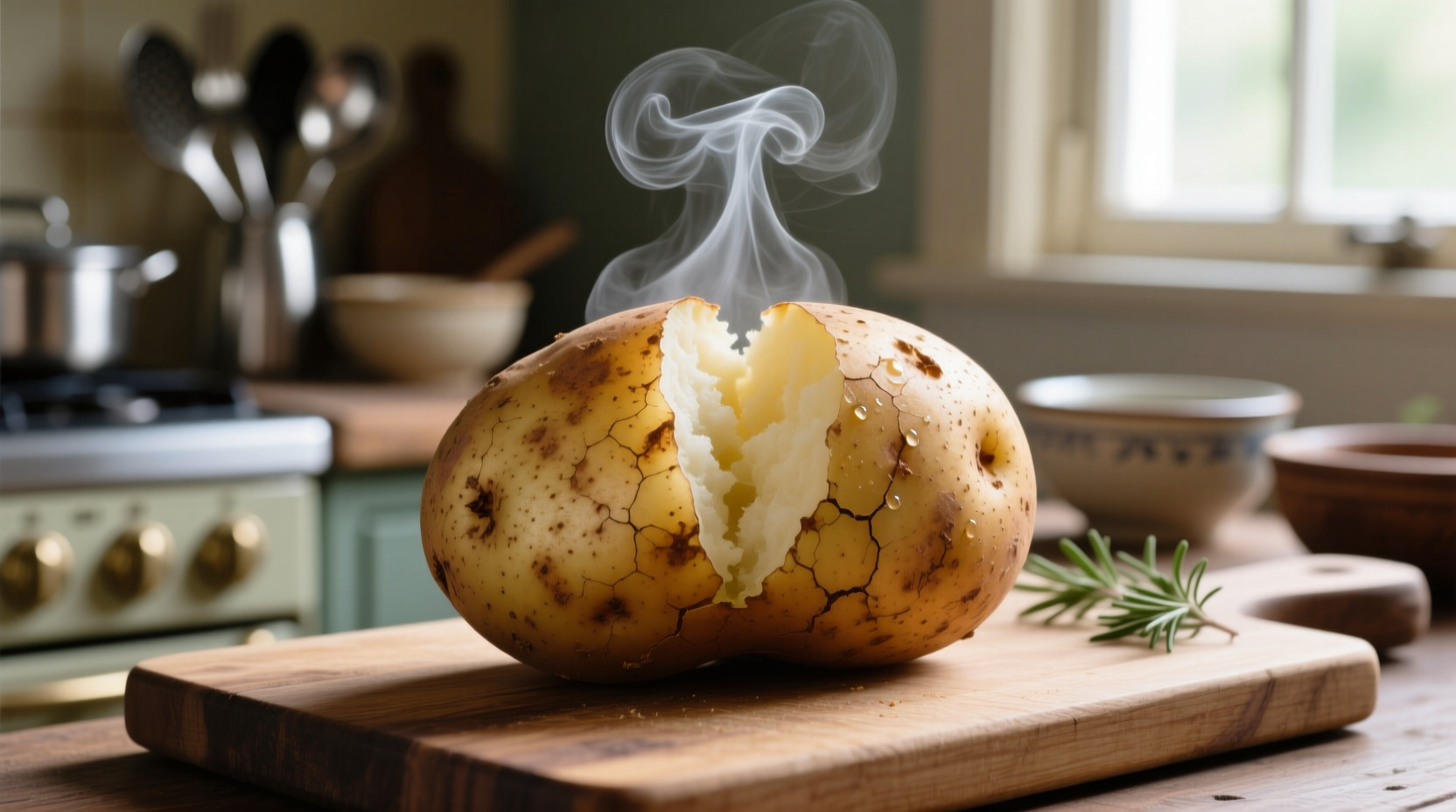
Step 4: The Critical Resting Period
Never skip this professional step! After removing from oven:
- Rest for 8-10 minutes - allows residual heat to finish cooking the center
- Cover loosely with foil to retain heat without steaming the skin
- Internal temperature continues rising 5-10 degrees during rest
Avoiding Common Large Potato Pitfalls
Based on America's Test Kitchen research, these issues plague home cooks:
- Undercooked center - solution: Start testing 10 minutes earlier than standard recipes
- Soggy skin - solution: Skip foil wrapping during cooking (contrary to popular belief)
- Dry texture - solution: Never exceed 400°F - higher temperatures dehydrate the flesh
- Uneven cooking - solution: Rotate baking sheet halfway through cooking time
Storage & Reheating Guidelines
For food safety, follow FDA recommendations:
- Cool completely within 2 hours of cooking
- Store in airtight container for up to 5 days
- Reheat at 350°F until internal temperature reaches 165°F
- Never reheat more than once
Pro Tips for Restaurant-Quality Results
Professional chefs use these advanced techniques:
- Par-cook in microwave for 3-4 minutes before oven finishing (reduces oven time by 15-20 minutes)
- Brush with oil twice - before baking and immediately after removing from oven
- Use a baking steel instead of sheet pan for superior bottom crispness
- Add moisture barrier - place potato on bed of coarse salt for even heat distribution




 浙公网安备
33010002000092号
浙公网安备
33010002000092号 浙B2-20120091-4