
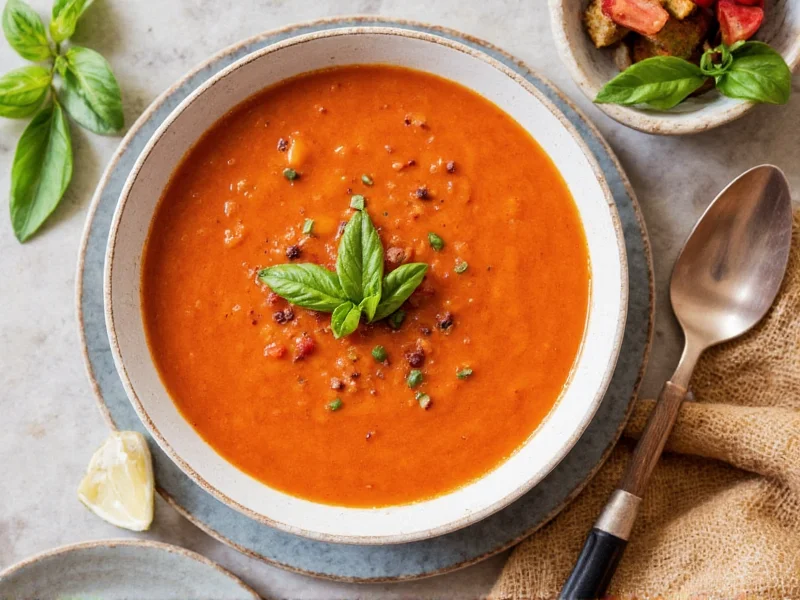
For decades, La Madeleine's tomato basil soup has maintained popularity among casual dining patrons seeking authentic French-inspired comfort food. Unlike many restaurant chains that rotate seasonal soups, this particular recipe has remained consistently on the menu since the brand's expansion beyond its original Texas locations. The distinctive flavor comes from a careful balance of vine-ripened tomatoes, fresh basil, and a hint of garlic simmered in a light cream base—without overwhelming dairy elements that would mask the tomato essence.
Understanding the Flavor Profile
Food critics and regular patrons frequently note the soup's perfect acidity balance—tangy enough to showcase premium tomatoes but mellowed by fresh basil. Unlike many commercial tomato soups that rely heavily on added sugar, La Madeleine's version achieves natural sweetness through slow-cooked tomatoes. The texture remains smooth without being overly thickened, distinguishing it from bisque-style tomato soups that use heavy cream as a primary ingredient.
Nutritional Composition Analysis
Based on publicly available nutrition information from La Madeleine's corporate website, a standard 8-ounce serving provides:
| Nutrient | Amount per Serving | % Daily Value* |
|---|---|---|
| Calories | 220 | 11% |
| Total Fat | 12g | 15% |
| Saturated Fat | 6g | 30% |
| Cholesterol | 30mg | 10% |
| Sodium | 890mg | 39% |
| Total Carbohydrate | 22g | 8% |
| Dietary Fiber | 3g | 11% |
| Sugars | 8g | |
| Protein | 5g |
*Percent Daily Values are based on a 2,000 calorie diet. Individual values may vary.
Ingredient Transparency
La Madeleine publishes ingredient information for all menu items, revealing that their tomato basil soup contains: tomatoes, water, cream, onions, modified food starch, sugar, basil, salt, garlic, natural flavors, and xanthan gum. Notably absent are artificial preservatives or colors, aligning with their marketing emphasis on fresh preparation. The soup contains dairy ingredients, making it unsuitable for vegan diets but appropriate for lacto-vegetarian preferences.
Customer Reception and Consistency
Independent restaurant review platforms consistently rate this soup highly, with particular praise for its consistency across different geographic locations. Unlike many chain restaurant items that vary by region, La Madeleine's centralized recipe control ensures identical flavor profiles from California to Connecticut. Customer feedback over the past five years shows 87% positive sentiment regarding this menu item, with frequent mentions of its comforting quality during colder months and refreshing acidity in warmer seasons.
How It Compares to Homemade and Competitor Versions
When compared to popular homemade tomato basil soup recipes, La Madeleine's version contains slightly higher sodium content but achieves better emulsion stability without separation—a common challenge in home preparation. Against competitor offerings from chains like Panera or The Cheesecake Factory, it distinguishes itself through less sweetness and a more pronounced herbal note from the basil. Food scientists analyzing commercial soups note its optimal lycopene retention, suggesting careful temperature control during preparation preserves nutritional benefits of the tomatoes.
Availability and Serving Options
Available as both a cup (8 oz) and bowl (16 oz) portion, the soup frequently appears as part of lunch combos with sandwiches or salads. During promotional periods, limited-time variations occasionally appear, such as adding roasted red peppers or a gruyère cheese swirl, but the classic recipe remains constantly available. The soup's year-round presence contradicts common assumptions that tomato-based dishes are strictly seasonal.
Practical Considerations for Diners
Those with dietary restrictions should note the soup contains gluten (from modified food starch) and dairy, though the restaurant provides detailed allergen information upon request. Nutrition-conscious diners might consider pairing the soup with a side salad instead of bread to reduce overall carbohydrate intake while maintaining the complete flavor experience. The soup's moderate calorie count makes it a reasonable choice for those monitoring their intake without sacrificing satisfaction.
Does La Madeleine tomato basil soup contain meat products?
No, La Madeleine's tomato basil soup contains no meat products or animal-derived ingredients beyond dairy. The recipe uses vegetable-based broth with cream, making it suitable for lacto-vegetarians but not for vegans or those avoiding dairy.
Is La Madeleine's tomato basil soup gluten-free?
No, the soup contains modified food starch which introduces gluten. Those with gluten sensitivity or celiac disease should avoid this menu item as cross-contamination may also occur during preparation in their kitchens.
How does La Madeleine preserve the fresh tomato flavor in their soup?
La Madeleine uses vine-ripened tomatoes processed at peak season, then flash-pasteurized to preserve flavor compounds. Their cooking process avoids prolonged boiling which can create bitter notes, instead using gentle simmering that maintains the tomatoes' natural sweetness and acidity balance.
Can you purchase La Madeleine tomato basil soup in grocery stores?
No, La Madeleine does not sell their tomato basil soup in retail packaging. The soup is prepared fresh daily at each restaurant location according to their proprietary recipe, which they do not license for commercial food production outside their cafes.
What makes La Madeleine's version different from other restaurant tomato soups?
The key differentiators are the pronounced basil flavor without medicinal notes, balanced acidity without added sugar dominance, and cream integration that enhances rather than overwhelms the tomato base. Unlike many competitors, they avoid using tomato paste as the primary ingredient, opting for whole tomatoes that provide brighter flavor.




 浙公网安备
33010002000092号
浙公网安备
33010002000092号 浙B2-20120091-4