
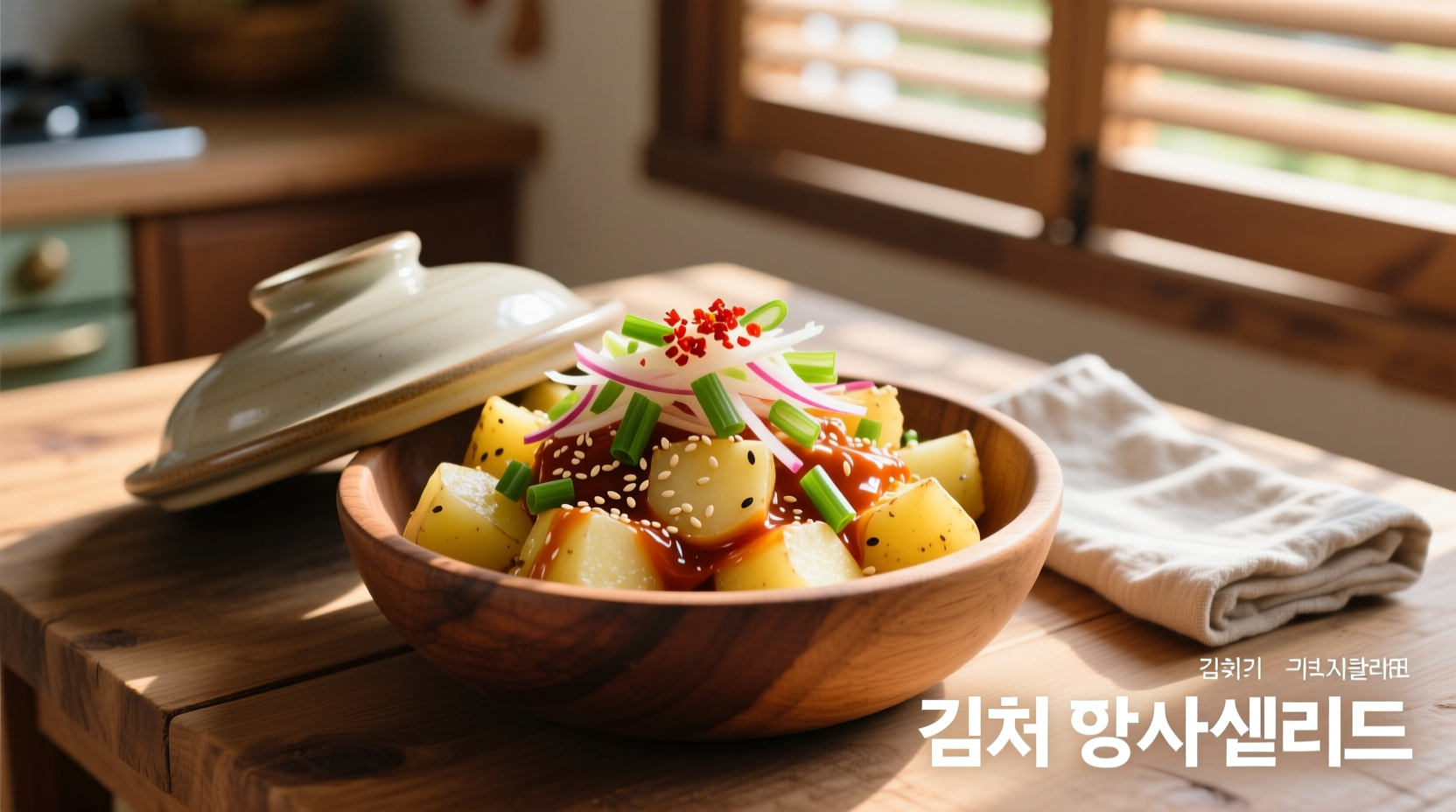
If you've encountered Korean barbecue menus or Korean family-style meals, you've likely seen gamja salad—a deceptively simple side dish that perfectly balances creamy richness with bright acidity. Unlike American or German potato salads that rely on vinegar or mustard-heavy dressings, Korean potato salad features a unique sweet-creamy profile with subtle tang from Korean mustard powder, creating a refreshing counterpoint to grilled meats and spicy stews.
What Sets Korean Potato Salad Apart: A Flavor Profile Comparison
Understanding the distinctive characteristics of Korean potato salad requires examining how it differs from Western interpretations. While all potato salads share core ingredients like potatoes and dressing, the Korean version stands out through specific preparation techniques and flavor balances.
| Feature | Korean Potato Salad | American Potato Salad | German Potato Salad |
|---|---|---|---|
| Dressing Base | Mayonnaise with Korean mustard powder | Mayonnaise-heavy | Vinegar and oil |
| Sweetness Level | Moderate (sugar added) | Low to none | None |
| Acidity Source | Rice vinegar + mustard powder | Vinegar (minimal) | Strong vinegar |
| Texture Approach | Finely diced, uniform pieces | Larger chunks | Waxy potato slices |
| Common Add-ins | Carrots, onions, sometimes ham | Hard-boiled eggs, celery | Bacon, onions |
The Evolution of Korean Potato Salad: From Post-War Adaptation to Banchan Staple
Korean potato salad's history reflects Korea's culinary adaptation during the 20th century. Potatoes weren't traditionally central to Korean cuisine until after the Korean War when food scarcity led to creative use of available ingredients. American military presence introduced mayonnaise-based salads, which Korean home cooks adapted using local flavor preferences.
By the 1970s, as Korea's economy developed, gamja salad appeared in restaurants as a refreshing side dish that complemented grilled meats. The Korean Food Promotion Institute documents how this dish evolved from a wartime adaptation to an essential component of modern Korean dining, particularly at celebrations and family gatherings where its mild flavor appeals to all ages.
Essential Ingredients for Authentic Korean Potato Salad
The magic of Korean potato salad lies in its precise ingredient balance. Unlike Western versions that might include hard-boiled eggs or celery, the Korean interpretation focuses on clean, complementary flavors:
- Potatoes – Waxy varieties like Yukon Gold hold their shape better when diced small
- Carrots – Finely julienned for texture contrast
- Onion – White or yellow onion, finely minced (soak in water to mellow sharpness)
- Mayonnaise – Japanese or Korean brands like Kewpie provide ideal richness
- Korean mustard powder – The secret ingredient adding subtle heat without spiciness
- Rice vinegar – For bright acidity that complements Korean flavors
- Sugar – Balances the tanginess (typically 1-2 tablespoons)
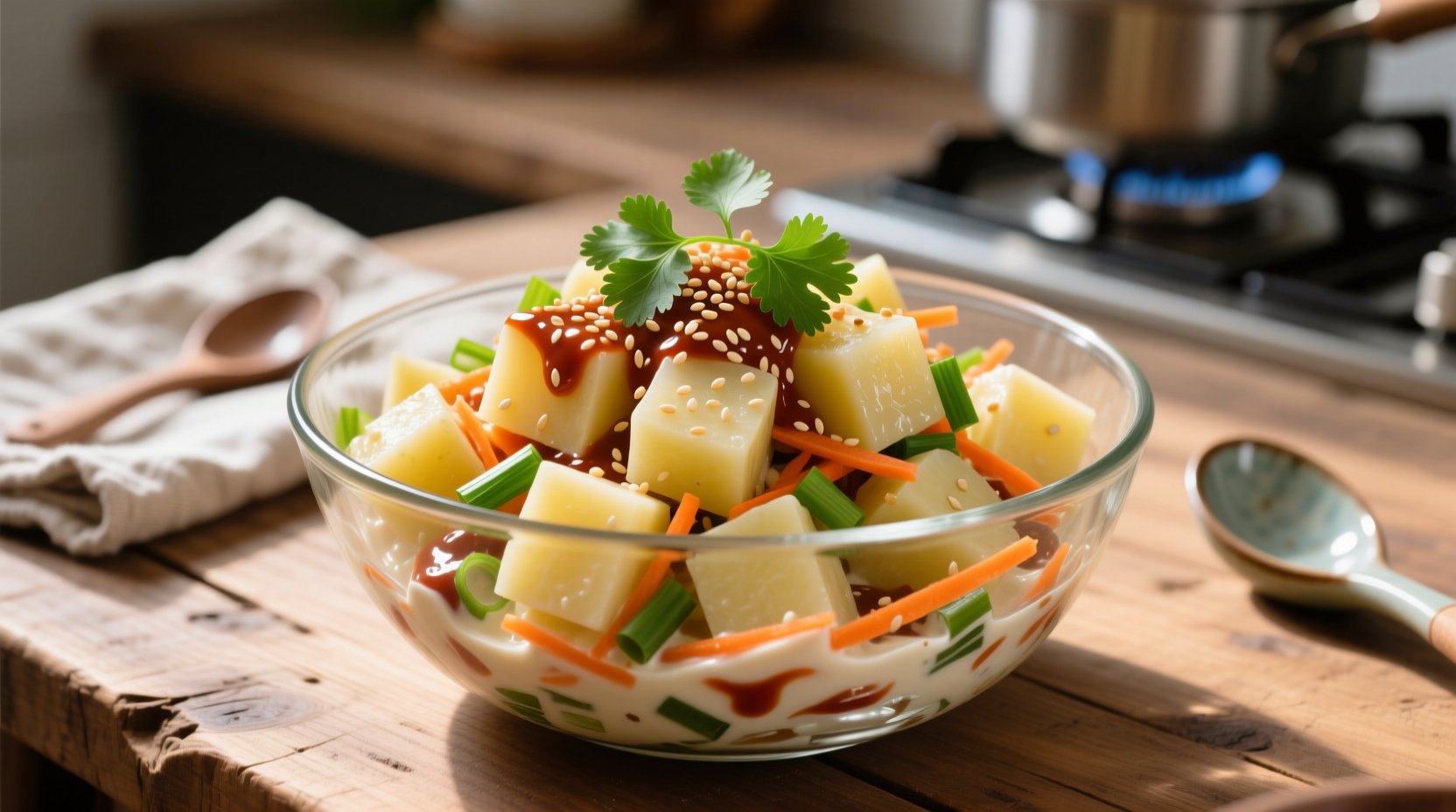
Step-by-Step Preparation: Achieving Perfect Texture and Flavor Balance
The key to exceptional Korean potato salad lies in meticulous attention to potato preparation and dressing balance. Follow these professional techniques for authentic results:
Potato Preparation Techniques
Boil potatoes whole with skin on to prevent water absorption, then cool completely before peeling and dicing. The USDA Food Safety and Inspection Service recommends cooling cooked potatoes within two hours to prevent bacterial growth. Dice potatoes to uniform 1/4-inch pieces—smaller than Western versions—for optimal dressing absorption.
Dressing Proportions That Make the Difference
The ideal dressing ratio balances creaminess with brightness:
- 1 cup mayonnaise
- 1-2 tablespoons rice vinegar
- 1-2 teaspoons Korean mustard powder
- 1-2 tablespoons sugar
- Pinch of salt
Mix dressing ingredients thoroughly before combining with vegetables. The Korean mustard powder needs time to hydrate—prepare dressing 15 minutes before assembling salad for optimal flavor development.
When to Serve Korean Potato Salad: Context and Cultural Considerations
Understanding appropriate contexts for serving Korean potato salad prevents cultural missteps. Unlike Western potato salads served as main dishes at picnics, gamja salad functions strictly as a banchan (side dish) in Korean dining culture.
It's particularly appropriate for:
- Korean barbecue meals (as a cooling counterpoint to grilled meats)
- Special occasions and celebrations (its mild flavor appeals to all ages)
- As part of a multi-dish Korean meal (never as a standalone dish)
Avoid serving Korean potato salad in contexts where spicy flavors dominate—its delicate profile gets overwhelmed by gochujang-heavy dishes. The Korean Culture and Information Service notes that this dish represents Korea's culinary adaptation of foreign ingredients into distinctly Korean flavors—a perfect example of how Korean cuisine transforms outside influences.
Common Mistakes That Ruin Korean Potato Salad
Even experienced cooks make these critical errors when preparing authentic Korean potato salad:
- Over-boiling potatoes – Results in mushy texture that falls apart when mixed
- Adding dressing while potatoes are warm – Causes mayonnaise to separate and become oily
- Using regular mustard instead of Korean mustard powder – Creates overpowering sharpness
- Skipping the resting period – Salad needs 2+ hours for flavors to meld properly
- Adding too much vinegar – Overpowers the delicate sweet-tangy balance
Authentic Variations Across Korea
Regional differences in Korean potato salad reflect local preferences:
- Seoul-style – Finely diced with minimal add-ins, emphasizing clean potato flavor
- Busan coastal version – Sometimes includes small amounts of crab stick for umami
- Jeju Island adaptation – May incorporate local black pork ham for subtle smokiness
- Modern restaurant interpretation – Often includes apple for natural sweetness and crunch
These variations demonstrate how Korean potato salad has evolved while maintaining its essential character—a testament to Korea's culinary adaptability documented by food historians at Ewha Womans University's Department of Food and Nutrition.




 浙公网安备
33010002000092号
浙公网安备
33010002000092号 浙B2-20120091-4