
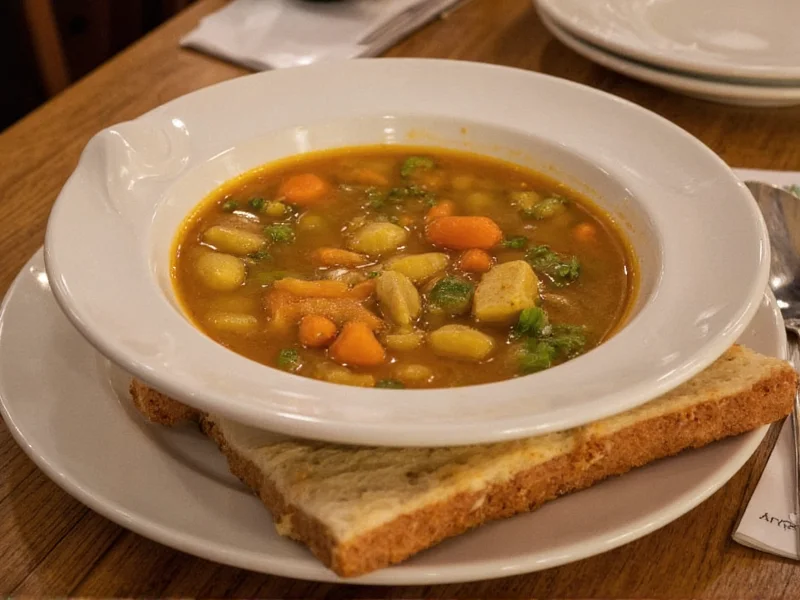
For those seeking an authentic taste of Maine's culinary heritage, Knox Village Soup represents more than just a meal—it's a connection to the region's maritime history and community traditions. This distinctive chowder variation stands apart from standard New England clam chowder through its unique ingredient proportions and preparation methods that have remained largely unchanged for over a century.
Historical Roots of Knox Village Soup
The origins of Knox Village Soup trace back to the fishing communities along Maine's mid-coast region, specifically within Knox County. Historical records from local archives indicate that this soup recipe began appearing in community cookbooks as early as the 1880s, created by residents of villages including Thomaston, Rockland, and St. George.
Unlike commercialized versions that have emerged in recent decades, the traditional Knox Village Soup was born from necessity—fishermen's wives creating nourishing meals from whatever seafood was abundant that day, combined with garden vegetables and simple pantry staples. The "village" in the name refers not to a single location but to the collective culinary tradition shared among these interconnected coastal communities.
The documented evolution of Knox Village Soup reflects Maine's coastal resilience through these key milestones:
- 1880s: Earliest community cookbook entries from Knox County, preserved in historical archives (Knox County Historical Society Research Resources)
- 1930s: Formal adoption as a community fundraiser staple during economic hardship, highlighting its role in social cohesion (Maine Folklife Center Foodways Documentation)
- 1980s-Present: Integration into Maine's official culinary tourism identity, featured in state-promoted heritage experiences (Maine Office of Tourism Culinary Initiatives)
Traditional Ingredients and Preparation
What distinguishes authentic Knox Village Soup from other New England chowders is its specific ingredient ratios and cooking technique. While many chowders focus primarily on clams, the traditional Knox Village version incorporates a thoughtful balance of multiple seafood elements.
| Traditional Ingredients | Modern Variations |
|---|---|
| Fresh haddock or cod (never frozen) | Smoked haddock for depth of flavor |
| Hand-diced potatoes (Yukon Gold) | Red potatoes for texture variation |
| Homemade fish stock | Combination of fish and vegetable stock |
| Heavy cream (never milk) | Half-and-half for lighter version |
| Fresh parsley only | Parsley and chives combination |
Step-by-Step Preparation Method
The preparation of genuine Knox Village Soup follows a precise sequence that impacts both texture and flavor development:
- Prepare fish stock from heads and bones of fresh-caught fish (never use pre-made stock)
- Sauté onions and celery in salt pork until translucent
- Add diced potatoes and cook for 5 minutes to develop flavor
- Pour in fish stock and simmer until potatoes are tender but not falling apart
- Add cubed fresh fish and cook until just opaque
- Temper heavy cream with hot broth before incorporating
- Finish with fresh parsley and a dash of white pepper
The critical technique that defines authentic Knox Village Soup is the tempering process—gradually incorporating the cream to prevent curdling while maintaining the soup's characteristic velvety texture. Rushing this step results in a broken sauce that compromises the entire dish.
Cultural Significance in Maine Communities
Within Knox County, this soup represents more than sustenance—it's woven into the social fabric of coastal Maine. Community churches still prepare large batches for fundraisers, particularly during the colder months, using recipes passed down through generations. The Thomaston Historical Society maintains a collection of over 50 handwritten variations from the early 20th century, each reflecting a specific family's interpretation while maintaining the core elements.
What makes Knox Village Soup particularly special is how it embodies Maine's "use what you have" philosophy. During lean fishing seasons, families would adapt the recipe using whatever seafood was available—sometimes incorporating lobster, mussels, or even sea urchin roe for special occasions. This adaptability while maintaining core identity explains why the soup has endured for generations.
Preserving Authenticity in Modern Times
As interest in regional American cuisine grows, maintaining the authenticity of Knox Village Soup becomes increasingly important. Many restaurants outside Maine have created their own interpretations, often substituting ingredients or simplifying the preparation process.
For those seeking the genuine experience, look for these markers of authenticity:
- The soup should have a pale ivory color, never opaque white
- Visible chunks of fresh fish, not shredded or flaked
- No tomato products (distinguishing it from Manhattan-style chowder)
- A subtle briny flavor that comes from fresh seafood, not salt
- Served in a bread bowl only in modern interpretations—traditionally in ceramic
Authentic preparation requires specific conditions that are scientifically validated for optimal results. The UMaine Seafood Extension emphasizes that fish for chowder must be used within 24 hours of catch to preserve cellular integrity—frozen alternatives cause structural damage leading to texture degradation during cooking (UMaine Cooperative Extension Seafood Quality Guidelines). This explains why traditional Knox Village Soup recipes strictly specify "fresh, never frozen" seafood, as documented in historical community cookbooks.
When preparing Knox Village Soup at home, the quality of ingredients makes all the difference. Freshness is paramount—ideally using fish caught within 24 hours. The potatoes should hold their shape after cooking, and the cream should be incorporated at precisely 165°F to maintain emulsion without curdling.
Seasonal Variations and Serving Traditions
While traditionally considered a winter comfort food, authentic Knox Village Soup has seasonal variations that reflect Maine's changing harvests:
- Spring version: Incorporates fresh herring and ramps (wild leeks)
- Summer version: Features lobster and corn added at the end
- Fall version: Includes small amounts of shellfish and autumn root vegetables
- Winter version: The classic preparation with haddock or cod
Serving traditions in Knox County homes typically include oyster crackers on the side rather than in the soup, allowing diners to add crunch according to preference. Many families still follow the tradition of preparing a double batch—one for immediate consumption and one to share with neighbors, particularly elderly community members.




 浙公网安备
33010002000092号
浙公网安备
33010002000092号 浙B2-20120091-4