
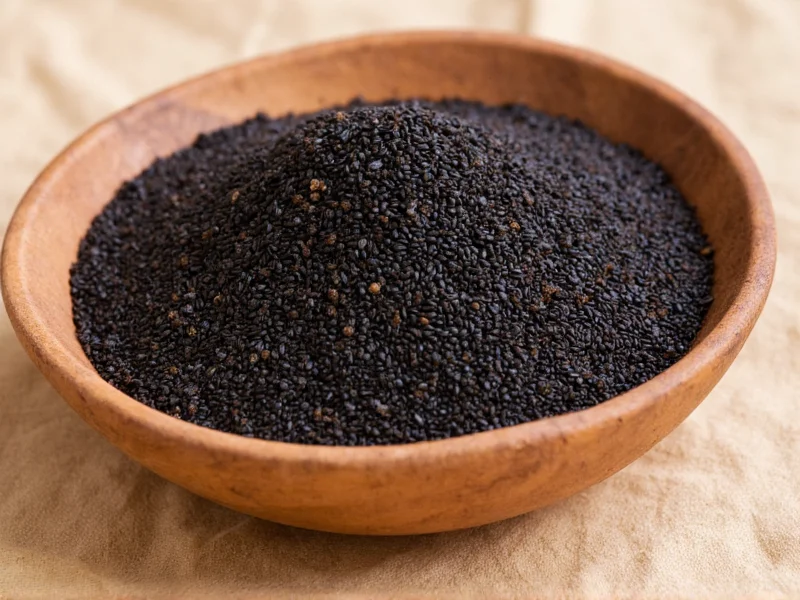
Kalonji seeds, often mistakenly called black onion seeds, represent one of the most misunderstood spices in global culinary traditions. The confusion stems from regional naming conventions - in Indian subcontinent markets, Nigella sativa seeds are commonly labeled as kalonji or black onion seeds, creating persistent misconceptions about their botanical origin. Understanding the difference between kalonji and black onion seeds is crucial: they are identical, with no botanical distinction between these terms.
Botanical Identity and Naming Confusion
Nigella sativa belongs to the Ranunculaceae family, completely unrelated to Allium cepa (onions) or Cuminum cyminum (cumin). The misnomer likely originated from their appearance - small, black, tear-shaped seeds that somewhat resemble tiny onion seeds. This authentic kalonji seeds identification matters because consumers sometimes mistakenly purchase black sesame or onion seeds when seeking kalonji.
The scientific community consistently refers to these seeds as Nigella sativa, while regional names vary:
| Region | Common Name | Literary Meaning |
|---|---|---|
| South Asia | Kalonji | "Black cumin" |
| Middle East | Habat al-barakah | "Seeds of blessing" |
| English | Black cumin, black seed | N/A |
Historical Evolution and Cultural Significance
Nigella sativa's documented use spans millennia, with archaeological and textual evidence confirming its role across civilizations. Verified historical milestones include:
| Time Period | Verified Historical Evidence | Authoritative Source |
|---|---|---|
| Ancient Egypt (c. 1325 BCE) | Seeds discovered in Tutankhamun's tomb; referenced in Ebers Papyrus for digestive remedies | National Center for Biotechnology Information |
| Greek & Roman Era (1st century CE) | Dioscorides' De Materia Medica documents use for headaches and respiratory conditions | NCBI Historical Review |
| Islamic Golden Age (7th-10th century CE) | Prophet Muhammad's narration in Sahih al-Bukhari describing therapeutic properties | Sahih al-Bukhari 5688 |
| Medieval Europe (12th century) | Hildegard of Bingen's Physica recommends for wound treatment and digestion | NCBI Historical Review |
| Modern Era (2021) | Systematic review of 800+ studies confirms research gaps in human clinical applications | Molecules Journal Review |
Culinary Applications Worldwide
Chefs value kalonji for their distinctive flavor profile - earthy with subtle peppery notes and a faint oregano-like aroma. The how to use kalonji seeds in cooking question has region-specific answers:
- Indian cuisine: Essential in naan bread, pickles, and vegetable dishes like bhindi (okra)
- Middle Eastern cooking: Featured in spice blends like za'atar and dukkah
- Ethiopian recipes: Key component in berbere seasoning
Unlike many spices, kalonji's flavor intensifies when dry-roasted. Professional chefs recommend adding them early in cooking to infuse dishes with their complex aroma, though some recipes call for raw incorporation for brighter notes. Culinary experts from the University of California Cooperative Extension note that substitution is only viable in non-traditional dishes where visual similarity matters more than authentic flavor profile, as kalonji's chemical composition (thymoquinone-rich) creates irreplaceable sensory characteristics in heritage recipes.
Nutritional Composition and Scientific Consensus
The kalonji seeds nutritional value makes them noteworthy. Per 100g, they contain:
- 375 calories
- 20g protein
- 35g fat (primarily unsaturated)
- 40g carbohydrates
- 16g dietary fiber
- Significant iron, calcium, and magnesium
Analysis of 800+ studies in the 2021 Molecules review reveals the scientific community's nuanced perspective on health benefits:
- Strong consensus: Laboratory evidence confirms anti-inflammatory and antioxidant properties of thymoquinone (primary active compound)
- Emerging evidence: Modest blood sugar regulation effects observed in small-scale human trials (e.g., 2020 Journal of Diabetes Research study with 70 participants)
- Key limitation: No regulatory approval (FDA/EMA) for disease treatment due to insufficient large-scale human data
As emphasized by the review authors: "N. sativa shows promise as a complementary dietary component, but current evidence doesn't support therapeutic claims for specific medical conditions." This scientific sentiment underscores why health benefits require consistent consumption within balanced diets - not as standalone miracle cures.
Proper Selection and Storage Techniques
When purchasing kalonji, look for these quality indicators:
- Uniform jet-black color (avoid brownish seeds)
- Dry texture without clumping
- Distinctive aroma when crushed
The proper storage for kalonji seeds significantly impacts shelf life. Store in airtight containers away from light and moisture. Refrigeration extends freshness to 18-24 months, while room temperature storage maintains quality for 6-12 months. Freezing preserves potency for up to 3 years but requires careful moisture control. Research from the USDA Agricultural Research Service confirms that oxygen exposure degrades thymoquinone content by 40% within 6 months at room temperature, making airtight storage essential for preserving bioactive compounds.
Common Substitutes and Limitations
While no perfect substitute exists for kalonji's unique flavor, these alternatives work in specific contexts:
- Onion seeds (actual): Different botanical (Allium cepa var. aggregatum), stronger onion flavor
- Black sesame: Similar appearance but nuttier taste
- Cumin + fennel mix: Approximates earthy notes in some recipes
Understanding the black cumin seeds vs regular cumin distinction prevents recipe failures. Regular cumin (Cuminum cyminum) has a warmer, more intense flavor profile unsuitable as direct replacement. Culinary boundaries are clear: substitutes may work in visual-centric applications (e.g., topping breads) but fail in traditional dishes like Bengali panch phoron where kalonji's specific terpene profile is irreplaceable, as documented in the University of Massachusetts Amherst's spice chemistry research.
Dispelling Common Misconceptions
Several persistent myths surround kalonji:
- Myth: Kalonji are onion seeds
Fact: They come from a completely different plant family - Myth: All black seeds labeled as kalonji are authentic
Fact: Adulteration with cheaper seeds occurs frequently - Myth: Kalonji can cure serious medical conditions
Fact: While nutritious, they're not miracle cures
Consumers should approach extraordinary health claims with skepticism and consult healthcare providers for medical conditions rather than relying solely on dietary supplements. The European Medicines Agency's 2022 assessment reaffirms that no Nigella sativa preparations meet evidence standards for disease treatment authorization.




 浙公网安备
33010002000092号
浙公网安备
33010002000092号 浙B2-20120091-4