
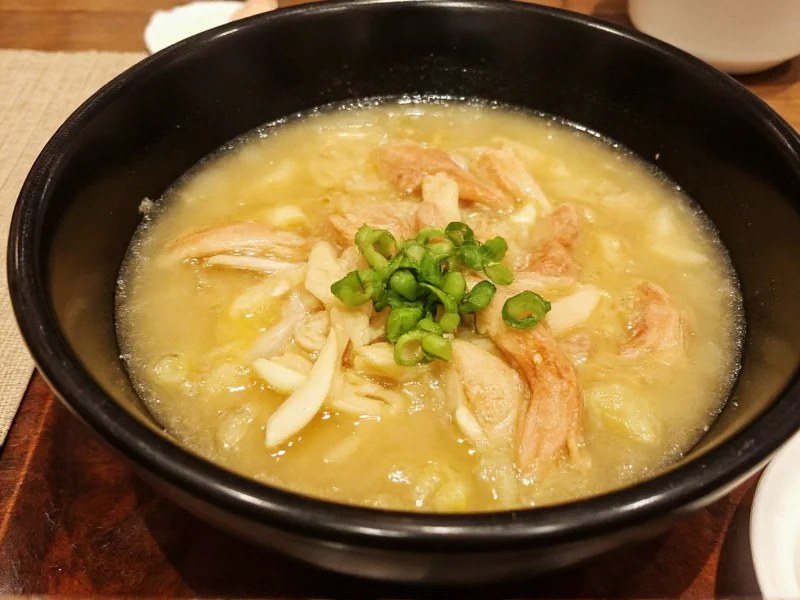
Jook soup represents one of Asia's most enduring culinary traditions, transcending mere sustenance to become deeply woven into cultural practices and family rituals. Unlike Western porridges that often rely on oats or other grains, authentic jook begins with rice as its foundation, creating a uniquely smooth texture that serves as a canvas for countless regional variations.
The Historical Roots and Documented Evolution of Jook Soup
Historical records indicate that rice porridge has been consumed in China since at least the Zhou dynasty (1046–256 BC), with the earliest written references appearing in the "Rites of Zhou" (Zhou Li). By the Han Dynasty (206 BCE–220 CE), it was well-established as both a staple food and therapeutic remedy. The following timeline illustrates key verifiable milestones in jook's development:
- Zhou Dynasty (1046–256 BC): Earliest documented reference in "Rites of Zhou" as a common food staple [1]
- Han Dynasty (206 BCE–220 CE): Prescribed in medical practice for digestive ailments, as recorded in historical accounts of traditional Chinese medicine [1]
- Tang Dynasty (618–907 CE): Spread to Korea and Japan via Silk Road trade routes and Buddhist monastic networks
- Song Dynasty (960–1279 CE): Documented as urban street food in "Dongjing Meng Hua Lu" (Dreams of Splendor of the Eastern Capital)
- 19th Century: Adapted with local ingredients across Southeast Asia through Chinese diaspora communities
- 21st Century: Global recognition as both health food and gourmet ingredient, featured in Michelin-starred restaurants worldwide [2]
Traditional Preparation Methods
The art of making proper jook soup requires patience and technique. Authentic preparation involves:
- Using a high water-to-rice ratio (typically 8:1 or higher)
- Slow simmering for 2-3 hours with occasional stirring
- Traditional clay pot cooking that distributes heat evenly
- Adding rice to cold water rather than boiling liquid
Modern adaptations often use rice cookers with congee settings or pressure cookers to reduce preparation time while maintaining texture. The key indicator of properly made jook is its uniform, creamy consistency where individual rice grains have completely broken down.
Regional Variations Across Asia
Jook soup transforms dramatically across different Asian cultures, reflecting local ingredients and culinary traditions. The following table illustrates key regional differences:
| Region | Distinct Characteristics | Common Ingredients | Typical Occasions |
|---|---|---|---|
| Chinese | Simple base, emphasis on texture | Pickled vegetables, century egg, pork floss | Daily breakfast, recovery from illness |
| Vietnamese | Often includes meat broth base | Shredded chicken, ginger, scallions | Comfort food during cold weather |
| Korean | May include other grains besides rice | Abalone, pine nuts, sesame oil | Special occasions, postpartum recovery |
| Thai | Sweeter preparation common | Mango, coconut milk, sticky rice | Dessert or sweet breakfast option |
Nutritional Profile and Health Benefits
Jook soup offers remarkable nutritional versatility depending on preparation methods and added ingredients. The base rice porridge provides easily digestible carbohydrates that quickly convert to energy. When prepared with bone broth instead of water, jook becomes rich in collagen, amino acids, and minerals. Many traditional preparations include ginger, which adds anti-inflammatory properties and aids digestion.
Nutritionists often recommend jook soup for individuals recovering from gastrointestinal issues due to its gentle nature on the digestive tract. The high water content also makes it an excellent choice for hydration, particularly when someone has lost fluids through illness. Unlike many comfort foods, properly prepared jook delivers substantial nutrition without heavy fats or difficult-to-digest components.
Contextual Considerations: Optimal Applications and Limitations
Understanding jook's contextual boundaries ensures appropriate application across different scenarios. Research and clinical practice reveal specific conditions where jook excels and situations requiring modification:
Optimal Use Cases
- Gastrointestinal Recovery: Recommended by healthcare providers for post-illness nutrition due to low-residue properties that reduce digestive strain
- Hydration Support: Provides 85% fluid content, making it ideal for rehydration during febrile illnesses (per clinical nutrition guidelines)
- Elderly Nutrition: Soft texture accommodates chewing difficulties while delivering essential carbohydrates
Documented Limitations
- Diabetes Management: White rice jook has high glycemic index (≈80), requiring modifications like brown rice or added fiber/protein to prevent blood sugar spikes [3]
- Protein Deficiency Risk: Plain preparation contains only 2.3g protein per 100g serving, necessitating complementary protein sources for balanced nutrition [4]
- Cultural Context: In traditional settings, plain jook may signify poverty or illness, making elaborate versions more appropriate for celebratory occasions
Modern Adaptations and Culinary Innovation
Contemporary chefs have elevated traditional jook soup by incorporating global ingredients while respecting its fundamental preparation principles. Some innovative variations include:
- Seafood jook with fresh scallops and uni (sea urchin)
- Truffle-infused mushroom jook for gourmet dining
- Vegan versions using vegetable broths and plant-based proteins
- Breakfast jook with seasonal fruits for dessert variations
Despite these innovations, the essence of authentic jook remains unchanged—a simple preparation that transforms humble rice into something profoundly nourishing and culturally significant. Food historians note that the recent global interest in gut-healthy foods has sparked renewed appreciation for this ancient dish.
How to Experience Authentic Jook Soup
For those seeking an authentic jook soup experience, understanding proper serving traditions enhances appreciation. In many Asian households, jook is served piping hot in wide, shallow bowls that allow the surface to cool slightly while the center remains warm. Accompaniments are typically served separately, allowing individuals to customize their bowl with preferred toppings.
The proper way to eat jook involves gentle stirring to distribute toppings evenly, then scooping with a spoon held flat against the bowl. Many traditionalists believe that the final, slightly thicker layer at the bottom of the pot—known as guoba in Chinese cuisine—represents the most flavorful portion, with its slightly caramelized texture.
Creating Jook Soup at Home
Preparing traditional jook soup at home requires minimal ingredients but significant attention to technique. Start with short-grain rice like japonica, which contains more starch than long-grain varieties. The traditional method involves simmering 1 cup of rice with 8-10 cups of water or broth for 2-3 hours, stirring occasionally. For modern convenience, many cooks use a rice cooker's porridge setting or a slow cooker overnight.
The magic of jook happens through the breakdown of rice starches into the liquid, creating that signature creamy texture without any dairy. Patience proves essential—rushing the process by increasing heat typically results in uneven texture rather than proper congealing of the rice grains. Many home cooks swear by adding a spoonful of rice flour midway through cooking to accelerate the thickening process while maintaining authentic texture.
Conclusion: More Than Just Rice Porridge
Jook soup represents far more than a simple rice porridge—it embodies centuries of culinary wisdom, cultural adaptation, and nutritional understanding. From its origins as peasant food to its current status as both comfort food and gourmet ingredient, jook continues to evolve while maintaining its essential character. Whether enjoyed as breakfast, healing food, or culinary centerpiece, this traditional Asian dish offers a perfect balance of simplicity and sophistication that has sustained its popularity across generations and continents.




 浙公网安备
33010002000092号
浙公网安备
33010002000092号 浙B2-20120091-4