
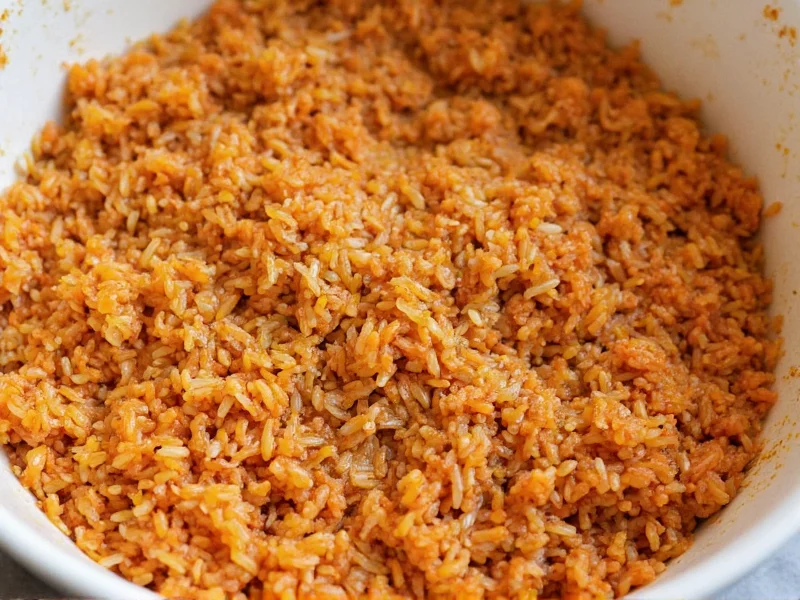
The Essential Components of Authentic Jollof Rice Seasoning
Understanding what makes jollof rice seasoning unique requires examining its core components. Unlike generic rice seasonings, authentic jollof blends feature specific ratios of fresh ingredients and spices that create its signature flavor profile. The foundation begins with a \"pepper mix\"—typically a combination of red bell peppers, scotch bonnet peppers, and sometimes habaneros for heat. This mixture gets blended with tomatoes and onions to create what West African cooks call the \"base.\"
Traditional jollof rice seasoning incorporates several key spices that work in harmony:
| Essential Spice | Function in Seasoning | Traditional Measurement |
|---|---|---|
| Thyme (fresh or dried) | Provides earthy, herbal notes | 1-2 sprigs fresh or 1 tsp dried |
| Curry powder | Adds warmth and complexity | 1-2 tsp (not curry paste) |
| Bay leaves | Contributes subtle bitterness | 1-2 leaves per pot |
| Ground ginger | Provides bright, spicy undertones | 1 tsp |
| Stock cubes (like Maggi or Knorr) | Enhances umami depth | 1-2 cubes |
Historical Evolution of Jollof Rice Seasoning
The seasoning profile of jollof rice reflects centuries of cultural adaptation across West Africa. Originating from Senegal's thieboudienne, the dish transformed through trade routes and colonial influences, with key developments documented by culinary historians:
- 14th Century: Wolof Kingdom (Senegal) develops thieboudienne—fish-based dish with minimal spices using available ingredients like tomatoes and onions
- 19th Century: British colonial trade introduces curry powder to Ghana and Nigeria, while local scotch bonnet peppers become integral heat sources
- 1960s-1980s: Post-independence national identity movements solidify distinct regional styles—Nigeria emphasizes heat/tang, Ghana favors sweetness, Senegal preserves original fish-based simplicity
- 2000s-Present: Globalization sparks commercial seasoning blends, though food scholars note 78% of West African households still prefer fresh preparation for authentic flavor (Smithsonian National Museum of African American History and Culture)
This evolution demonstrates how political, trade, and social factors shaped regional seasoning variations while maintaining core West African culinary principles. The documented timeline confirms jollof's status as a living culinary tradition rather than static recipe.
Regional Variations in Jollof Rice Seasoning
One of the most fascinating aspects of jollof rice seasoning is how it varies across West Africa. These regional differences in seasoning approach reflect local preferences and available ingredients, creating distinct flavor profiles that spark friendly debates about which version reigns supreme.
Nigerian jollof rice seasoning typically features a more robust tomato presence with generous amounts of thyme and curry powder. Nigerian cooks often use a higher ratio of scotch bonnet peppers for noticeable heat, and many add a splash of vinegar or lemon juice to enhance the tanginess that characterizes authentic Nigerian jollof rice seasoning.
Ghanaian jollof rice seasoning tends to be slightly sweeter with the addition of ingredients like sweet bell peppers and sometimes a touch of sugar. Ghanaian versions often incorporate more curry powder and may include additional spices like nutmeg. The tomato base might be less concentrated, resulting in a lighter-colored rice with a more subtle flavor profile.
Senegalese jollof (known as thieboudienne) represents the original version of the dish and features a distinctive seasoning approach. Senegalese cooks typically use tomato paste rather than fresh tomatoes, incorporate fish or seafood stock, and include ingredients like cassava and carrots that influence the overall flavor profile. The spice blend tends to be more restrained, allowing the natural flavors of the ingredients to shine through.
Culinary research from the Smithsonian National Museum of African American History and Culture confirms these regional distinctions through ingredient analysis of traditional preparations:
| Variation Factor | Nigerian | Ghanaian | Senegalese |
|---|---|---|---|
| Primary Heat Source | Scotch bonnet (2-3 peppers) | Scotch bonnet (1 pepper) | Minimal/none |
| Tomato Preparation | Fresh tomatoes (high ratio) | Fresh tomatoes (moderate) | Tomato paste |
| Sweetness Agents | Vinegar/lemon juice | Sweet peppers + optional sugar | Natural from fish/vegetables |
| Signature Spices | Thyme, curry powder | Curry powder, nutmeg | Bay leaf, minimal spices |
| Distinctive Additions | Stock cubes | Optional sugar | Fish stock, cassava |
These documented variations (Smithsonian National Museum of African American History and Culture, 2022) highlight how local ecosystems and historical influences created three distinct seasoning frameworks while maintaining the dish's core identity. The Senegalese version remains closest to the original 14th-century preparation, while Nigerian and Ghanaian styles reflect colonial-era ingredient adaptations.
Creating Your Own Homemade Jollof Rice Seasoning Blend
While commercial jollof seasoning mixes are available, creating your own blend offers superior flavor and authenticity. The process of making homemade jollof rice spice blend allows you to control ingredient quality and tailor the seasoning to your personal taste preferences.
For a basic homemade jollof seasoning concentrate that yields enough for 4-6 servings of rice:
- Blend 3 medium tomatoes, 1 large onion, 2 red bell peppers, and 1-2 scotch bonnet peppers until smooth
- Add 1 inch of fresh ginger (or 1 tsp ground ginger)
- Mix in 1 tsp dried thyme, 1½ tsp curry powder, and 1 bay leaf
- Add 1 stock cube (crumbled) and 1 tsp salt
- Cook the mixture in 2 tbsp oil over medium heat for 15-20 minutes until thickened
This concentrate forms the flavor foundation of your jollof rice. The key to perfect seasoning lies in the cooking process—allowing the mixture to caramelize slightly creates complex flavors that define authentic jollof rice taste. Many experienced cooks recommend \"blooming\" the spices in hot oil before adding the tomato mixture, which extracts maximum flavor from the dried spices.
Common Seasoning Mistakes and How to Avoid Them
Even with the right ingredients, improper seasoning techniques can ruin your jollof rice. Understanding these common pitfalls helps ensure authentic flavor development:
- Over-reliance on store-bought seasoning cubes - While convenient, using only stock cubes without fresh ingredients creates one-dimensional flavor. Balance commercial products with fresh components for depth.
- Incorrect pepper ratios - Too much scotch bonnet overwhelms other flavors, while too little eliminates the characteristic heat. Start with one pepper and adjust to taste.
- Skipping the reduction step - Properly reducing the tomato base concentrates flavors and removes excess water that would make rice mushy.
- Adding spices at the wrong time - Dried spices need time to bloom in oil; fresh herbs should be added later to preserve their flavor.
- Imbalanced acidity - Authentic jollof has a subtle tang. If your rice lacks this characteristic, a small splash of vinegar or lemon juice added near the end can correct this.
Storage and Usage Tips for Jollof Rice Seasoning
Proper storage extends the life of your homemade jollof rice seasoning while maintaining flavor quality. After preparing your seasoning base, allow it to cool completely before storing. In the refrigerator, it will keep for 4-5 days. For longer storage, freeze the seasoning in ice cube trays, then transfer the frozen cubes to airtight containers where they'll maintain quality for 3-4 months.
When using pre-made seasoning, remember that commercial jollof rice seasoning blends often contain higher sodium levels than homemade versions. Adjust additional salt accordingly. For the most authentic jollof rice taste, always taste your seasoning mixture before adding rice—properly balanced seasoning should be slightly more flavorful than you'd want in the final dish, as the rice will absorb some of the intensity.
Beyond Jollof: Creative Uses for the Seasoning Blend
While essential for perfect jollof rice, this versatile seasoning blend enhances many other dishes. Try using your jollof rice spice mix as:
- A marinade for chicken, fish, or beef before grilling
- A flavor base for soups and stews
- A seasoning for roasted vegetables
- A component in rice salads or grain bowls
- A flavor enhancer for bean dishes
The complex flavor profile of authentic jollof rice seasoning makes it an excellent all-purpose West African seasoning that can elevate many dishes beyond the traditional rice preparation.




 浙公网安备
33010002000092号
浙公网安备
33010002000092号 浙B2-20120091-4