
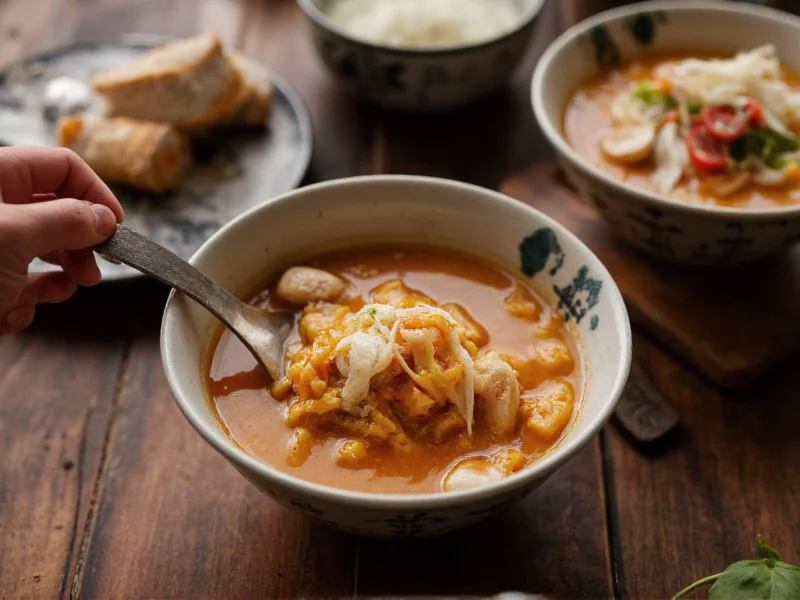
Understanding the unique design and purpose of Japanese soup spoons reveals much about Japanese dining culture and practical eating techniques. These utensils aren't merely functional tools but represent centuries of culinary refinement that prioritize both efficiency and respect for the food being consumed.
The Cultural Evolution of Japanese Soup Spoons: A Historical Timeline
Japanese soup spoons evolved differently from their Western counterparts due to Japan's distinct culinary traditions. While European spoons developed alongside thick, creamy soups requiring scooping motions, Japanese cuisine traditionally features clear broths where the emphasis is on sipping rather than scooping. This fundamental difference in soup preparation and consumption led to the development of specialized utensils optimized for Japanese dining practices.
Key developments in Japanese soup spoon history reflect broader societal shifts, as documented by Japan's Agency for Cultural Affairs in its UNESCO Intangible Cultural Heritage submission:
| Era | Development | Historical Context |
|---|---|---|
| Heian (794-1185) | Lacquered wooden spoons used exclusively by nobility for ceremonial soup consumption | Introduction of Chinese-inspired tableware; focus on court rituals and aesthetic refinement |
| Edo (1603-1868) | Standardization of ceramic/bamboo spoons for commoners; regional variations emerge | Peaceful era with merchant-class prosperity; rise of street food culture including noodle soups |
| Meiji (1868-1912) | Adoption of Western materials (stainless steel); fusion designs for international dining | Modernization drive; incorporation of Western dining customs while preserving tradition |
| Post-WWII | Mass production of specialized spoons; ramen culture drives larger "ramen bashi" designs | Economic growth; ramen becomes national dish requiring utensils for hearty broths |
This documented evolution demonstrates how Japanese soup spoons transformed from aristocratic ceremonial objects to specialized tools reflecting Japan's culinary identity, recognized globally through UNESCO's Washoku designation (Agency for Cultural Affairs, 2013).
Distinctive Design Features
What sets Japanese soup spoons apart from Western varieties? Several key design elements make them uniquely suited for Japanese cuisine:
- Shape and Profile: Japanese spoons have a flatter, more elongated bowl that sits comfortably against the lower lip, allowing for direct sipping without tilting the head back—a practice considered impolite in traditional Japanese dining
- Edge Design: The tapered edge facilitates smooth liquid transfer from bowl to mouth
- Handle Length: Typically shorter than Western spoons to accommodate the traditional Japanese dining position
- Bowl Depth: Deeper than Western teaspoons but shallower than Western soup spoons, optimized for clear broths
| Feature | Japanese Soup Spoon | Western Soup Spoon |
|---|---|---|
| Bowl Shape | Flatter, more elongated | Rounded, deeper |
| Edge Profile | Tapered for sipping | Uniform thickness |
| Handle Length | Shorter (3-4 inches) | Longer (5-6 inches) |
| Primary Use | Sipping clear broths | Scooping thick soups |
Contextual Usage Guidelines: When and Where Japanese Soup Spoons Apply
Japanese soup spoons function within precisely defined cultural and practical boundaries. Understanding these context-specific applications prevents misuse and enhances appreciation of their design philosophy:
- Formal Dining Context: In kaiseki (traditional multi-course meals), lacquered wooden spoons are mandatory for clear soups served in lidded bowls. Using ceramic spoons in this setting would be inappropriate
- Soup Type Limitations: These spoons are engineered exclusively for broth-based soups (miso, ramen, clear soups). They are never used for thick stews, chowders, or desserts, which require Western-style spoons
- Regional Exceptions: In Okinawa, traditional soup consumption typically omits spoons entirely, reflecting distinct culinary practices from mainland Japan
- Modern Adaptations: Contemporary Japanese households may use Western spoons for non-traditional soups, but authentic restaurants maintain strict adherence to traditional spoon usage based on soup type
As documented in Japan's official UNESCO Washoku submission, "the use of soup spoons (shiru-bashi) for miso soup and other clear soups" is a defining characteristic of traditional Japanese dining, but these utensils are strictly context-bound: they are not used for thick soups, in casual Okinawan settings, or when consuming soup directly from the bowl in informal meals (Agency for Cultural Affairs, 2013).
Materials and Craftsmanship
Authentic Japanese soup spoons showcase remarkable craftsmanship through their material selection:
- Lacquered Wood: Traditional choice for formal settings, often made from cherry or cypress wood with multiple layers of urushi lacquer
- Ceramic: Common for miso soup, frequently matching the accompanying soup bowl
- Stainless Steel: Modern choice for ramen restaurants, durable and easy to clean
- Bamboo: Used in more casual settings, lightweight and sustainable
The choice of material often corresponds to the formality of the meal and the specific soup being served. High-end restaurants might use handcrafted lacquered spoons that complement the overall dining experience, while casual ramen shops typically use stainless steel for practicality.
Specialized Spoon Varieties
Japanese dining features several specialized spoon types tailored to specific soups:
- Miso Soup Spoon (Miso-shiru Bashi): Small (2-3 inches), often ceramic, designed for the delicate flavors of miso soup
- Ramen Spoon (Ramen Bashi): Larger (4-5 inches), typically stainless steel with a deeper bowl for hearty broths
- Soba/Udon Spoon (Noodle Soup Spoon): Features a small notch in the edge to help separate noodles from broth
- Chawanmushi Spoon: Small, often decorative spoon for egg custard dishes
Understanding these distinctions helps appreciate how Japanese tableware is precisely engineered for specific culinary experiences rather than using a one-size-fits-all approach.
Proper Usage and Etiquette
Using a Japanese soup spoon correctly involves specific techniques that reflect broader Japanese dining etiquette:
- Lift the spoon with your dominant hand, keeping your elbow close to your body
- Fill the spoon about two-thirds full to avoid spills
- Sip directly from the spoon without tilting your head back—this demonstrates respect for the food
- Place the spoon on its provided rest between sips, never directly on the table
- When finished, return the spoon to its original position in the bowl or on the rest
Unlike Western dining where soup bowls might be tilted, Japanese etiquette emphasizes maintaining an upright posture while consuming soup. This practice stems from historical customs where tilting the head back was associated with begging or desperation.
Integration with Japanese Dining Experience
The Japanese soup spoon functions as part of a harmonious dining system rather than as an isolated utensil. It works in concert with other elements:
- Soup Bowl Design: Japanese soup bowls often have specific contours that accommodate the spoon's shape
- Meal Structure: Soup typically appears early in the meal sequence, cleansing the palate
- Complementary Utensils: Chopsticks handle solid components while the spoon manages the broth
- Aesthetic Coordination: Spoons often match the overall tableware design for visual harmony
This integrated approach reflects the Japanese concept of “washoku” (harmonious food), where every element of the meal contributes to a balanced sensory experience.
Common Misconceptions
Several misunderstandings persist about Japanese soup spoons:
- Misconception: Japanese people always use spoons for soup Reality: Traditional Japanese meals often feature soup consumed directly from the bowl, especially in informal settings
- Misconception: All Japanese spoons are small Reality: Ramen spoons can be quite large, sometimes exceeding Western soup spoon dimensions
- Misconception: Japanese soup spoons are identical to Chinese or Korean varieties Reality: Each East Asian culture has developed distinct spoon designs reflecting their unique culinary traditions
Understanding these distinctions helps appreciate the specificity of Japanese tableware design rather than lumping all Asian utensils into a single category.
Practical Considerations for Western Diners
For those new to Japanese dining, here are practical tips for using Japanese soup spoons effectively:
- Don't fill the spoon completely—two-thirds capacity prevents spills
- Hold the spoon closer to the bowl end for better control
- Use the spoon to separate solid ingredients from broth when needed
- When soup contains noodles, use chopsticks for the noodles and the spoon for the broth
- Never leave your spoon standing upright in the soup—this resembles incense sticks at funerals
These practical techniques help bridge cultural differences while respecting Japanese dining traditions.




 浙公网安备
33010002000092号
浙公网安备
33010002000092号 浙B2-20120091-4