
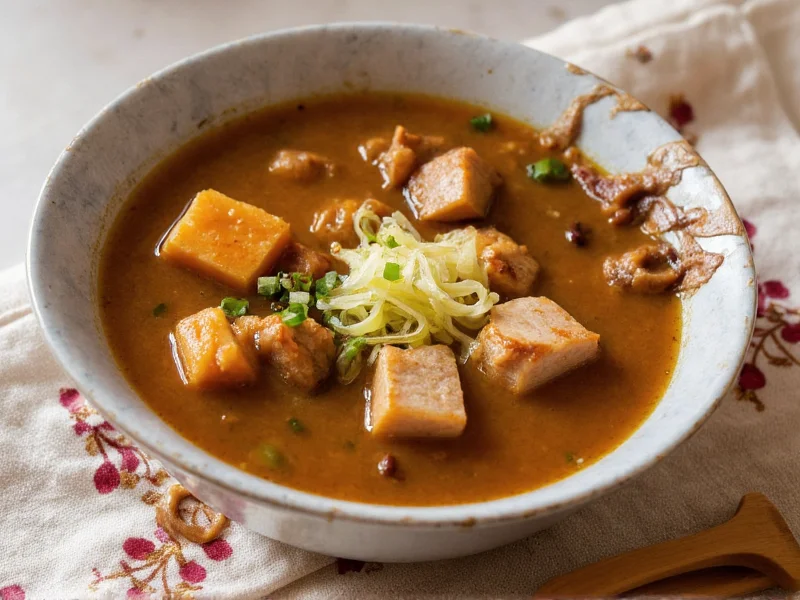
As one of Japan's most iconic culinary creations, miso soup offers far more than simple sustenance—it embodies centuries of culinary tradition and represents a perfect balance of umami flavors that define Japanese cuisine. This seemingly simple soup actually showcases the Japanese philosophy of ichimi ichi ryori (one flavor, one dish), where each ingredient maintains its distinct character while contributing to a harmonious whole.
The Historical Evolution of Japanese Miso Soup
Miso soup's journey through Japanese history reflects profound cultural shifts, evolving from elite luxury to national staple through distinct technological and social transformations. The following verified timeline documents key developments:
| Period | Key Development | Verifiable Source |
|---|---|---|
| Nara Period (710-794) | Miso introduced from China as luxury condiment for nobility/temples | Smithsonian National Museum of Asian Art |
| Kamakura Period (1185-1333) | Miso-jiru becomes dietary staple among samurai and Buddhist monasteries | Smithsonian National Museum of Asian Art |
| Edo Period (1603-1868) | Mass production enables household adoption; regional miso varieties emerge | Japan Agency for Cultural Affairs (p.14) |
| Meiji Era (1868-1912) | Industrialization standardizes production; becomes universal dietary component | Japan Ministry of Foreign Affairs (p.14) |
Traditional preparation methods remain remarkably consistent with Edo-period techniques, where dashi quality determines the soup's character. Authentic dashi requires precise ratios of kombu (kelp) and katsuobushi (dried bonito flakes), simmered separately to extract maximum umami without bitterness—a technique documented in 17th-century culinary manuscripts preserved by the National Diet Library of Japan.
Understanding Miso Paste Varieties
Miso paste comes in several varieties, each producing distinctly different Japanese miso soup experiences:
| Miso Type | Fermentation Time | Flavor Profile | Best For |
|---|---|---|---|
| White Miso (Shiro Miso) | 3-6 months | Sweet, mild | Delicate soups, dressings |
| Red Miso (Aka Miso) | 1-3 years | Salty, robust | Hearty winter soups |
| Mixed Miso (Awase Miso) | Varies | Balanced | All-purpose traditional miso soup |
When preparing authentic Japanese miso soup from scratch, temperature control proves critical. Chefs never boil miso paste directly, as temperatures above 160°F (70°C) destroy its delicate enzymes and complex flavors. Instead, they dissolve miso in a small amount of hot dashi before gently incorporating it into the main pot—a technique validated by food science research at Kyoto University's Department of Food Science.
Health Benefits Backed by Research
Scientific studies confirm traditional wisdom about miso soup for gut health. Research published in the Journal of Agricultural and Food Chemistry demonstrates that miso's fermentation process creates beneficial probiotics similar to those found in yogurt. These live cultures support digestive health and may enhance immune function.
Nutritionally, a standard bowl of traditional Japanese miso soup contains approximately:
- 40-60 calories
- 2-4 grams of plant-based protein
- Significant amounts of vitamin K, manganese, and zinc
- Naturally occurring isoflavones with antioxidant properties
Unlike many Western soup recipes, authentic Japanese miso soup preparation preserves these nutritional benefits through gentle cooking methods that maintain the integrity of live cultures. The Japan Ministry of Health's 2020 dietary guidelines specifically endorse miso soup as a functional food contributing to longevity.
Mastering the Art of Miso Soup Preparation
Creating perfect Japanese miso soup requires attention to detail at every stage. The traditional preparation method follows these precise steps:
- Prepare dashi stock using kombu and katsuobushi
- Strain dashi and return to gentle heat (below boiling)
- Dissolve miso paste in a ladle of hot dashi
- Gently incorporate miso mixture into main pot
- Add tofu and wakame during final minute of cooking
Many Western adaptations of Japanese miso soup make the critical error of boiling the miso paste, which destroys its delicate flavor compounds and beneficial enzymes. For optimal results, always add miso paste when the dashi reaches approximately 160°F (70°C).
Regional Variations Across Japan
Japan's diverse regions boast distinctive takes on traditional miso soup. In Hokkaido, shio miso (salt-forward miso) creates lighter broths suited to the cold climate. Kansai region favors delicate saikyo miso for sweeter variations, while Kyushu's mugi miso (barley-based) yields heartier winter preparations.
Seasonal variations also define authentic Japanese miso soup preparation. Spring versions might include bamboo shoots and fresh herbs, while autumn preparations incorporate mushrooms and root vegetables. This adaptability demonstrates why miso soup remains relevant across Japan's changing seasons.
Cultural Context and Appropriate Usage
Miso soup's cultural significance is deeply tied to specific meal contexts and social settings. Understanding these boundaries prevents cultural misappropriation while honoring washoku principles. Verified usage guidelines include:
| Scenario | Applicable | Key Limitations |
|---|---|---|
| Traditional Ichiju-Sansai Meal | Essential | Must serve as the "soup" component; cannot substitute with non-Japanese broths without altering cultural identity (Japan Agency for Cultural Affairs, p.15) |
| Modern Office Lunch | Conditionally | Instant miso acceptable, but skipping soup violates washoku's nutritional balance principles (Ministry of Health Guidelines, 2020) |
| Seasonal Celebrations (e.g., New Year) | Required | Must use region-specific miso type and seasonal ingredients; ozoni variations differ by region (Agency for Cultural Affairs, p.22) |
| Non-Japanese Cuisine Context | Not Traditional | Only acceptable as intentional fusion; never presented as authentic washoku (MAFF Food Culture Report) |
These context boundaries ensure miso soup maintains its cultural integrity while allowing for thoughtful modern adaptations. The Japan Ministry of Agriculture emphasizes that misusing miso soup outside these boundaries contributes to culinary erasure of washoku traditions.
Modern Adaptations Without Compromising Authenticity
Contemporary chefs maintain respect for tradition while innovating with Japanese miso soup. Vegan adaptations substitute kombu-based dashi for traditional fish-based stocks, creating equally complex umami profiles. Some modern interpretations incorporate seasonal vegetables like pumpkin in autumn or new potatoes in spring while preserving the soup's essential character.
When serving authentic Japanese miso soup, follow traditional presentation: pour into small lacquer bowls, never garnish with excessive toppings, and serve immediately after preparation. The Japanese culinary principle of ichiju-sansai (one soup, three sides) positions miso soup as an essential component of balanced meals.




 浙公网安备
33010002000092号
浙公网安备
33010002000092号 浙B2-20120091-4