
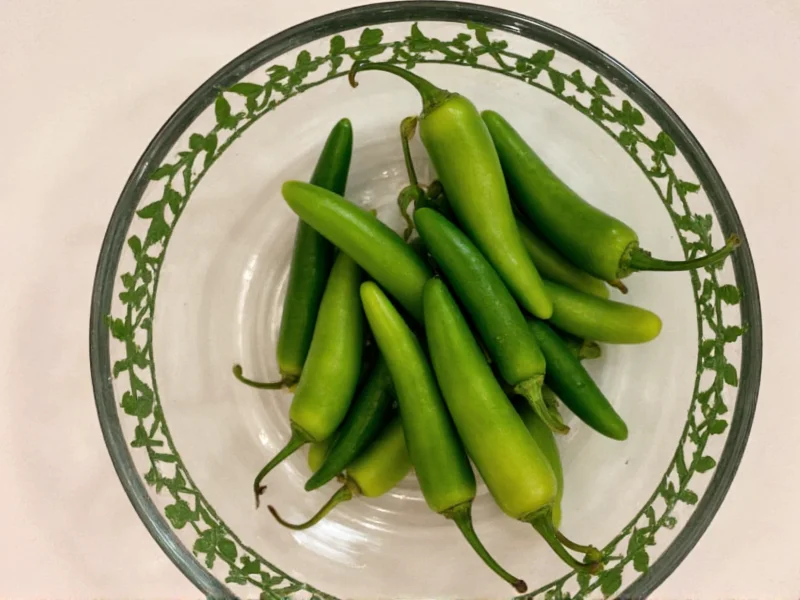
Understanding jalapeño SHU ratings is essential for home cooks and culinary professionals alike. These popular peppers offer more complexity than many realize, with their heat varying significantly based on multiple factors. Unlike extremely hot varieties that can overwhelm dishes, jalapeños provide a balanced kick that enhances rather than dominates flavors.
What Are Scoville Heat Units?
The Scoville scale, developed by pharmacist Wilbur Scoville in 1912, measures the concentration of capsaicinoids—the compounds responsible for chili pepper heat. Originally determined through human taste testing, modern measurements use high-performance liquid chromatography for precise quantification. The scale starts at zero (bell peppers) and extends beyond 2 million SHU for the hottest peppers like the Carolina Reaper.
Historical Evolution of Jalapeño Cultivation and Heat Measurement
The journey of jalapeños from regional Mexican crop to global kitchen staple reveals how agricultural practices and scientific understanding have shaped our perception of their heat profile. This timeline contextualizes why modern jalapeños occupy their specific SHU range:
| Era | Key Development | Impact on Heat Profile |
|---|---|---|
| Pre-1500s | Domestication in Mesoamerica | Natural selection favored moderate-heat varieties for culinary use over wild superhots |
| 1912 | Scoville's organoleptic test published | First standardized heat measurement; jalapeños initially rated 2,500-5,000 SHU (later refined) |
| 1970s | USDA establishes standard growing regions | Commercial cultivation in New Mexico/California stabilized SHU range through controlled conditions |
| 1990s | HPLC replaces sensory testing | Revealed 2,500-8,000 SHU range due to capsaicinoid quantification (USDA Agricultural Research Service) |
| 2010s | Genome sequencing of Capsicum annuum | Identified TRPV1 receptor interaction mechanisms explaining variable heat perception |
This historical progression, documented by the USDA Agricultural Research Service, demonstrates how both natural selection and scientific advancement converged to define the modern jalapeño's characteristic heat profile.
Jalapeño SHU Range Explained
While jalapeños consistently fall between 2,500-8,000 SHU, this wide range reflects significant natural variation. Several key factors influence where an individual jalapeño lands within this spectrum:
- Maturity level: Green jalapeños (harvested early) tend toward the lower end (2,500-4,000 SHU), while red jalapeños (fully ripe) often reach 6,000-8,000 SHU
- Environmental stress: Drought conditions or nutrient deficiencies can increase capsaicin production
- Genetic variation: Different jalapeño cultivars have distinct heat profiles
- Seed and membrane content: The white pith and seeds contain most capsaicin
| Pepper Variety | Scoville Heat Units (SHU) | Relative Heat Comparison |
|---|---|---|
| Jalapeño | 2,500-8,000 | 1x (baseline) |
| Serrano | 10,000-23,000 | 2-3x hotter than jalapeño |
| Habanero | 100,000-350,000 | 15-40x hotter than jalapeño |
| Bell Pepper | 0 | No heat |
| Thai Bird's Eye | 50,000-100,000 | 10-20x hotter than jalapeño |
Practical Implications for Cooking
Knowing the jalapeno shu measurement helps cooks make informed decisions. At 2,500-8,000 SHU, jalapeños provide noticeable heat without overwhelming other flavors—making them ideal for:
- Adding subtle warmth to salsas and guacamole
- Infusing oils and vinegars with mild heat
- Stuffing with cheese for appetizers (heat balanced by dairy)
- Creating accessible hot sauces for those new to spicy foods
- Adding dimension to marinades without excessive burn
When working with jalapeños, remember that heat distribution isn't uniform. The placenta (white ribs) contains most capsaicin, so removing these reduces heat significantly while preserving flavor. For consistent results in recipes, consider tasting a small piece before adding the entire pepper.
Contextual Boundaries for Jalapeño Usage
While versatile, jalapeños have specific limitations where their SHU range becomes either insufficient or inappropriate. Recognizing these boundaries prevents culinary missteps:
- Ideal Applications:
- Beginner-friendly dishes: Perfect for introducing spice (e.g., nacho cheese, mild salsas)
- Dairy pairings: Heat balances beautifully with cheese/sour cream (capsaicin binds to casein)
- Everyday cooking: Safe for family meals where extreme heat would be problematic
- Limitations:
- Authentic regional cuisines: Mexican mole requires mulato peppers (2,500-3,000 SHU with smoky notes jalapeños lack)
- High-volume commercial production: SHU inconsistency complicates batch standardization (per New Mexico State University Chile Pepper Institute)
- True "hot" applications: Fails to deliver sufficient heat for competitive eating or authentic Southeast Asian dishes
- Substitution Guidance:
- When milder heat needed: Poblano (1,000-2,000 SHU) for similar flavor profile
- When more heat required: Serrano (10,000-23,000 SHU) for comparable culinary role
As confirmed by the New Mexico State University Chile Pepper Institute, understanding these contextual boundaries ensures jalapeños enhance rather than compromise dish authenticity and flavor balance.
Common Misconceptions About Jalapeño Heat
Several myths persist about jalapeño shu ratings and heat management:
- Myth: All jalapeños have the same heat level
Reality: Two jalapeños from the same plant can vary dramatically in SHU - Myth: Smaller jalapeños are always hotter
Reality: Size correlates weakly with heat; environmental factors matter more - Myth: Cooking eliminates jalapeño heat
Reality: Capsaicin remains stable during cooking, though distribution may change - Myth: Seeds contain most of the heat
Reality: The white pith holds highest capsaicin concentration; seeds absorb heat from contact
Measuring Jalapeño Heat at Home
While professional SHU testing requires laboratory equipment, you can assess relative heat through:
- Visual inspection: More striations (corking) often indicate higher stress and potentially greater heat
- Smell test: Stronger, sharper aroma may suggest higher capsaicin content
- Taste sampling: Tiny nibble of the inner membrane (with caution)
- Comparative testing: Prepare identical dishes with different jalapeños to gauge relative heat
For consistent heat in recipes, consider using pickled jalapeños, which often have more standardized heat levels due to processing controls. Alternatively, commercial jalapeño-based hot sauces typically maintain consistent SHU from batch to batch.
Conclusion
Understanding jalapeño shu measurements empowers cooks to use these versatile peppers more effectively. Their 2,500-8,000 SHU range offers a sweet spot between flavor and heat that explains their global popularity. By recognizing factors that influence jalapeño heat—maturity, growing conditions, and preparation techniques—you can consistently achieve desired results in your culinary creations. Whether you're making mild nacho cheese dip or a moderately spicy salsa verde, knowing what to expect from your jalapeños transforms guesswork into precision.




 浙公网安备
33010002000092号
浙公网安备
33010002000092号 浙B2-20120091-4